


19.07.2026
If you want the short answer first, here it is: a 600ml / 20 oz milk pitcher is the best all-round size for most users. It works for one large latte or two smaller milk drinks, gives better control during steaming, and helps reduce waste in both home and commercial settings.
But that is not always the right answer for every workflow.
The right Milk Pitcher Size depends on how many drinks you make at once, how much milk you steam, how important latte art is, and whether you are buying for a home setup, café counter, training lab, or wholesale product line.
This guide will help you choose the right size without guessing, overbuying, or ending up with a pitcher that makes milk steaming harder than it should be.
Table of Contents
Your Quick Size Guide
Here is the practical version most buyers need:
| Pitcher Size | Best For | Main Advantage | Main Limitation |
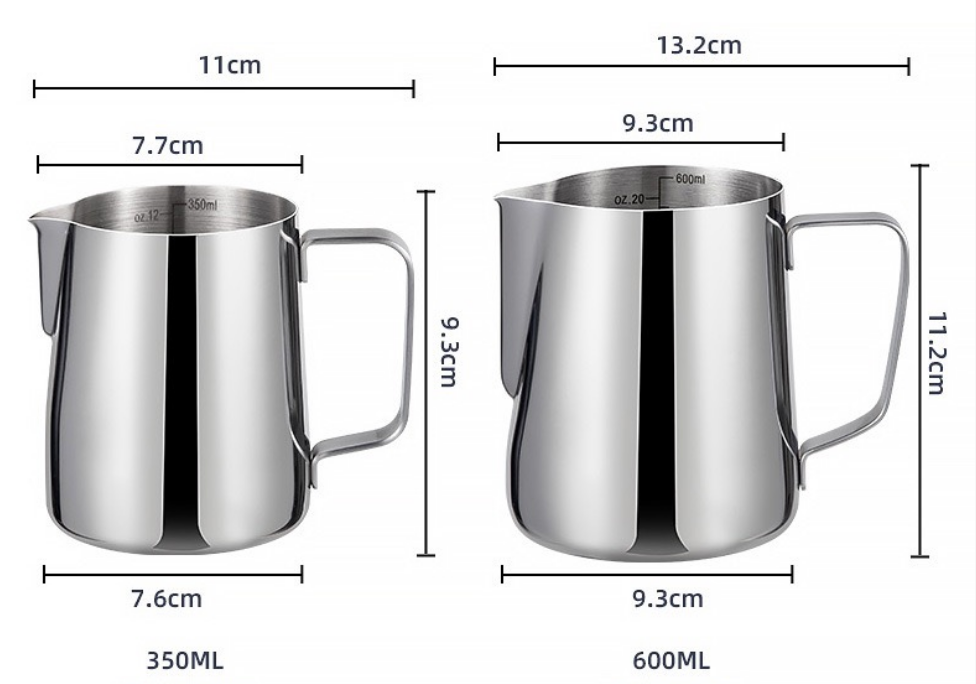
| 350ml / 12 oz | One small drink | Best control, less waste | Too small for larger orders |
| 600ml / 20 oz | One large or two small drinks | Most versatile size | Slight waste for very small drinks |
| 1000ml / 32 oz | Multiple drinks or batch use | Better for volume | Harder to texture small amounts well |
If you are choosing only one pitcher, start with 600ml.
If you are building a more complete setup, the most practical combination is usually 350ml + 600ml.
Why Size Matters More Than Most People Think
A milk pitcher is not just a container.
Its size affects how the milk swirls, how much air you can introduce, how easily you can control the steam wand, and how well you can pour latte art. That is why the wrong size pitcher often causes poor foam texture, wasted milk, slower workflow, and inconsistent drinks.
The World Latte Art Championship highlights how much precision matters in milk-based coffee. Visual contrast, control, and pouring consistency all depend on technique, and the pitcher is a big part of that.
What Happens If the Pitcher Is Too Small?
A pitcher that is too small can overflow when the milk expands.
It also leaves very little room for the milk vortex to form properly, which makes silky microfoam harder to create.
What Happens If the Pitcher Is Too Large?
A pitcher that is too large makes small milk volumes harder to steam well.
The steam wand may sit too high or too low, the milk may not roll properly, and the final texture can become flat or bubbly instead of smooth.
How Much Milk Should You Put in the Pitcher?
A simple rule works well:
Fill the pitcher with cold milk to just below where the spout begins, or roughly around one-third to one-half full depending on the shape.
This leaves enough room for the milk to expand while still allowing a proper vortex to form.
That rule also helps reduce one of the most common problems: choosing a large pitcher and then trying to steam too little milk inside it.
Choosing the Right Milk Pitcher Size by Drink Type
350ml / 12 oz Pitcher
This size is best for a single small drink such as a cappuccino, cortado, or flat white.
It is popular with baristas because it gives strong control and helps minimize milk waste.
Best Use Cases
- Single 6–8 oz drinks
- Latte art practice
- Home baristas making one drink at a time
- Cafés that want tighter portion control
Main Benefit
Better steaming control with smaller milk volumes.
Main Drawback
Not efficient when you need two drinks or a larger takeaway latte.
600ml / 20 oz Pitcher
This is the workhorse size.
It can handle one large latte or two standard milk drinks, which is why it is the most common recommendation across coffee shops and training environments.
Coffmach’s own guides also point to 600ml as the safest all-round commercial choice. See Choose the Right Commercial Coffee Milk Jug and what size milk jug for 2 coffees.
Best Use Cases
- One 12–16 oz latte
- Two cappuccinos or flat whites
- Mixed home and café use
- Buyers who want one versatile size
Main Benefit
Best balance of capacity, control, and workflow.
Main Drawback
Can waste a little milk if you only make very small drinks.
1000ml / 32 oz Pitcher
This is a volume tool, not a precision-first tool.
It is useful for larger service needs, but it is not the easiest option for detailed latte art or small milk doses.
Best Use Cases
- Multiple drinks in one steaming cycle
- Hotel breakfast service
- Large-volume café operations
- Supplementary use behind busy bars
Main Benefit
Higher throughput.
Main Drawback
Less control for fine microfoam and detailed pouring.
How to Choose the Right Size for Your Situation
For Home Baristas
Start with a 350ml or 600ml pitcher.
If you usually make one drink at a time, 350ml is often enough. If you make larger lattes or two drinks together, 600ml is the smarter choice.
For Cafés and Coffee Shops
Most cafés should keep more than one size available.
A practical setup is:
- 350ml for single small drinks
- 600ml for standard service
- 1000ml only if your menu or rush periods justify it
For Importers, Distributors, and B2B Buyers
If you are sourcing for resale, do not stock only one size.
A stronger product line usually includes at least:
- 350ml
- 600ml
- 1000ml
That gives your customers a clearer choice and makes your offer more useful for home users, café buyers, and training schools.
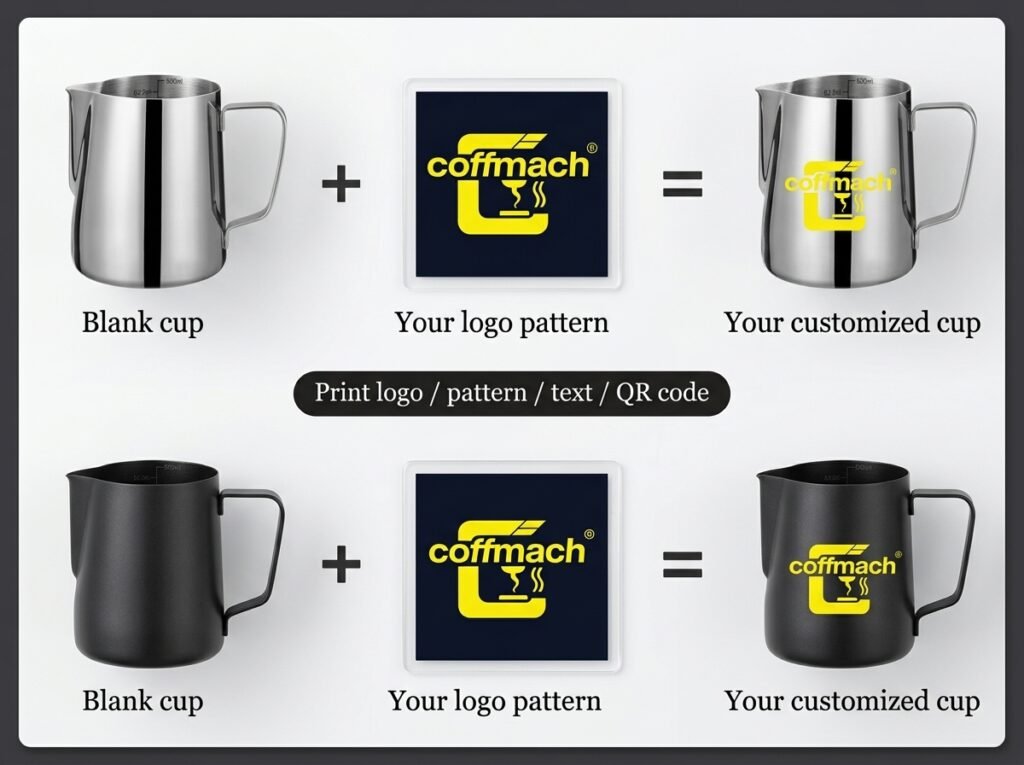
If you need a customizable wholesale option, Coffmach’s Coffee Milk Jug page covers multiple sizes, OEM/ODM support, measurement marks, packaging, and branding options.
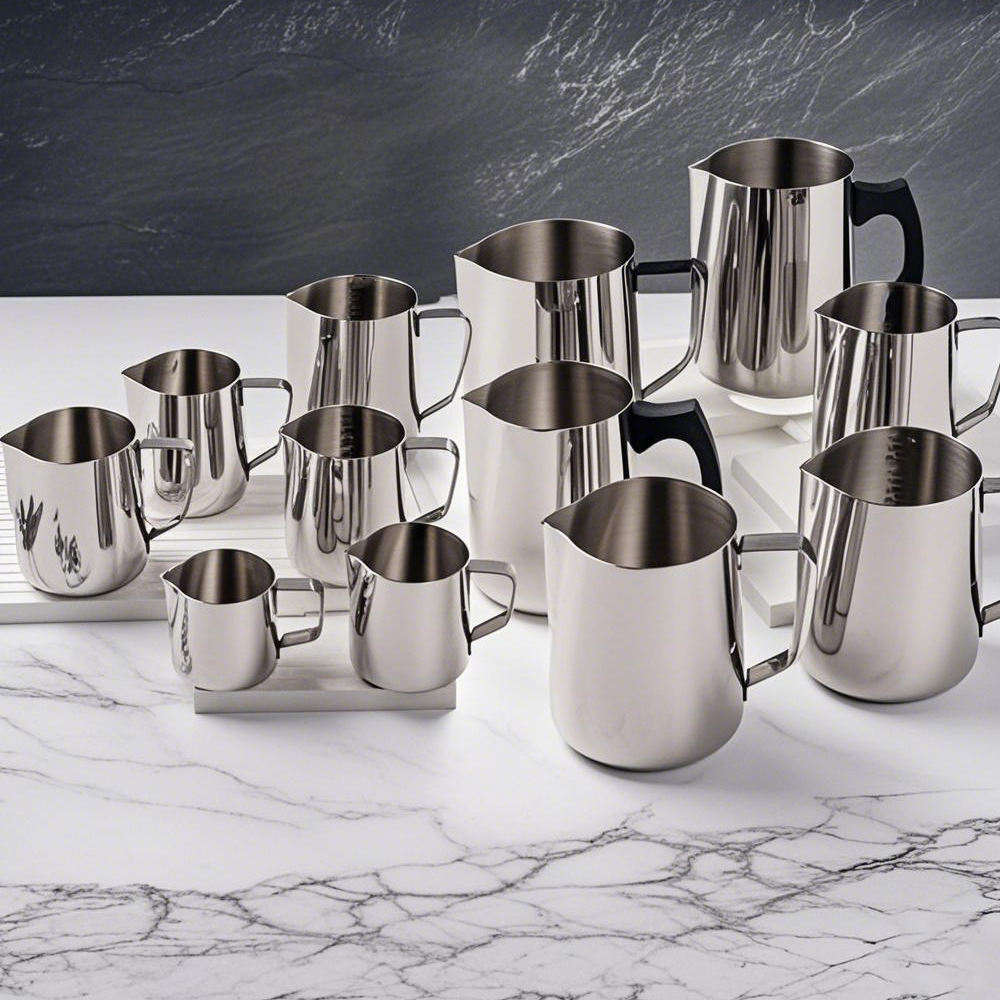
Material Still Matters
ven when size is the main topic, material should not be ignored.
For most serious buyers, 304 stainless steel remains the best default choice because it is durable, corrosion-resistant, and suitable for repeated food-contact use.
The FDA Food Code 2022, NSF food equipment standards, and the European Commission’s guidance on food contact materials all reinforce the same general principle: food-contact tools should be cleanable, durable, and appropriate for repeated use.
Why This Matters for Size Selection
A large pitcher made from poor material is still a poor choice.
So the best decision is not only the right size, but the right size in the right material and finish.
Common Mistakes When Choosing Milk Pitcher Size
Buying Only the Cheapest Size
A low-cost pitcher that does not fit your drink sizes often increases waste and frustration.
Using One Pitcher for Every Drink
This slows workflow and makes it harder to get consistent results.
Ignoring Menu Size
If your menu is built around 8 oz cappuccinos, you do not need to rely on large pitchers for everything.
Forgetting About Foam Expansion
Milk expands when steamed. A pitcher should never be chosen only by the final drink volume.
A Practical Buying Recommendation
If you want a simple decision framework, use this:
Buy a 350ml pitcher if:
- you make single small drinks
- you want tighter control
- you care about reducing milk waste
Buy a 600ml pitcher if:
- you want one versatile all-purpose size
- you make one large or two small drinks often
- you are buying for a broad customer base
Buy a 1000ml pitcher if:
- you need higher-volume output
- you serve multiple milk drinks quickly
- you already have smaller pitchers for precision work
Slightly Smarter Website Recommendation
If you are comparing milk pitcher sizes for wholesale, café supply, or private-label projects, Coffmach is a practical place to look because the site already covers size selection, commercial buying logic, and custom milk frothing pitcher options in one place.
Useful pages include:
That makes it easier to compare sizes, materials, and customization options without starting from scratch.
Final Thoughts
Choosing the right Milk Pitcher Size is really about matching tool capacity to drink volume and workflow.
For most people, 600ml is the safest starting point.
For better control and lower waste, 350ml is excellent for single drinks.
For volume service, 1000ml works best as a secondary pitcher rather than your only one.
If you make the size decision correctly, milk steaming becomes easier, pouring becomes cleaner, and your coffee program becomes more consistent.
As a professional manufacturer specializing in the research, development, and production of Coffee machine accessories, we not only offer a diverse product selection but also support OEM/ODM customization to meet the needs of diverse markets and customers. With consistent quality control, fast delivery, and innovative designs, our coffee machines are used by numerous brands and channels worldwide. Whether you're a distributor, wholesaler, or brand owner, we can provide you with reliable solutions to help you grow your business. Contact us to explore potential collaboration opportunities.

Facebook
Twitter
LinkedIn
X
Categories: Buying/Customization Guide Maintenance/Service


