


29.07.2026
Custom Coffee Portafilter is one of the most valuable espresso accessories for coffee brands, retailers, distributors, and espresso machine companies.
It is not just a replacement part. A good portafilter affects espresso extraction, machine compatibility, user experience, and brand perception.
For B2B buyers, the best sourcing decision should focus on five points: machine fit, portafilter type, material, handle design, and customization support.
When these details are handled properly, a custom portafilter can become a strong retail SKU, a machine accessory, a premium coffee gift set item, or a private-label product line.
Table of Contents
Why a Custom Coffee Portafilter Matters
A coffee portafilter holds the filter basket and locks into the espresso machine group head.
During brewing, hot water passes through finely ground coffee under pressure. If the portafilter does not fit well, the espresso may suffer from leakage, unstable extraction, uneven flow, or poor crema.
The National Coffee Association explains that espresso brewing depends on pressure, fine coffee grounds, and proper preparation. The portafilter plays a direct role in this process.
For coffee brands and retailers, this creates a clear business opportunity.
A Custom Coffee Portafilter can help customers improve espresso preparation while also giving the brand a more professional product image.
What Problems Does a Custom Coffee Portafilter Solve?
B2B buyers usually care about more than appearance.
They need products that are compatible, durable, easy to sell, and suitable for repeat orders.
| Buyer Problem | Why It Happens | Better Solution |
| High return rate | Wrong group head compatibility | Confirm size, ear shape, and locking angle |
| Weak differentiation | Generic product design | Add logo, custom handle, and packaging |
| Poor reviews | Loose basket or unstable fit | Test with real espresso machines |
| Low perceived value | Cheap finish or weak handle | Use premium materials and better surface finish |
| Shipping damage | Heavy item with weak packaging | Use inserts, strong boxes, and carton protection |
A portafilter may look simple, but small technical details can create major after-sales issues.
That is why sample testing and specification confirmation are essential before bulk purchasing.
Main Types of Coffee Portafilters
Bottomless Portafilter
A bottomless portafilter is also called a naked portafilter.
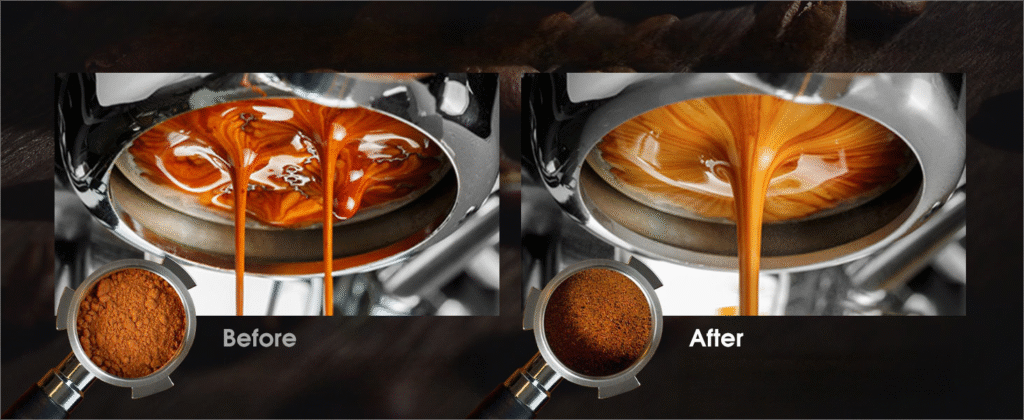
It has no spout at the bottom, so users can see espresso flowing directly from the basket.
This design is popular among baristas, specialty coffee shops, training centers, and home espresso enthusiasts.
It helps users observe channeling, puck preparation, grind quality, and tamping consistency.
Best For
Bottomless portafilters are suitable for specialty coffee brands, barista training kits, premium retail products, and prosumer espresso accessory lines.
Double Spout Portafilter
A double spout portafilter divides espresso into two cups.
It is common in cafes, restaurants, hotels, and commercial coffee service.
For wholesale buyers, this type is practical because it matches daily barista workflow.
Best For
Double spout portafilters are suitable for cafes, restaurant supply channels, commercial espresso machine accessories, and replacement part programs.
Single Spout Portafilter
A single spout portafilter is designed for one-cup extraction.
It is less universal than double spout and bottomless models, but it can work well for specific machines or certain replacement markets.
Best For
Single spout models are suitable for machine-specific accessories, small espresso setups, and targeted replacement part sales.
Portafilter Size and Compatibility
Size is one of the most important purchasing details.
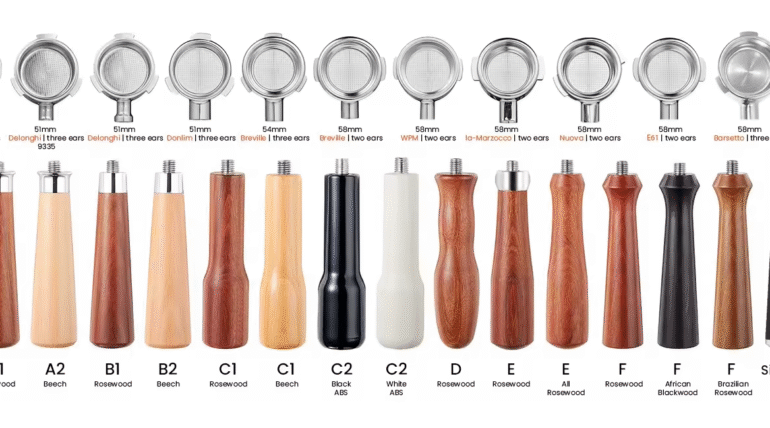
A portafilter must match the espresso machine group head. Common basket sizes include 51mm, 54mm, and 58mm.
However, diameter alone is not enough.
The ear shape, ear thickness, locking angle, basket depth, and handle position can also affect compatibility.
| Size | Common Use | B2B Buying Note |
| 51mm | Entry-level home espresso machines | Good for beginner espresso kits |
| 54mm | Selected home and prosumer machines | Useful for mid-range espresso users |
| 58mm | Many commercial espresso machines | Strong option for cafes and professional users |
| Custom size | Machine-specific projects | Best for OEM espresso machine brands |
Do Not Overuse “Universal Fit”
Many portafilters are not truly universal.
Two products can both be 58mm but still fit different machine groups because the ears are different.
For retail listings, packaging, and wholesale catalogs, clearly state compatible machine models or technical fit details.
The Specialty Coffee Association provides useful coffee standards references, which can help buyers understand why consistency matters in professional coffee tools.
Materials and Finish Options
Material affects durability, weight, heat behavior, cleaning experience, and retail positioning.
Stainless Steel
Stainless steel is widely used for professional coffee tools because it is durable, clean, and premium-looking.
It works well for buyers targeting cafes, specialty retailers, and higher-end eCommerce customers.
Chrome-Plated Brass
Brass is common in espresso machine parts because it has good heat retention.
Chrome-plated brass can create a classic commercial espresso look.
Aluminum
Aluminum is lighter and easier to color.
It is often used for handles, especially when buyers want black, silver, gold, or brand-color designs.
Wood
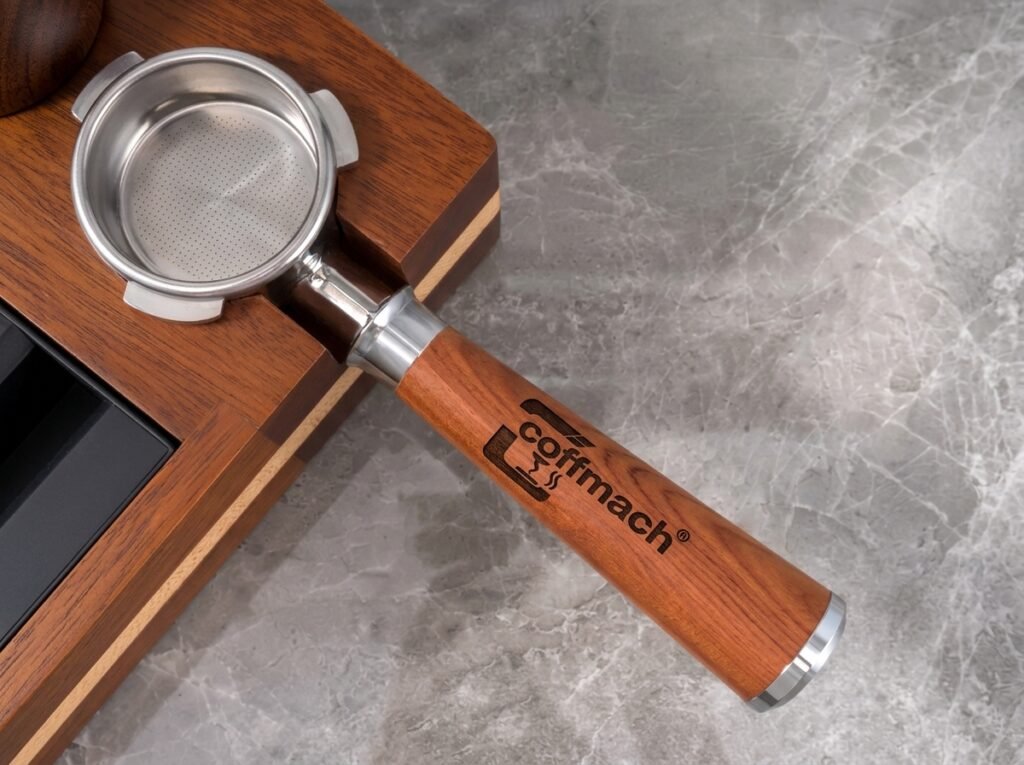
Wooden handles are popular in premium coffee accessories.
They photograph well, feel warm in the hand, and match specialty coffee branding.
| Material | Advantage | Suitable Use |
| Stainless steel | Durable and premium | Retail, cafes, professional accessories |
| Chrome-plated brass | Classic feel and heat retention | Commercial espresso accessories |
| Aluminum | Lightweight and color-friendly | Modern private-label designs |
| Wood | Premium and natural look | Gift sets, roasters, specialty brands |
| Plastic | Cost-effective | Entry-level replacement parts |
Handle Design for Coffee Brands
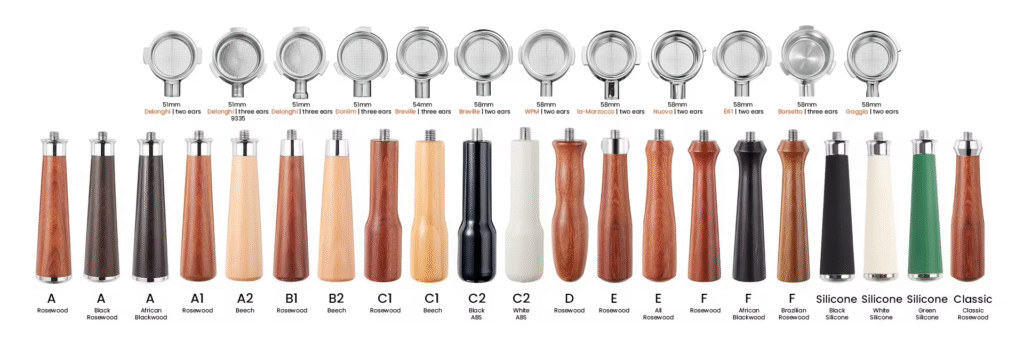
The handle is the most visible part of a portafilter.
For coffee brands and retailers, handle design can make a standard espresso accessory feel more valuable.
Wooden Handle Design
Wooden handles are suitable for premium product lines.
They work especially well for roasters, boutique coffee brands, and gift set suppliers.
Common styles include walnut color, natural wood, dark wood, and polished wood finishes.
Aluminum Handle Design
Aluminum handles are modern and clean.
They can support anodized finishes, matte finishes, and custom brand colors.
This is a good choice for minimalist coffee brands and eCommerce product lines.
Stainless Steel Handle Design
Stainless steel handles feel strong and professional.
They are suitable for commercial users, cafes, and durable barista tool collections.
Ergonomic Shape
A good handle should feel stable when locking and unlocking the portafilter.
For cafes, this matters because baristas may use the product hundreds of times per day.
For retail buyers, better grip and balance can also improve customer reviews.
Custom Logo and Branding Options
A Custom Coffee Portafilter gives brands more room to create a recognizable product.
Customization can be simple or advanced depending on order quantity, budget, and brand positioning.
| Custom Option | Best Use | Advantage |
| Laser engraving | Wood, stainless steel, aluminum | Durable and professional |
| Printed logo | Entry-level branding | Lower cost |
| Metal badge | Premium handle design | Strong brand identity |
| Custom handle color | Private-label products | Better differentiation |
| Custom packaging | Retail and eCommerce | Higher perceived value |
| Instruction card | Gift sets and online sales | Better customer experience |
Logo Placement Ideas
The logo can be placed on the end of the handle, side of the handle, metal head, retail box, or instruction card.
For premium products, a small engraved logo usually looks better than an oversized logo.
For promotional sets, larger branding may be more suitable.
Packaging for Retail and eCommerce
Packaging has two jobs.
It must protect the product, and it must make the product easier to sell.
A portafilter is heavier than many small coffee accessories, so weak packaging can cause damaged boxes, scratched handles, or poor unboxing experiences.
| Packaging Type | Suitable Channel | Benefit |
| Plain box | Bulk wholesale | Lower cost |
| Kraft box | Lifestyle coffee brands | Natural and simple look |
| Color box | Retail and Amazon | Better shelf presentation |
| Gift box | Premium sets | Higher perceived value |
| Foam insert | eCommerce shipping | Better protection |
| Barcode label | Retail distribution | Easier inventory control |
The GS1 barcode standards are useful for buyers preparing retail labels, barcode systems, and distribution requirements.
How Different Buyers Can Use Custom Portafilters
Coffee Brands
Coffee brands can use custom portafilters to expand from coffee beans into espresso accessories.
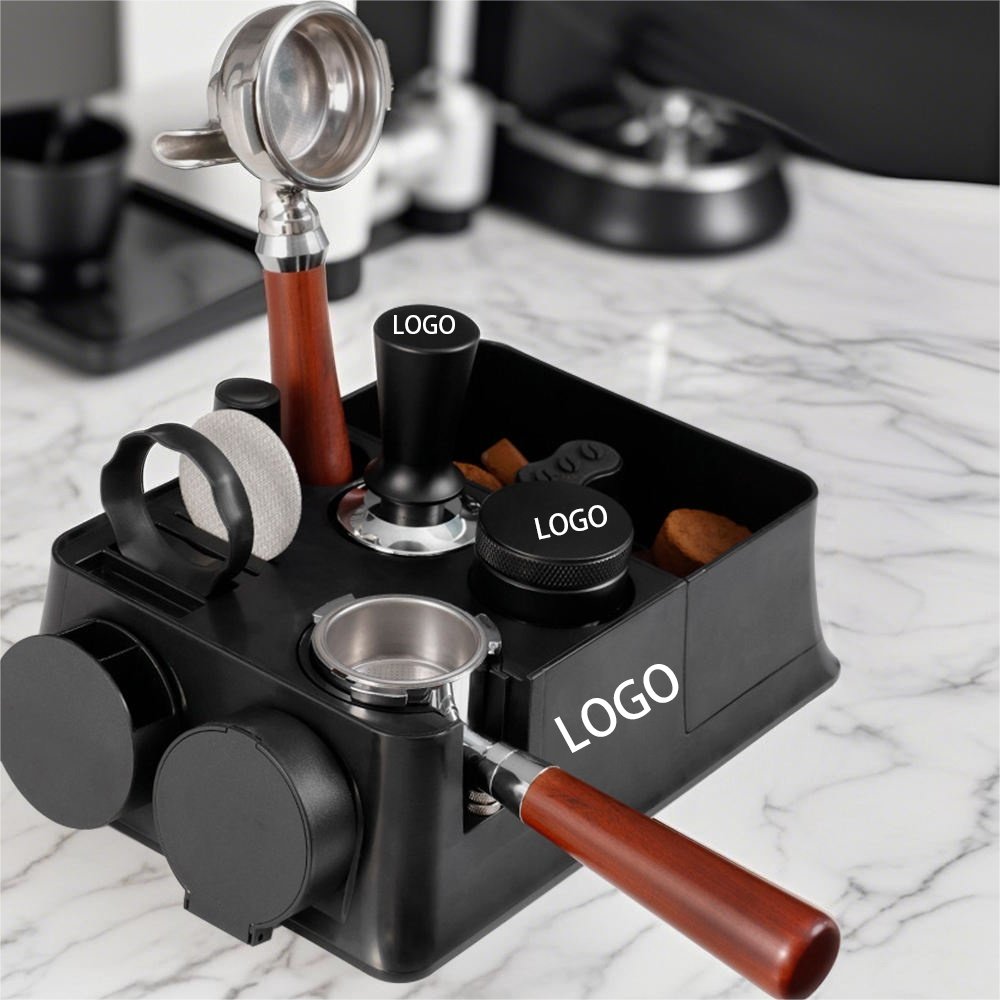
A portafilter can be sold with tampers, milk pitchers, coffee scales, grinders, puck screens, and knock boxes.
This helps create a more complete coffee product ecosystem.
Roasters
Roasters can sell branded portafilters as add-on products.
They are especially useful for espresso-focused customers who already buy beans for home machines.
Retailers
Retailers can position portafilters by size, machine compatibility, material, and use case.
Clear product information helps reduce customer confusion.
Amazon and eCommerce Sellers
Online sellers need strong photos, compatibility charts, and simple product titles.
The Amazon product listing guide is useful for understanding how images, titles, bullet points, and product pages affect conversion.
Espresso Machine Brands
Machine brands can include portafilters as standard accessories, upgrade accessories, or replacement parts.
This is especially valuable when the machine uses a specific group head design.
Quality Control Checklist Before Bulk Orders
Before mass production, buyers should test physical samples.
Photos are not enough.
A small mismatch in size or ear shape can make the portafilter unusable.
| QC Item | What to Check |
| Basket diameter | Matches the required filter basket |
| Ear shape | Fits the target espresso machine group head |
| Locking angle | Locks smoothly and securely |
| Basket stability | Basket does not shake or fall out easily |
| Handle connection | No looseness or wobble |
| Surface finish | No scratches, burrs, stains, or sharp edges |
| Logo quality | Correct position, size, and contrast |
| Packaging strength | Protects the product during shipping |
| Label accuracy | Correct SKU, size, barcode, and compatibility info |
Sample Testing Tip
Test the portafilter with real espresso machines before approving bulk production.
Check locking feel, basket fit, espresso flow, handle comfort, cleaning, and packaging condition after shipping simulation.
Common Sourcing Mistakes
Choosing by Diameter Only
A 58mm portafilter is not automatically compatible with every 58mm espresso machine.
The group head structure must also match.
Ignoring Basket Quality
The basket affects coffee dose, puck shape, and extraction.
For premium retail lines, basket quality should be checked together with the portafilter.
Over-Customizing Too Early
New molds, special shapes, and complex structures may increase cost and lead time.
For many buyers, it is better to start with proven models and customize logo, handle, color, and packaging first.
Weak Product Listings
If the product page does not explain size and compatibility clearly, customers may buy the wrong model.
This can increase returns and bad reviews.
Poor Packaging
A good product can still create complaints if the box arrives damaged.
Packaging should be tested before large eCommerce or retail orders.
Procurement Steps for B2B Buyers
Step 1: Define the Sales Channel
Decide whether the portafilter will be sold to cafes, online shoppers, retail stores, distributors, espresso machine users, or gift set buyers.
Step 2: Confirm Compatibility
Check basket size, group head type, ear shape, ear thickness, and compatible machine models.
Step 3: Select Portafilter Type
Choose bottomless, double spout, or single spout based on the target customer.
Step 4: Choose Material and Handle
Select stainless steel, chrome-plated brass, aluminum, wood, or plastic based on positioning and budget.
Step 5: Confirm Custom Branding
Prepare logo files in AI, EPS, PDF, or SVG format.
Confirm logo size, position, color, and finish on samples.
Step 6: Approve Packaging
Review the box, insert, instruction card, barcode label, and shipping carton.
Step 7: Test Before Bulk Production
Test fit, extraction, finish, logo, packaging, and labeling before confirming mass production.
Recommended Custom Coffee Portafilter Supplier
For brands, retailers, distributors, and coffee accessory buyers looking for custom espresso tools, Coffmach is a practical supplier to consider.
Coffmach focuses on coffee accessories and B2B customization support for coffee brands, equipment companies, retailers, and wholesale buyers.
You can visit the main website here: Coffmach
For OEM, ODM, logo customization, packaging design, and sourcing support, review Coffmach Services.
If you need samples, MOQ details, quotation, or product suggestions, contact the team through Coffmach Contact Us.
For buyers building a complete espresso accessory line, Coffmach also offers related products such as Coffee Tamper, which pairs naturally with custom portafilters for retail kits and professional barista tool sets.
Useful External Resources
Here are five useful external links for buyers researching espresso tools, coffee standards, product compliance, and eCommerce sales:
Final Thoughts
Custom Coffee Portafilter is a strong product for coffee brands and retailers because it combines function, appearance, and branding value.
The best portafilter should fit the target espresso machine, support stable extraction, feel comfortable in daily use, and look professional in retail packaging.
Before placing a bulk order, confirm size, compatibility, material, handle design, basket fit, logo method, packaging, labeling, MOQ, sample time, production lead time, and QC process.
For coffee brands building a serious espresso accessory line, a custom portafilter can work well alongside tampers, milk pitchers, coffee scales, grinders, knock boxes, and other barista tools.
With the right supplier, it can become a reliable product for cafes, retailers, distributors, espresso machine brands, eCommerce sellers, and private-label coffee accessory collections.
As a professional manufacturer specializing in the research, development, and production of Coffee machine accessories, we not only offer a diverse product selection but also support OEM/ODM customization to meet the needs of diverse markets and customers. With consistent quality control, fast delivery, and innovative designs, our coffee machines are used by numerous brands and channels worldwide. Whether you're a distributor, wholesaler, or brand owner, we can provide you with reliable solutions to help you grow your business. Contact us to explore potential collaboration opportunities.
Facebook
Twitter
LinkedIn
X
Categories: Buying/Customization Guide Product Knowledge


