


10.12.2025
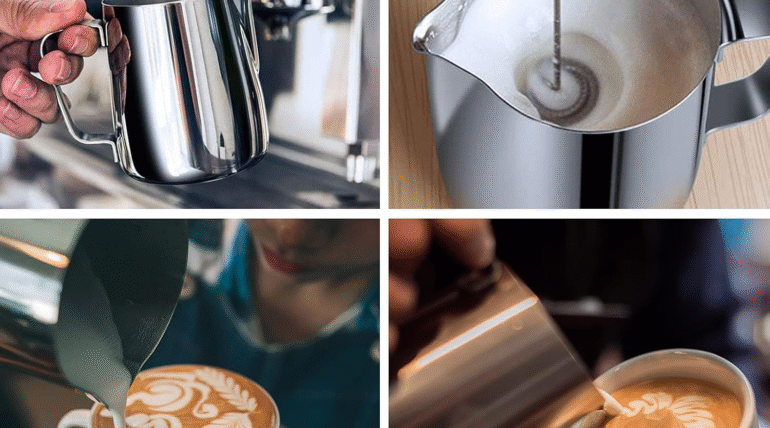
Most cafes and coffee professionals choose stainless steel coffee milk jugs. There’s a good reason for this. The reason why cafes prefer stainless steel coffee milk jugs comes down to four key factors: unmatched durability, superior thermal performance for steaming milk, excellent hygiene standards, and long-term cost savings.
This isn’t just a trend. It’s a smart business decision that affects quality, consistency, and daily operations in busy commercial environments.
This guide explains the specific reasons behind this industry choice. We’ll provide detailed analysis for cafe owners, procurement managers, distributors, and baristas who want to understand or justify this essential investment in commercial coffee equipment.
The Unbeatable Material
Stainless steel isn’t just better—it’s proven by science. In a professional cafe where tools get heavy use, the material you choose affects performance, safety, and profits. Stainless steel fits perfectly in this demanding environment.
Built for Durability
Commercial cafes are tough on equipment. Milk pitchers get dropped, banged against portafilter baskets to knock out grounds, and run through high-temperature dishwashers dozens or hundreds of times daily.
Glass or ceramic alternatives might look nice, but they’re too fragile for this reality. One drop can cause a shatter or chip. This creates immediate safety hazards from broken pieces and disrupts service.
Stainless steel is exceptionally tough. Its high impact resistance means it can handle the daily beating of a busy coffee bar without denting easily, cracking, or breaking. This strength ensures a long service life, making it reliable day after day.
Science of Cleanliness
Hygiene is critical in any food service operation. Stainless steel has one property that makes it the gold standard for food safety: it’s non-porous.
This smooth, non-porous surface prevents milk residue, oils, and bacteria from soaking in. It doesn’t hold onto old flavors or odors—a problem called “flavor ghosting.” This ensures each coffee beverage tastes pure and clean.
Food-grade stainless steel, typically grades like 304 (also called 18/8 for its 18% chromium and 8% nickel content), is often required by health regulations. Its compliance with standards from food safety authorities like NSF International confirms it’s suitable for professional use.
Resisting the Elements
A milk jug constantly faces moisture, acidic elements from coffee, and harsh cleaning agents. Materials not suited for this environment break down quickly.
Stainless steel resists corrosion and rust exceptionally well. This happens because of a microscopic layer of chromium oxide that naturally forms on its surface. This layer protects the iron content from oxidation and repairs itself. This keeps the jug looking new even after years of use, as explained by material science resources like the British Stainless Steel Association.
Its chemical neutrality means it never adds a metallic taste to milk. This preserves the delicate flavor profile that roasters and baristas work hard to achieve.
Material Advantage Summary
- Impact Resistance: Nearly unbreakable in normal commercial settings.
- Non-Porous Surface: Guarantees top hygiene and prevents flavor transfer.
- Corrosion-Proof: Withstands daily washing and contact with acidic dairy.
- Heat Tolerant: Doesn’t warp or break down under high temperatures from steam wands.
Performance Under Pressure
Beyond material properties, the stainless steel milk pitcher is an essential performance tool for baristas. It becomes an extension of their hand. It provides the feedback and control needed to craft consistently high-quality beverages. This is why baristas, from beginners to champions, demand it.
Temperature Control Art
Perfect steamed milk depends on temperature. The goal is heating milk to around 60-65°C (140-150°F). Below this temperature, the flavor is weak. Above it, proteins break down, creating a scalded, unpleasant taste.
Stainless steel’s excellent heat conduction is the barista’s best friend in this process. It lets them use their hand as a precise thermometer, providing critical touch feedback.
The process is natural for a trained barista:
- The pitcher feels cold at the start of steaming.
- As steam is injected and milk aerates, gradual, even warmth spreads across the jug’s surface.
- When the pitcher becomes too hot to hold comfortably, the ideal temperature has been reached.
This direct feedback disappears with insulated, double-walled, or thick ceramic jugs. Without it, baristas work blindly, often needing separate thermometers. This slows workflow and creates another item to clean.
Consistency is King
Successful cafes are built on consistency. Customers expect their favorite latte to taste and feel the same every time. A stainless steel milk pitcher helps achieve that repeatability.
Because the material heats evenly, it helps create consistent milk texture—silky microfoam—from top to bottom of the pitcher. This reliability is crucial when serving hundreds of drinks during peak hours.
This consistency also makes training new baristas easier. They can quickly learn to feel the correct temperature and produce milk that meets the cafe’s quality standards. This process focus is a core principle emphasized by professional bodies like the Specialty Coffee Association (SCA), which champions global coffee standards.
Ergonomics and Control
The final step, pouring latte art, tests precision. Professional milk frothing pitchers are designed specifically for this task.
The weight and balance of a stainless steel jug are predictable and manageable. The handle provides a secure, comfortable grip that reduces wrist strain during long shifts.
Most importantly, the spout allows precise control over milk flow rate. A well-designed spout lets baristas switch between a faster stream for the base and a fine, controlled trickle for creating detailed patterns. This level of control isn’t possible with a poorly designed pitcher.
The Business Case
For cafe owners, procurement managers, and wholesalers, choosing stainless steel coffee milk jugs is a strategic financial decision. It’s about optimizing Total Cost of Ownership (TCO) and ensuring operational strength.
Beyond Sticker Price
TCO is a critical business metric. It forces evaluation beyond initial purchase price to include all costs associated with an asset over its entire lifecycle. The cheapest upfront option is rarely the most cost-effective long-term.
When evaluating milk jugs, TCO includes initial cost, replacement frequency due to breakage or wear, service interruption costs, and ongoing cleaning and maintenance expenses. Stainless steel excels across all these long-term measures.
Material Showdown
When analyzed through TCO, stainless steel’s value becomes clear compared to common alternatives. The frequent replacement cycle of other materials quickly surpasses their lower initial purchase price.
Feature | Stainless Steel Jugs | Teflon-Coated Jugs | Glass/Ceramic Jugs |
Initial Cost | Moderate | High | Low to Moderate |
Durability | Excellent (High impact resistance) | Poor (Coating scratches/peels) | Very Poor (Easily shatters/chips) |
Avg. Lifespan (Comm.) | 5+ Years | 6-12 Months | 3-6 Months (or first drop) |
Hygiene | Excellent (Non-porous, easy to sanitize) | Good (until coating is compromised) | Good (but can chip, creating havens for bacteria) |
Performance | Excellent (Great thermal feedback) | Poor (Insulating, no temp feedback) | Poor (Poor thermal feedback, heavy) |
Long-Term Cost (TCO) | Lowest | Highest (due to frequent replacement) | High (due to frequent replacement) |
Cost of Downtime
Consider the impact of one broken milk jug during the 8 AM morning rush. The barista must stop, clean up a potentially dangerous spill, find a replacement, and reset their workflow.
This interruption directly translates to lost sales, longer customer wait times, and damaged customer experience. Stainless steel reliability is operational insurance. It prevents small-scale disruptions that can significantly impact profitability, as research on operational inefficiencies in hospitality shows. The cost of these inefficiencies is often explored in publications like the Cornell Hospitality Quarterly.
Streamlining Operations
For wholesalers, distributors, and multi-location coffee chains, standardization is key to efficiency. Stocking one proven product line of stainless steel jugs simplifies inventory management and reduces SKU complexity.
It also ensures brand consistency. Customers should receive the same high-quality beverage at every brand location. Using the same durable, high-performance tools across all locations makes training simpler and guarantees uniform quality standards.
A Buyer's Guide
Selecting the right professional coffee milk jugs involves more than just picking a material. For procurement managers, e-commerce sellers, and cafe owners, understanding the details of size, spout design, and construction is key to making a smart investment.
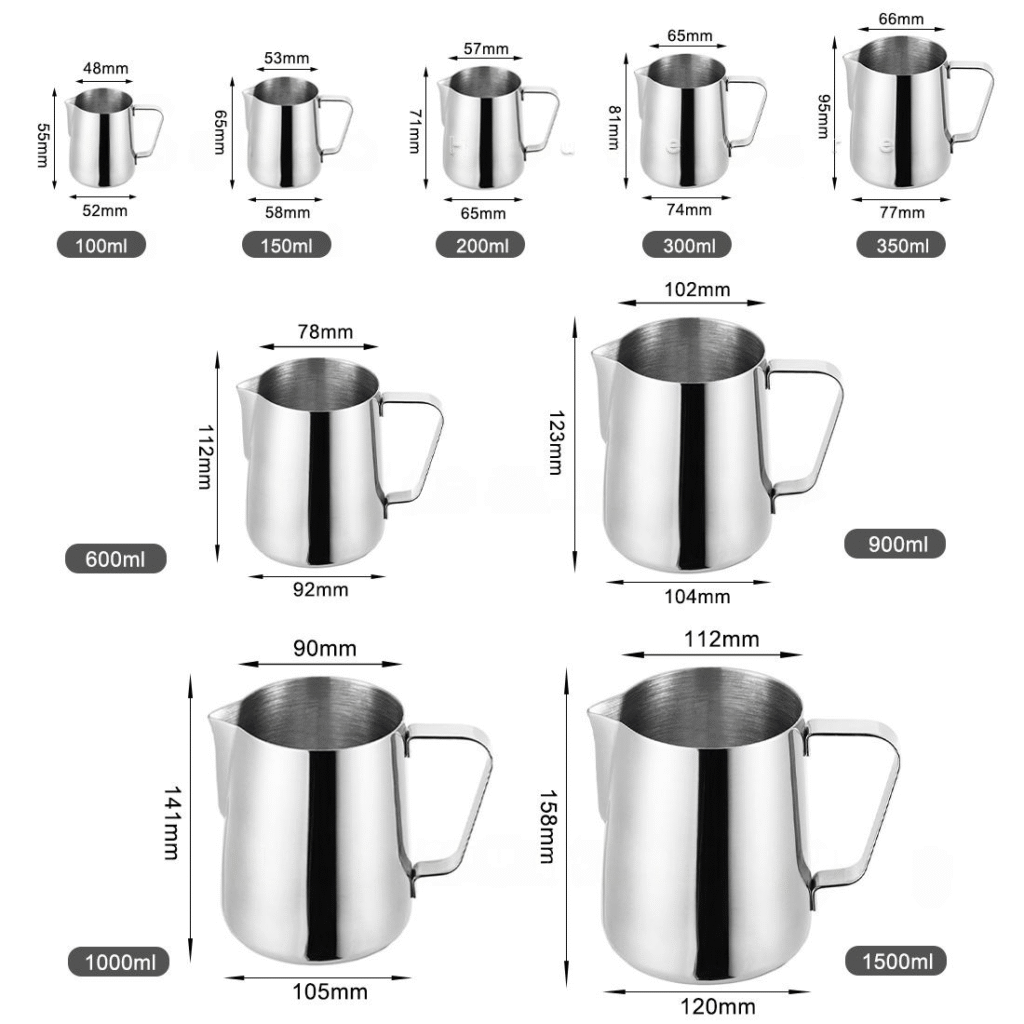
Decoding Jug Sizes
Choosing the correct size is crucial for reducing milk waste and maximizing workflow efficiency. Using a jug that’s too large for a single drink wastes milk. One that’s too small limits steaming capacity.
Jug Size | Primary Use | Best For |
12 oz / 350 ml | Single small lattes, cappuccinos, flat whites, cortados | Low-volume cafes or high-precision single drinks. |
20 oz / 600 ml | The Industry Workhorse. Two small drinks or one large. | Virtually all cafes. The most versatile and essential size. |
32 oz / 900 ml+ | Steaming large quantities for multiple drinks at once. | High-volume cafes, batch preparation, or alternative milk bars. |
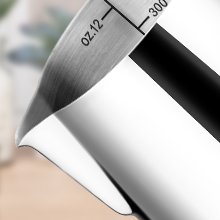
The Spout Matters
Spout design directly impacts latte art potential. The two primary types serve different skill levels and artistic goals.
A classic or round spout is more forgiving and ideal for beginners. It excels at creating bold, basic patterns like hearts and simple rosettas. It provides a consistent and broad milk flow.
A sharp or narrow spout is the preferred tool for advanced baristas. It allows a much finer, more controlled milk stream. This is essential for pouring complex, high-detail patterns like intricate tulips, swans, and other detailed designs.
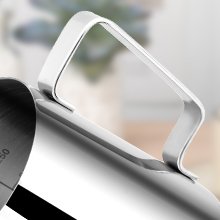
Wall Thickness and Handle
Small construction details separate good pitchers from great ones. Wall thickness balances durability and thermal sensitivity. A wall around 1mm is often considered ideal. It provides a quality feel and strength without significantly reducing temperature feedback.
The handle is another critical component. A handle fully welded to the jug body is far more durable than one that’s just spot-welded. Spot welds can fail under daily use stress, leading to early replacement. An ergonomic handle shape is also vital for reducing barista fatigue and improving pouring stability during long shifts.
Finishes and Customization
While classic polished or brushed stainless steel finish is the industry standard, other options exist. Colored coatings can be used for branding or to designate specific milk types (e.g., blue for soy, black for oat).
When considering coated pitchers, ensure the underlying material is still high-grade stainless steel. The coating is purely aesthetic. Performance and durability come from the steel itself.
Sourcing and Supply
For businesses like cafe chains, wholesalers, and e-commerce sellers, finding a reliable supply partner is as important as choosing the right product. A stable supply chain ensures quality, availability, and cost-effectiveness.
Factory-Direct Advantages
For businesses requiring consistent supply of commercial coffee equipment in bulk, sourcing directly from a manufacturer offers significant advantages. This approach bypasses middlemen, leading to better pricing and greater product control.
Factory-direct partnerships also open doors to superior quality control and custom product development. This is ideal for brands wanting to create unique pitchers with specific branding or design features through OEM/ODM services.
What to Look For
When evaluating a potential manufacturing partner, several key criteria indicate reliability and quality:
- Proven experience working with international brands and understanding their quality standards.
- Strict quality management processes, such as ISO certification, to ensure product consistency.
- Flexible production capacity, able to handle both reasonable Minimum Order Quantities (MOQs) and large-scale, stable production runs.
- Clear communication channels and strong support for OEM/ODM projects.
For businesses seeking a dependable partner meeting these criteria, options from factory-direct suppliers are ideal. For example, a quality Coffee Milk Jug from an experienced manufacturer like Coffmach ensures you receive a product built to professional standards. This is backed by a stable supply chain, a critical component of modern supply chain management.
The Clear Choice
In the final analysis, the reason why cafes prefer stainless steel coffee milk jugs is clear and multifaceted. It’s the only material that perfectly balances the critical demands of the professional coffee world.
It delivers absolute durability against the demands of a busy cafe. It offers flawless performance for baristas, enabling the consistency and artistry that define specialty coffee. It meets the strict hygiene standards required for food service. And finally, it represents the smartest long-term financial decision for the business.
Investing in high-quality stainless steel jugs isn’t an expense. It’s a foundational investment in quality, operational efficiency, and the long-term success of any professional coffee program.
As a professional manufacturer specializing in the research, development, and production of Coffee machine accessories, we not only offer a diverse product selection but also support OEM/ODM customization to meet the needs of diverse markets and customers. With consistent quality control, fast delivery, and innovative designs, our coffee machines are used by numerous brands and channels worldwide. Whether you're a distributor, wholesaler, or brand owner, we can provide you with reliable solutions to help you grow your business. Contact us to explore potential collaboration opportunities.

Facebook
Twitter
LinkedIn
X
Categories: Buying/Customization Guide Product Knowledge


