


09.12.2025
Here’s the clear answer to when making coffee how often should you rinse milk jug: after every single use. No exceptions in a professional setting.
This is the most important rule for café operations.
For busy coffee shops, this practice goes beyond keeping things tidy. It’s essential for consistent flavor, customer safety, smooth operations, and your brand’s reputation. Skip this step, and you’re taking risks no serious business can afford.
This guide goes deeper than that simple rule. We’ll explore why it’s so important, give you a step-by-step process for your team, show you what happens when you don’t follow it, and help you choose the right equipment.
Table of Contents
The Critical "Why"
Understanding why immediate rinsing matters helps reinforce good habits for quality and safety. These aren’t random rules—they’re based on food science.
Flavor Integrity
Leftover milk contains proteins and fats that start to spoil within minutes of being heated.
Even tiny amounts of old milk left in a pitcher will ruin the next drink. It adds sour or “off” flavors that clash with the sweet taste of fresh steamed milk.
When you steam milk, it undergoes chemical changes that create sweetness and smooth texture. Old, burnt milk residue stuck inside the jug interferes with this process. It prevents fresh milk from reaching its full potential and creates a burnt taste.
The Food Safety Imperative
Milk is a TCS food (Time/Temperature Control for Safety). This makes it perfect for fast bacterial growth.
Dangerous bacteria like Listeria, Staphylococcus, and E. coli multiply quickly in milk film left in dirty jugs. This is especially true when jugs sit at room temperature on busy coffee bars.
The danger zone for milk is between 40°F and 140°F (4°C to 60°C). Steam heats milk into this range. A pitcher left on the counter stays in it, creating perfect conditions for bacteria. The U.S. Food & Drug Administration (FDA) provides detailed guidelines on dairy safety.
Equipment Longevity
Your espresso machine’s health depends directly on milk jug cleanliness.
When steaming ends and pressure drops, some milk gets sucked back into the steam wand tip. If you don’t clean and purge the wand right away, this milk stays there.
Over time, this residue hardens inside the wand. It creates stubborn blockages called milk scale.
The results are serious: poor steaming, no microfoam, inconsistent drinks, and expensive repairs or full steam assembly replacement. Proper cleaning protects your investment. Learn more about equipment care at https://coffmach.com/.
The "How": An SOP
A clear cleaning process ensures consistency, speed, and hygiene. This Standard Operating Procedure works for staff training in any professional café.
Immediate Rinse & Purge
Every barista must do this automatically after every milk drink. It should become second nature.
- Pour Milk: Right after you pour textured milk into the cup, start cleaning the jug.
- Rinse Thoroughly: Take the pitcher straight to a rinser or faucet. Use cold water—hot water “bakes” milk proteins onto steel, making them harder to remove. Swirl water to clear all visible milk residue from inside. A built-in pitcher rinser is the industry standard for speed and water savings.
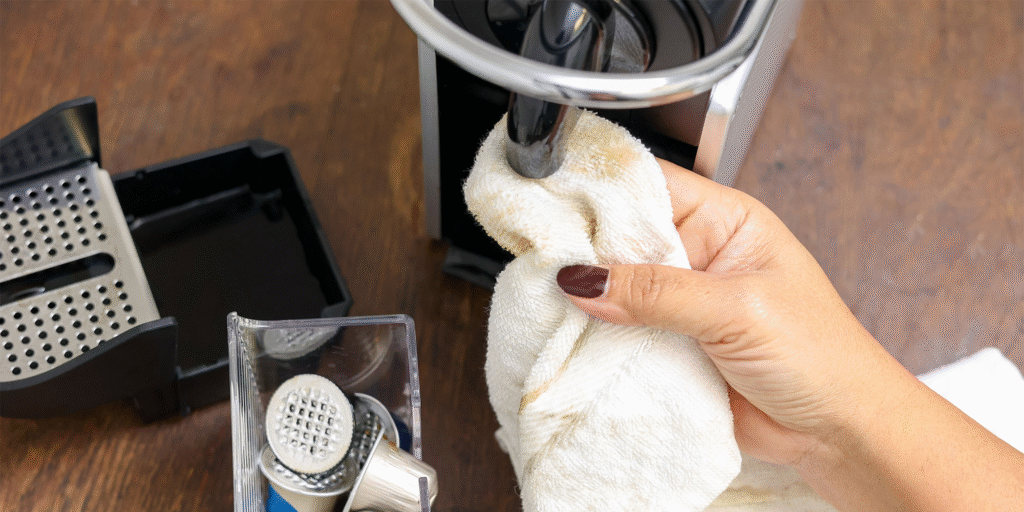
- Wipe Steam Wand: At the same time, use a clean, damp cloth to wipe all milk residue from the steam wand. Use this cloth only for this purpose.
- Purge Steam Wand: Right after wiping, point the wand over the drip tray and purge for 1-2 seconds. This steam blast removes any milk that entered the wand tip, keeping internal pathways clear.
- Store Properly: Place the clean, empty jug upside down on a ventilated drip tray to air dry. This prevents water pooling and keeps it ready for next use.
End-of-Day Deep Clean
Daily deep cleaning is required for proper sanitation and maintenance.
- Soak: At day’s end, put all used milk jugs in a sink filled with hot water and dairy cleaning solution. Products like Rinza break down milk protein and fat buildup.
- Scrub: After soaking for the recommended time (usually 15-30 minutes), use a soft brush to scrub each jug’s interior. Focus on bottom corners and spout interior where residue builds up.
- Rinse and Dry: Rinse each jug thoroughly with clean water to remove cleaning chemicals. Let them air dry completely overnight, upside down on a drying rack. Find professional cleaners at Urnex Brands.
Weekly Maintenance Check
Weekly checks keep your equipment in top condition.
- Check all jugs for hardened milk scale the daily clean might miss. Look for deep scratches or dents inside that can harbor bacteria and resist cleaning.
- Deep clean your steam wands. This often means removing tips and soaking them in dairy cleaner according to your espresso machine manual.
- Following these steps aligns your operation with top professional standards from organizations like the Specialty Coffee Association (SCA).
Choosing Your Jug
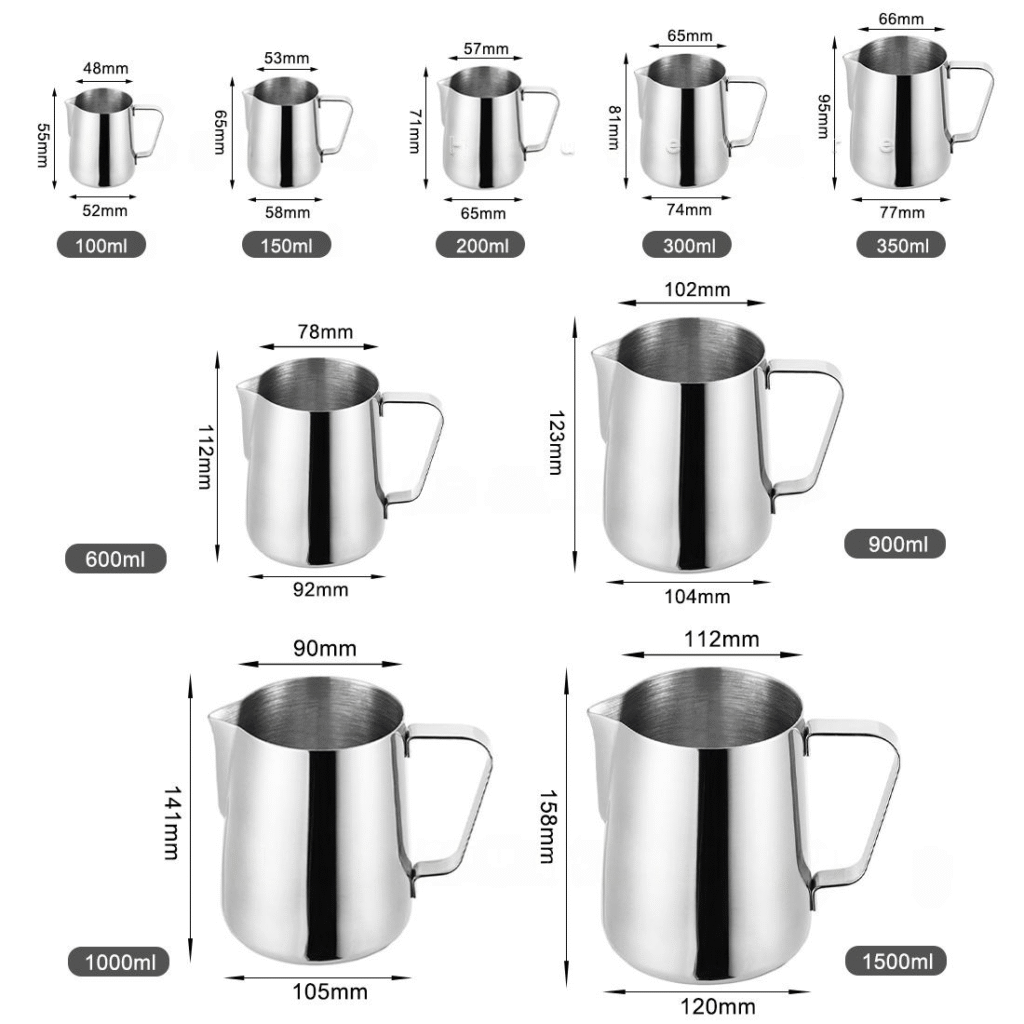
For managers and wholesalers, picking the right professional coffee milk jug affects workflow, quality, and long-term costs. It’s a precision tool, not just a container.
High-Performance Features
Look for these key features in a quality, professional milk jug.
- Material: 304-grade stainless steel is the industry standard. It’s durable, conducts heat evenly, and has a non-porous surface that resists bacteria and cleans easily.
- Spout Design: A sharp, well-defined spout gives you control. It lets baristas pour precisely, which is essential for consistent latte art—a key quality indicator for customers.
- Wall Thickness: Thicker walls insulate better. This gives baristas more time to steam milk to perfect temperature and texture before it gets too hot to handle.
- Handle Design: An ergonomic, open handle offers comfort and control. It reduces wrist strain during long, busy shifts.
- Volume Markings: Etched internal measurement lines add real value. They help baristas pour the right amount of milk for each drink size, cutting waste and ensuring consistency. This directly impacts your profits. For custom solutions or bulk orders, contact our team at https://coffmach.com/contact-us/.
Quality for Bulk Orders
For wholesalers and café chains, consistency across all locations is crucial.
Source from reliable manufacturers who guarantee uniform material, weight, and spout design in every batch. This ensures consistent brand experience.
For businesses wanting durable, professionally designed pitchers meeting these standards, the Coffee Milk Jug from Coffmach is built specifically for high-volume café environments. It ensures both performance and longevity.
The Business Impact
Milk jug hygiene isn’t a minor detail. It significantly affects key business metrics. Understanding this shows managers and owners why it matters.
The Hidden Costs
Poor coffee milk jug cleaning creates hidden costs that hurt profits.
- Increased Milk Waste: Drinks returned by customers or remade due to off-flavors from dirty jugs directly increase your costs.
- Equipment Repair Costs: Clogged steam wands lead to expensive service calls and machine downtime, stopping revenue.
- Damaged Reputation: Poor drink quality causes customer dissatisfaction. One negative review about a “sour” latte or food safety issue can permanently damage your brand.
- Staff Inefficiency: Baristas struggling with poor-performing steam wands or hunting for clean jugs during rushes slow down service. This creates longer waits and frustrated customers.
The ROI of Hygiene
Strong hygiene protocols deliver clear returns across multiple business areas. The difference is dramatic.
Metric | Impact of Poor Hygiene | Benefit of Strict Hygiene Protocol |
Product Quality | Inconsistent flavor, poor texture, scorched notes | Consistently high-quality, sweet, great-tasting beverages |
Customer Loyalty | Decreased loyalty, negative online reviews | Increased repeat business, positive word-of-mouth |
Milk Waste | High, due to frequent re-makes and discards | Minimized, due to precise pours and consistency |
Equipment Costs | Frequent repairs, shorter equipment lifespan | Reduced maintenance needs, extended machine lifespan |
Staff Morale | Frustration from poor tools, workflow friction | Smooth, efficient workflow, pride in craftsmanship |
Compliance | High risk of health code violations and fines | Confident adherence to all food safety standards |
Great customer experience drives retention and growth in service industries. This is emphasized by publications like Harvard Business Review.
Common Mistakes
Even with procedures in place, common mistakes can undermine café hygiene. Identifying and training against them ensures operational excellence.
- Mistake 1: Using one cloth for everything. Wiping steam wands with the same cloth used for counters or portafilters creates major cross-contamination risk.
- Solution: Use a strict, color-coded cloth system. Blue cloths for steam wands only, green cloths for countertops. These are available from any major restaurant supply store.
- Mistake 2: “Batch Rinsing” after rushes. Letting dozens of used milk jugs pile up for later rinsing allows milk to dry and bacteria to grow.
- Solution: Enforce the “rinse immediately” rule as non-negotiable workflow. Place pitcher rinsers strategically to make immediate rinsing the easiest action for baristas.
- Mistake 3: Storing wet jugs nested. Stacking wet jugs inside each other traps moisture, creating dark, damp conditions perfect for bacteria.
- Solution: Require all clean jugs to be stored upside down on ventilated drip trays or drying racks. This allows complete air circulation and drying.
- Mistake 4: Skipping daily deep clean. Treating end-of-day chemical soaking as optional or skippable on busy nights.
- Solution: Make deep cleaning a mandatory checklist item requiring sign-off. Ensure your team has proper tools and supplies. For bulk accessory solutions that simplify cleaning, contact our team.
Hygiene as a Pillar
Mastering milk pitcher maintenance is fundamental to professional coffee craft. It separates amateurs from professionals.
We’ve established three essential levels of professional coffee milk jug cleaning: immediate rinse after every use, daily deep clean with chemical solution, and regular weekly inspection.
This rigorous approach to coffee milk jug hygiene isn’t a chore. It’s a core part of operational excellence—showing respect for your quality coffee, expensive equipment, and most importantly, your customers.
A clean, cold milk jug is the blank canvas for every great milk-based coffee. Master this simple but critical discipline, and your coffee business builds an unshakable foundation for quality, safety, and lasting success.
As a professional manufacturer specializing in the research, development, and production of Coffee machine accessories, we not only offer a diverse product selection but also support OEM/ODM customization to meet the needs of diverse markets and customers. With consistent quality control, fast delivery, and innovative designs, our coffee machines are used by numerous brands and channels worldwide. Whether you're a distributor, wholesaler, or brand owner, we can provide you with reliable solutions to help you grow your business. Contact us to explore potential collaboration opportunities.

Categories: Coffee/Brewing Tips Maintenance/Service Product Knowledge


