


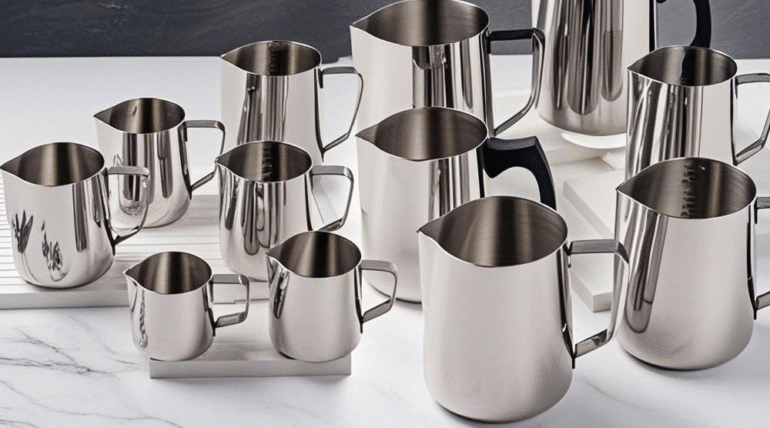
21.10.2025
Picture yourself pouring perfect, glossy latte art. You see the crisp rosetta forming as you pour. You feel the satisfaction of a perfectly balanced cappuccino made in your own kitchen.
This dream feels complex. But the secret often starts with one surprisingly simple choice.
You need to answer a key question before mastering the pour. Before perfecting the whirlpool. What size milk frothing pitcher should i get?
This decision is the most important first step toward cafe-quality coffee. It affects milk texture, temperature control, waste, and your pouring precision.
Get it wrong and you’ll face frustration. You’ll waste milk. Your foam will be either bubbly and thin or stubbornly flat. Get it right and you’ll succeed every time.
This guide will give you the confidence and expert knowledge to select the exact pitcher size for your needs. You’ll know precisely which tool to reach for, whether you’re making a single morning flat white or serving a line of customers.
Table of Contents
The Quick Answer Cheat Sheet
We believe in getting you answers fast. This cheat sheet is your solution if you need to decide right now.
It connects your daily coffee routine directly to the ideal milk frothing pitcher size. No more guesswork.
Your Typical Order | Number of Drinks (at one time) | Recommended Pitcher Size | Why It Works |
1 Small Cappuccino/Latte (6-8 oz cup) | 1 | Perfect space for stretching milk for one drink without waste. | |
1 Large Latte/Mocha (10-16 oz cup) | 20 oz (600 ml) | Accommodates the larger milk volume needed for a big drink. | |
2 Small Cappuccinos/Lattes | 20 oz (600 ml) | The ideal size for steaming enough milk for two standard drinks at once. | |
Multiple drinks (3-4) / Commercial use | Essential for workflow efficiency in a busy environment. |
The rule behind these recommendations is simple. Always choose a pitcher that’s about twice the volume of the cold milk you plan to use.
A standard 6-ounce cappuccino needs about 3-4 ounces of cold milk. This means a 12-ounce pitcher is perfect. It gives the milk room to expand without overflowing.
Why Pitcher Size Matters
A milk frothing pitcher is much more than a simple metal cup. It’s a purpose-built tool designed to harness steam power and transform liquid milk into velvety microfoam.
The size isn’t an arbitrary detail. It’s a critical variable that determines the quality of your final product. Understanding this will help you troubleshoot issues and perfect your technique.
Creating the Perfect Vortex
You need two things to create silky microfoam: aeration (introducing air) and texturing (spinning the milk to break down air bubbles). You do this by creating a vortex, or whirlpool.
The milk level must be high enough to properly submerge the steam wand tip. If the milk is too shallow, you can’t create the whirlpool.
The milk also needs space to expand. Milk can increase in volume by 50-100% during steaming. A pitcher that’s too full will overflow. This creates a mess and prevents proper texturing. This “Goldilocks Zone”—not too full, not too empty—only works with the right size pitcher for your milk volume.
Temperature Control and Consistency
Milk has a specific ideal temperature range for sweetness and texture. This is typically around 140-150°F (60-65°C). Go beyond this and the proteins break down. This results in a scalded, flat taste.
Using a very large pitcher for a small amount of milk heats the milk almost instantly. You have virtually no time to properly aerate and texture it before it scalds.
A correctly sized pitcher provides a wider, more forgiving window to work the milk. You can feel the temperature change gradually in your hand. This gives you the time needed to create a perfect vortex and stop steaming at the precise moment.
Precision, Control, and Art
Pouring beautiful latte art requires finesse and control. The weight and balance of your pitcher play a huge part in this.
Trying to pour a delicate rosetta for a single 6-ounce cappuccino using a heavy, full 32-ounce pitcher is frustrating. It’s like trying to write your name with a gallon paint can.
A smaller, correctly-sized pitcher is lighter and more nimble. It becomes an extension of your hand. This allows for the subtle wrist movements required for intricate patterns. Professional baristas often have multiple sizes on their bar for this reason.
Minimizing Milk Waste
Milk waste matters whether you’re a home user on a budget or a cafe owner watching your bottom line. Using the right pitcher size is one of the easiest ways to reduce it.
When you use a pitcher that’s too large for your drink, you’re forced to pour more milk than needed just to get the vortex started. The leftover, perfectly steamed milk often goes down the drain.
This waste adds up quickly for a small cafe. As detailed in publications like Barista Magazine, reducing milk waste by just a small percentage can save hundreds or even thousands of dollars annually. The right equipment is the first step toward that efficiency.
A Deep Dive into Sizes
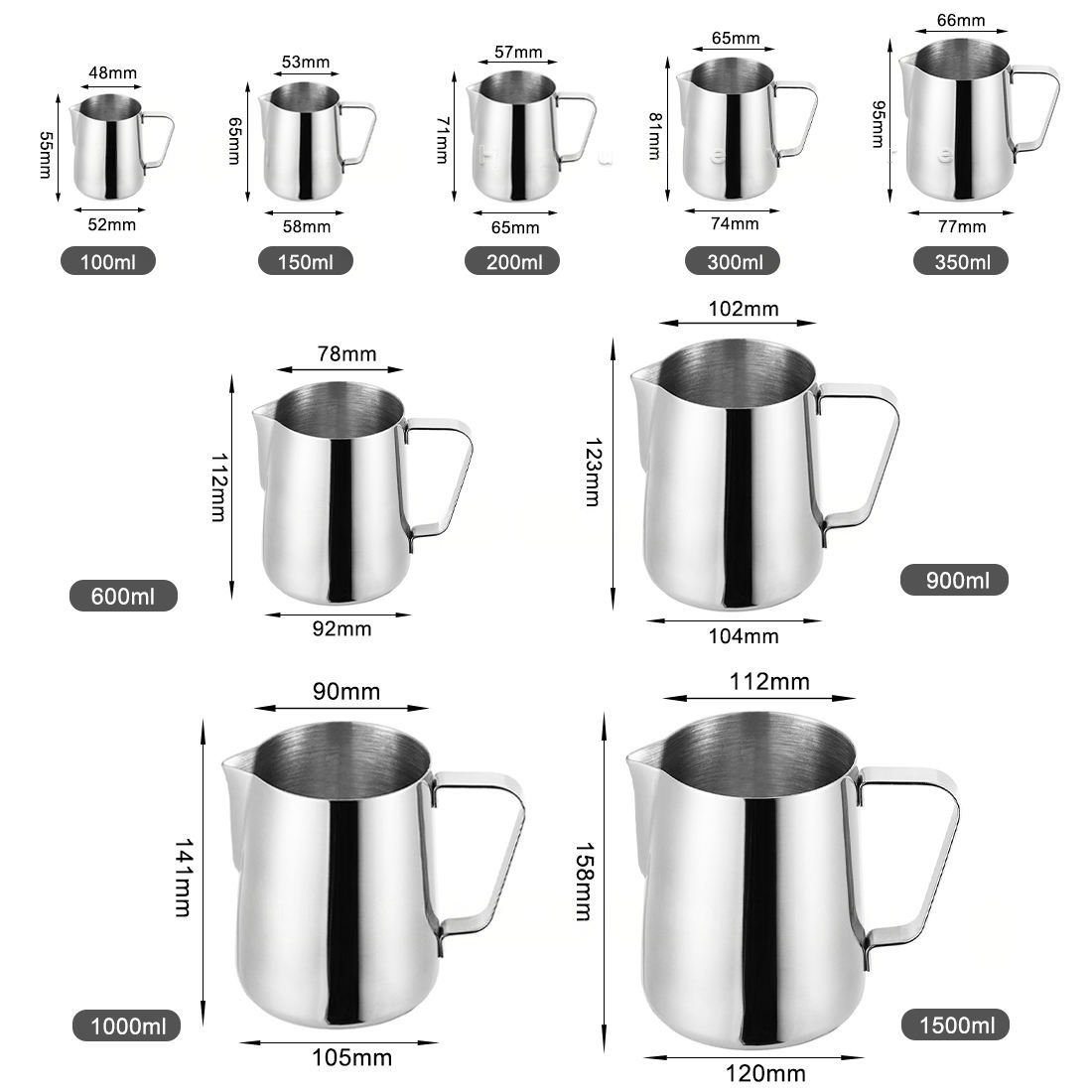
Now that you understand the principles, let’s break down the most common pitcher sizes. We’ll cover their pros, cons, and best-use scenarios to help you visualize which one belongs on your counter. Answering “what size milk frothing pitcher should i get” becomes much easier when you know the specific job of each tool.
The 12 oz (350 ml) Pitcher
This is the specialist’s tool. The solo artist’s choice. It’s designed with one primary purpose: to perfectly steam milk for a single, small-to-medium sized drink.
It’s the ideal companion for making a 6-8 ounce cappuccino, flat white, or cortado. If your goal is to perfect your latte art for one cup at a time, this is your pitcher.
The 12 oz pitcher offers significant pros. It provides maximum control and a nimble feel in the hand. This makes detailed art pours feel more intuitive. It heats a small amount of milk efficiently and minimizes waste by its very nature. It also forces good habits by requiring you to measure your milk precisely for the drink you’re making.
However, it has clear limitations. It’s practically useless for making more than one drink at a time. It’s also unforgiving—add just a little too much milk, and you’re guaranteed an overflow as the milk expands. When we use a 12 oz pitcher for a single cappuccino, the level of control is unparalleled. You can feel the milk texturing perfectly.
The 20 oz (600 ml) Pitcher
If you can only buy one pitcher, this is almost always the one we recommend. The 20 oz is the versatile all-rounder of the milk pitcher world. It capably handles the widest range of common scenarios.
This size is perfect for most home users. It’s the best tool for steaming enough milk for two small-to-medium drinks (like two 8 oz lattes) at once. It’s also the right choice if your go-to drink is a single large 12-16 oz latte or mocha that requires a greater volume of milk.
The primary pro of the 20 oz pitcher is its incredible versatility. It’s an excellent size for learning because it’s more forgiving than a 12 oz. A slight miscalculation in milk volume won’t necessarily result in an overflow. It bridges the gap between single-serve precision and small-batch efficiency.
The cons are minor but worth noting. It can feel slightly too large and wasteful if you only ever make a single, small 6 oz drink. It requires more milk to create a proper vortex. For intricate art, it’s a bit less nimble than its 12 oz counterpart. Still, it’s the size we recommend most often. Our Durable Stainless Steel 20oz Pitcher is a perfect example of this do-it-all workhorse.
The 32 oz (950 ml) Pitcher
This is the workhorse of the professional world. The 32 oz (and larger) pitcher is built for volume and efficiency. This makes it a staple in any commercial cafe or busy office kitchen.
It’s the right tool when you need to steam milk for three or four drinks simultaneously. It’s also the choice for home baristas who frequently entertain and need to serve multiple guests at once without steaming milk for each cup individually.
Its main advantage is workflow speed. In a cafe setting, grabbing the 32 oz pitcher is second nature when an order for “three lattes” comes in. It allows a barista to keep the line moving and serve customers quickly.
The downsides make it a poor choice for most home users. It’s completely impractical and wasteful for making a single drink. The weight and bulk make it clumsy and difficult to control for detailed latte art. Furthermore, texturing a large volume of milk requires a powerful steam wand. Many entry-level home espresso machines lack this.
The Misfit Scenarios
To truly understand why size is so important, it helps to visualize what happens when you use the wrong tool for the job. We’ve all made these mistakes. They provide powerful, memorable lessons.
The Overflow Disaster
This is what happens when you use a pitcher that’s too small for your needs.
The problem: You want to make a big 16 oz latte. So you pour about 8 oz of cold milk into your 12 oz pitcher. You begin steaming.
The result: For a few seconds, everything seems fine. Then, the milk rapidly begins to expand. It climbs the walls of the pitcher with alarming speed. Before you can react, hot, frothy milk is cascading over the sides. It covers your drip tray, counter, and hand. You’re left with a huge mess and a pitcher of under-aerated, overheated milk with a few giant bubbles.
The Whirlpool of Failure
This is the opposite scenario: using a pitcher that is far too large for your milk volume.
The problem: You want to make one perfect 6 oz cappuccino and reach for your big 32 oz pitcher. You pour in the 4 oz of milk required for the drink.
The result: The milk barely covers the bottom of the pitcher. When you insert the steam wand, you can’t submerge the tip deep enough to create a vortex. The steam wand either blasts the milk, instantly scalding it, or it screeches loudly. This creates a thin layer of soapy, useless bubbles on top of hot, flat milk. You have no control and no chance of creating microfoam. Watching a professional like James Hoffmann demonstrate proper technique makes it clear how crucial the milk-to-pitcher ratio is for creating that essential whirlpool.
Beyond Size: 4 Other Features
Now that you’re confident in answering “what size milk frothing pitcher should i get,” let’s refine your choice. Several other features contribute to a pitcher’s performance and your overall experience.
1. Spout Shape
The spout is your paintbrush. Its shape is the single most important feature for determining what kind of latte art you can pour.
A classic or rounded spout is wider and better for creating soft, cloud-like foam for traditional cappuccinos. It’s also good for basic patterns like hearts.
A sharp or narrow spout is essential for high-detail latte art. This pointed design gives you a finer stream of milk. This allows for the precision needed to pour complex patterns like rosettas, tulips, and swans.
2. Material
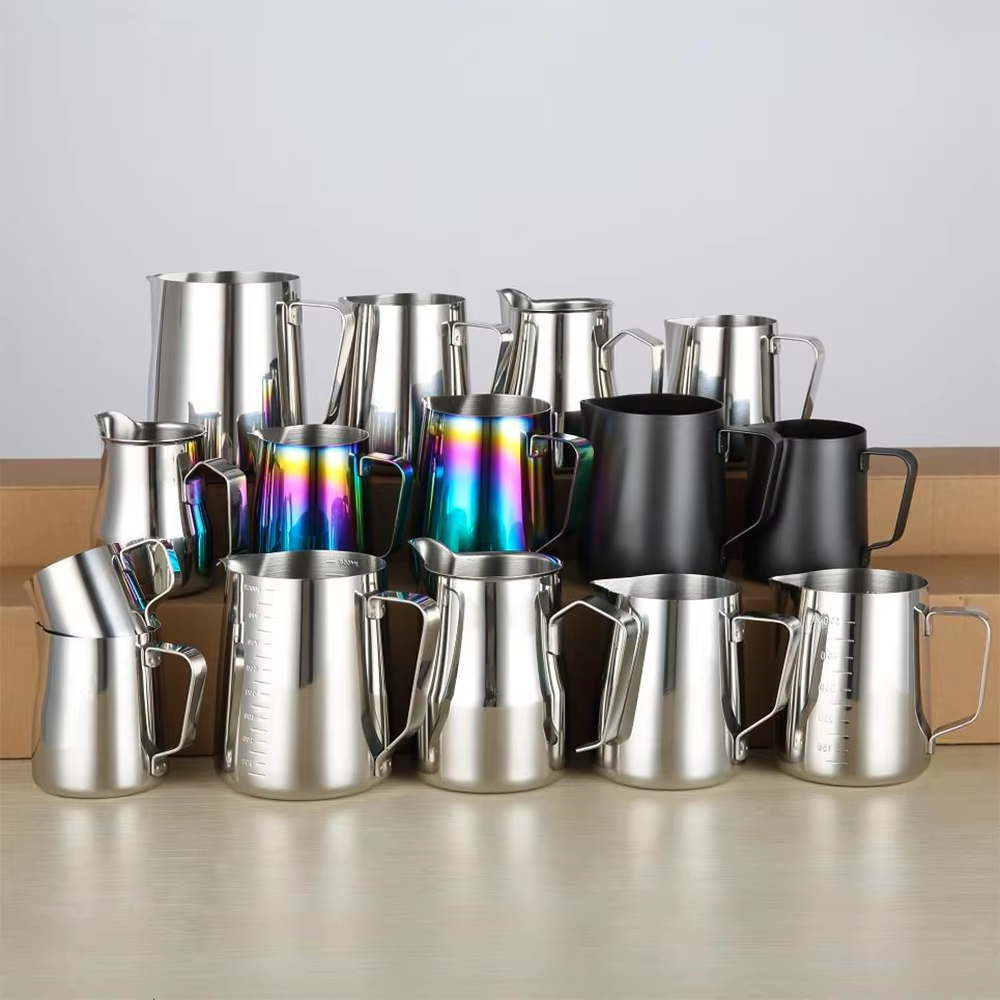
The industry standard is 304-grade stainless steel, and for good reason. This material is the king of milk pitchers.
It’s incredibly durable, resistant to rust and staining, and easy to clean. Most importantly, it has excellent thermal conductivity. This allows you to place your hand on the side of the pitcher and accurately feel the temperature of the milk as it heats up. This gives you a tactile cue to stop steaming at the perfect moment. As a guide from Serious Eats explains, stainless steel is a safe and reliable choice for any food-contact application.
While you may see pitchers with colored coatings, these are primarily for aesthetics. The underlying stainless steel is what does the work.
3. Handle Design
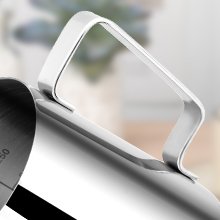
What matters more is that the handle is securely attached, typically spot-welded. It should feel balanced in your hand, both when empty and when full of milk. A comfortable, ergonomic handle reduces fatigue and improves your pouring control.
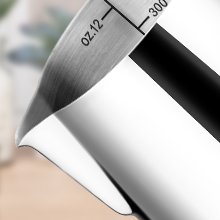
4. Measurement Markings
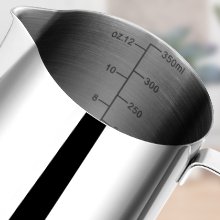
These markings remove the guesswork from pouring your milk. You know you’re starting with the exact same amount every time. This helps you build muscle memory and understand how that specific volume of milk behaves when steamed. It’s an invaluable feature for reducing waste and accelerating your learning curve. For those just starting out, a pitcher with these guides, like the Barista-in-Training 20oz Pitcher, can be a huge confidence booster.
Our Final Verdict
Choosing your perfect pitcher doesn’t have to be complicated. You now have all the information you need to make an expert choice.
The core principle to remember is simple: start with the volume of your most common drink and choose a pitcher that is roughly double that size. This gives you the ideal space for the milk to expand and the perfect depth to create a quality vortex.
To make it even simpler, here is our final “If-Then” quick guide.
- IF you primarily make one small-to-medium coffee (6-8 oz) for yourself, THEN get a 12 oz pitcher.
- IF you want maximum versatility for one large or two small drinks, THEN get a 20 oz pitcher. This is our top all-around pick.
- IF you are outfitting a cafe or regularly make coffee for a crowd, THEN you need a 32 oz pitcher (and likely a 20 oz for smaller orders).
Your journey to better coffee is built on a foundation of good tools and good knowledge. This philosophy is shared by leaders in the coffee world from roasters like Counter Culture Coffee to news outlets like Sprudge.
Ready to find your perfect match? Explore our curated collection of professional-grade milk frothing pitchers to find the ideal size and style for you. The Specialty Coffee Association also provides a wealth of resources on best practices for milk preparation, reinforcing these core concepts.
From Confused to Confident

You started with a simple question: what size milk frothing pitcher should i get? Now, you’re equipped with the knowledge of a seasoned barista.
You understand that this choice isn’t just about holding milk. It’s about controlling temperature, creating texture, and enabling artistry.
Congratulations on taking a simple but powerful step to elevate your coffee game. You now have the expert knowledge to walk past the wall of options and confidently select the perfect tool for your craft.
Now, go forth and steam some beautiful, silky microfoam. Your perfect pour awaits.
As a professional manufacturer specializing in the research, development, and production of coffee machines, we not only offer a diverse product selection but also support OEM/ODM customization to meet the needs of diverse markets and customers. With consistent quality control, fast delivery, and innovative designs, our coffee machines are used by numerous brands and channels worldwide. Whether you're a distributor, wholesaler, or brand owner, we can provide you with reliable solutions to help you grow your business. Contact us to explore potential collaboration opportunities.

Facebook
Twitter
LinkedIn
WhatsApp


