ESPRESSO BASKETS · PUCK GEOMETRY · BUYING GUIDE
What Is a Step-Down Portafilter Basket?
A step-down basket keeps a wide rim that fits the portafilter, then narrows to a smaller coffee chamber below. It creates a deeper puck at the same dose, which changes the recipe and tool set—but it is not an automatic espresso upgrade.
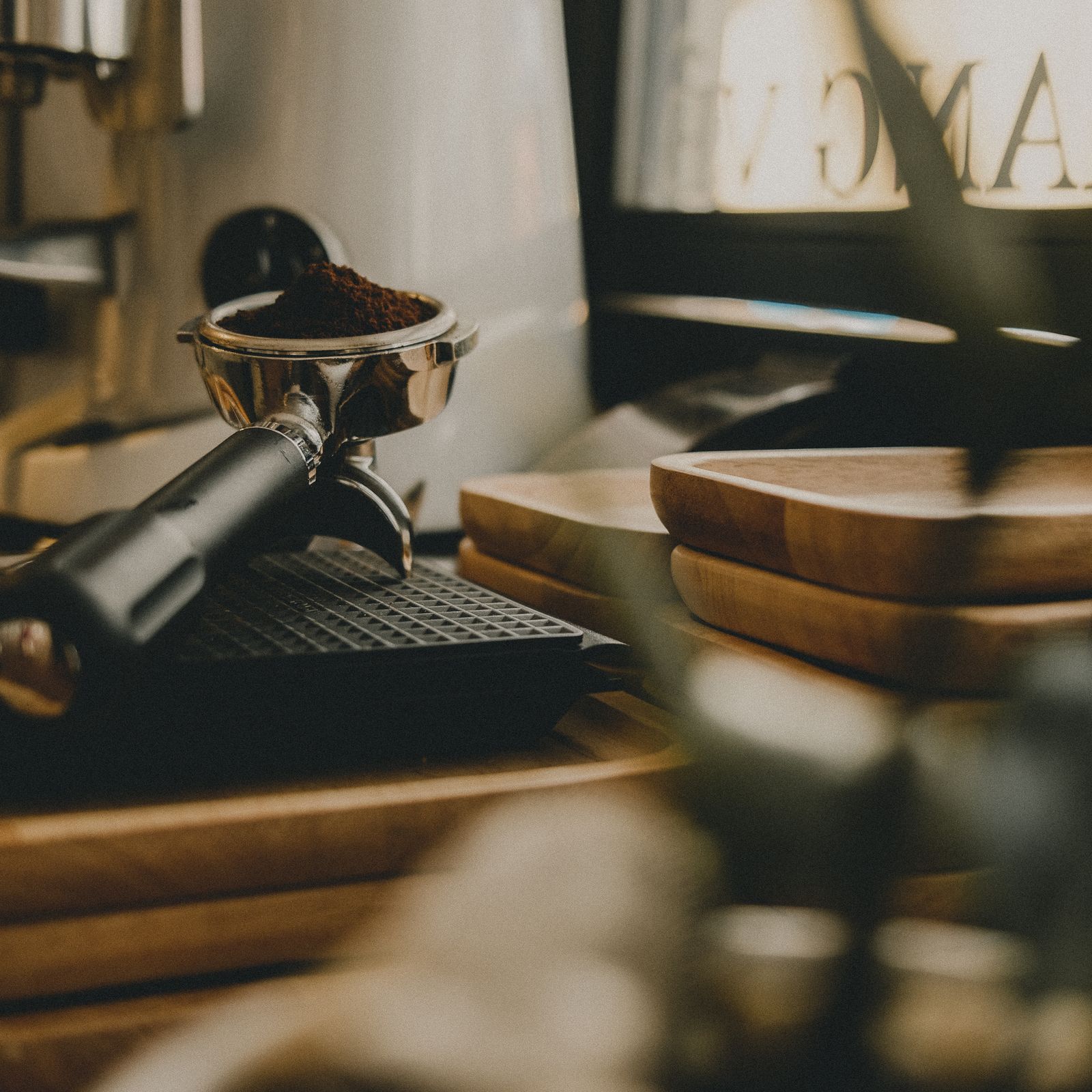
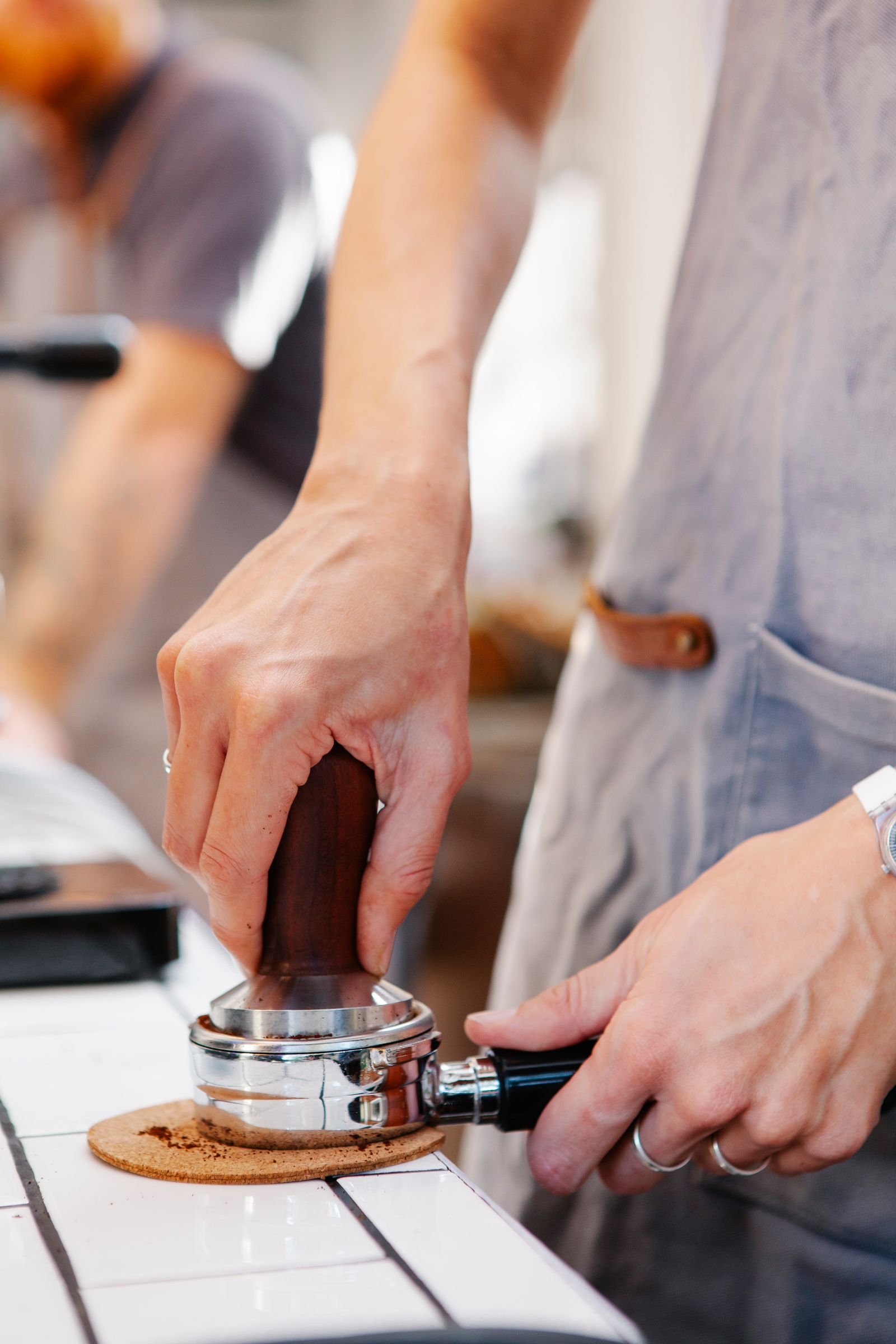
Quick answer: a wide rim with a smaller brew chamber
For example, a 58-to-49 basket is designed for a compatible 58mm-class portafilter rim while the coffee extracts in a chamber close to 49mm wide. It is a basket geometry, not a portafilter adapter: it does not change the locking ears or make incompatible machines fit. Choose it only when a deeper-puck workflow solves a real recipe or low-dose problem.
- The upper rim fits the portafilter; the lower chamber defines the smaller coffee-puck diameter.
- At equal dose and packing density, smaller area makes a taller, deeper coffee bed.
- Grind usually needs a fresh dial-in; coarser is a reasonable starting direction, not a guarantee.
- Hole design, dose range, headspace and puck preparation can affect results as much as basket shape.
- Many deep step-down systems need a bottomless portafilter, matched funnel and specified tamper.
- Keep a standard basket when it already produces stable espresso with a simpler workflow.
What is a step-down espresso basket?
A conventional straight-wall basket keeps a broadly similar inner width from top to bottom. A step-down basket starts with a portafilter-compatible rim, then transitions—either abruptly or on a slope—into a narrower lower chamber. Most of the compacted coffee puck sits in that lower chamber.
It is not a portafilter adapter
The basket does not alter the group-head lock. A 58mm portafilter still requires the exact machine-side ears, sealing plane and gasket fit.
It is not automatically pressurized
Pressurized refers to added outlet restriction. A step-down basket changes internal geometry; hole pattern and outlet construction remain separate specifications.
Read both sizes carefully
In a name such as 58-to-49, the first number generally refers to the upper rim family and the second to the smaller brew chamber—not universal fit.
Read drawings and maker instructions rather than relying on the label alone. The lip, total depth, lower body, retaining spring, bottom clearance and recommended tools still determine whether the basket works in a particular portafilter.
How the smaller chamber changes puck depth
The mechanism is simple geometry. For an ideal cylindrical coffee chamber, area scales with the square of diameter. Moving from 58mm to 49mm reduces cross-sectional area to about 71% of the larger chamber; with the same coffee mass and packed density, the puck therefore becomes about 40% deeper. Real baskets have tapers, transitions and different hole fields, so this is a geometry illustration—not a promised extraction result.
| Variable | Direct effect | Practical implication |
|---|---|---|
| Floor area | Smaller diameter reduces the area holding coffee | The same dose occupies a taller coffee bed |
| Puck depth | Depth rises when mass and packing density stay comparable | Hydraulic resistance and the sensible grind starting point can change |
| Hole field | Hole number, diameter and open area may change with the basket design | Two step-down baskets with the same size label can need different grind settings |
| Headspace | A deep lower chamber may leave more open space above a low dose | Check the maker's dose range and any compatible screen or spring |
Geometry affects flow—but does not work alone
Research on porous coffee beds supports treating geometry as a real flow variable: bed shape and water delivery can influence local flow and extraction patterns. It does not show that every narrower basket tastes better. Grind distribution, particle size, coffee, dose, compression, basket-hole geometry and water delivery still determine the final result.
Decent Espresso likewise describes its basket designs as a combined relationship among bed depth, basket size and hole size. Use a step-down basket as a new system to dial in, not as a one-variable shortcut.
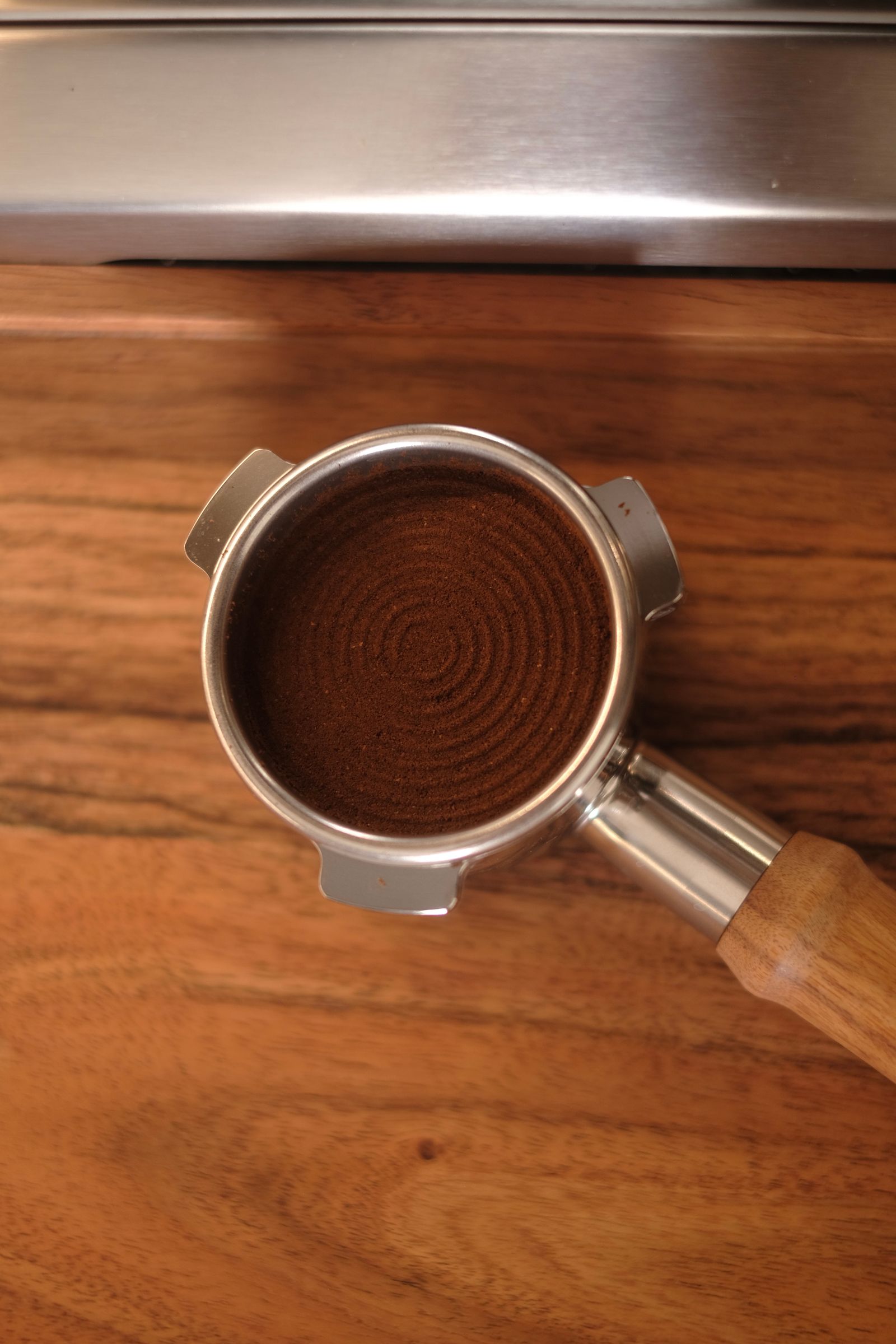
Step-down vs. other espresso basket types
Product names can overlap. Some single baskets have a strongly tapered shape; some makers use “step-down” for a modern wide-rim/narrow-chamber system. Compare the actual internal profile, depth, lower diameter and tool list.
| Basket type | Primary geometry or function | What it does not guarantee |
|---|---|---|
| Straight-wall basket | Broadly similar diameter through the coffee chamber | Universal portafilter, tamper or recipe compatibility |
| Tapered or traditional single basket | Narrows progressively toward the floor | The same workflow as a modern step-down kit |
| Step-down basket | Wide rim/upper interface with a smaller lower brew chamber | Automatic channeling prevention or better flavor |
| Pressurized basket | Uses an outlet design that adds resistance beyond the coffee bed | Compatibility simply because nominal diameter matches |
Possible benefits, costs and myths
When a deeper puck can be useful
A lower dose in a wide basket can make a shallow coffee bed. A narrower chamber can give that dose a deeper geometry without changing the machine group. Makers of step-down systems often position this as a route to a coarser-grind recipe or a different body-and-clarity balance. Treat those as testable possibilities. Dial both baskets to their own best recipe and compare taste, not marketing claims.
What it cannot fix
A deeper puck cannot repair clumps, tilted tamping, a damaged basket, unsuitable grinder output, poor water distribution or an incompatible portafilter. It changes the starting geometry; it does not make puck preparation optional.
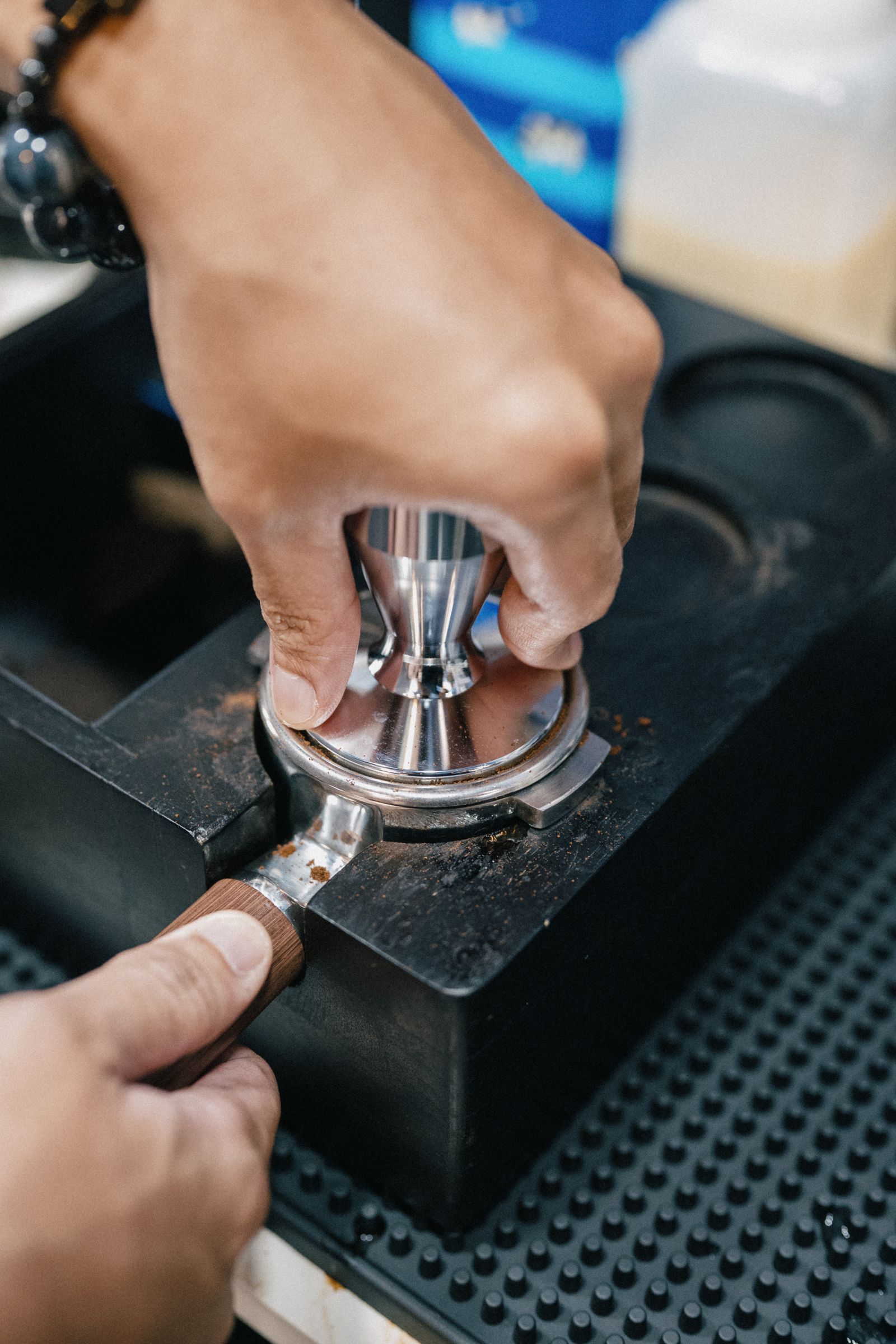
Compatibility: check the complete basket system
A correctly sized upper rim can still fail in the lower body. Deep baskets may contact the floor, splitter or spouts of a spouted portafilter; several current step-down kits specify bottomless use for this reason. Also, “49mm” is not enough to purchase a tamper: exact maker guidance can differ among similarly named baskets.
- Confirm the exact espresso machine, portafilter and basket-rim family before buying.
- Compare basket rim profile, full height, lower-body width and bottom clearance—not only the upper diameter.
- Verify retaining-spring engagement and a clean, no-force seat while the equipment is cool.
- Use the basket maker’s stated dose range and matched smaller tamper base.
- Check whether a funnel is required to move grounds past the step without leaving coffee on the shoulder.
- Check screen, spring and paper size only against the same basket system, and confirm headspace before brewing.
- Do not assume a spouted portafilter, self-leveling collar or automatic tamper will clear the new geometry.
Need a tamper matched to a basket system?
Send Coffmach the machine model, basket make and lower chamber size, dose range, preferred base profile, material, finish and packaging needs for an OEM/ODM or sample discussion.
How to dial in a step-down basket
Use the basket as a new recipe platform. Do not copy the old setting and expect an identical shot time. Keep dose, beverage yield, water and temperature stable while changing one variable at a time.
Who should buy one—and what should an RFQ specify?
Good candidate
You want a lower dose that behaves too shallowly in a large basket, enjoy controlled recipe testing, and can use a bottomless portafilter plus matched tools.
Keep the standard basket
Your existing recipe is stable and tasty, service speed matters, or your spouted portafilter and automatic tamper cannot accept the deeper smaller chamber.
For cafés and brands
Test the complete workflow: dose, funnel, tamping, extraction, cleaning, puck removal, staff training and spare-part control—not the basket alone.
For an OEM or private-label project, a label such as “58-to-49” is not a full specification. State the machine-side rim/interface, complete dimensional drawing, lower brew diameter, transition profile, total depth, dose range, material, hole pattern, surface finish, matching tamper, funnel, screen, spring, paper size, compatible portafilter type and acceptance tests. Approve a golden sample against a fixture or exact machine before production.
Frequently asked questions
What does a step-down portafilter basket do?
It fits the portafilter with a wide upper rim, then narrows into a smaller coffee chamber. The smaller chamber creates a deeper puck at the same dose and can change flow resistance and grind setting. The result still depends on holes, coffee, preparation and recipe.
Is a step-down basket better than a normal basket?
Not for every user. It can help when a lower dose feels too shallow in a wide basket or when you want to test a deeper-puck recipe. A standard basket is often simpler, more tool-compatible and better suited to a proven café workflow.
Will a 58-to-49 basket fit every 58mm machine?
No. The upper label does not confirm lip profile, total depth, retaining spring, lower-body clearance or the machine-specific portafilter. Many deep products require a bottomless portafilter. Check the maker’s exact compatibility instructions.
Do I need a new tamper?
Usually yes. A normal full-size base cannot enter the smaller brew chamber. Follow the basket maker’s stated base diameter; similarly named 49mm systems can specify different practical fits. Also check the outside diameter of any self-leveling collar.
Can I use a step-down basket in a spouted portafilter?
Only when the basket maker confirms full clearance. Deep lower bodies can hit the spout assembly or floor. Do not remove internal parts or force the basket; use a compatible bottomless portafilter or choose a different basket.
Does a deeper puck stop channeling?
No. It can change resistance, but clumps, uneven density, tilt, poor grind, damaged baskets and water delivery can still create uneven flow. Use consistent distribution and tamping, then diagnose one variable at a time.
Should I grind coarser?
Often that is a reasonable first direction because the deeper puck can add resistance, but it is not universal. Hole pattern and dose can shift the answer. Start from the maker’s guidance, then dial in with measured flow and taste.
Why is water left above the puck?
A deep narrow chamber can leave more headspace, especially with a low dose, and machine pressure release also affects puck wetness. Check the stated dose range and only use approved screens or springs. A wet puck alone does not prove a bad shot.
Technical sources and image credits
- Sworksdesign — Step Down Billet Basket. Product-specific example of step-down sizes, dose ranges and matched-tool requirements.
- Normcore — 58mm to 49mm Step-Down Portafilter Basket Kit. Product-specific compatibility, bottomless-portafilter and tamper guidance.
- Decent Espresso — Portafilter Baskets. Technical explanation of basket depth and hole design as combined variables.
- PLOS ONE — Analysing Extraction Uniformity from Porous Coffee Beds. Modelling research on packed-bed geometry, flow and extraction uniformity.
- Coffmach — Coffee Tamper Guide. Internal guidance on basket measurement, tamper types and fit.
- Coffmach — How to Choose a Coffee Tamper. Internal selection guide for basket-specific tamper fit.
- All four article photographs are real, unbranded coffee-workflow images from Pexels. Each photograph is credited in plain text directly below the image; images and photo credits are not clickable.