ESPRESSO ACCESSORIES · COMPATIBILITY · BUYING GUIDE
Portafilter Size Guide: Find the Right Fit for Your Espresso Machine
Choose a portafilter by the exact espresso-machine model and group-head interface—not by diameter alone. Confirm the official part or named compatible model first, then verify basket size, locking-ear geometry, body dimensions, basket rim and tamper fit before a clean, cold, no-force test.


Quick answer: model first, diameter second
A complete portafilter is a pressure-bearing handle-and-head assembly, not just a basket holder. A buyer needs to separate three interface questions: does the head lock and seal in the machine; does the basket seat securely in the head; and does the tamper fit the basket at working depth? A single dimension cannot answer all three.
- Portafilter size usually refers to a nominal basket or group family, not the whole locking interface.
- Check model, part number, ears, sealing plane, body dimensions, basket rim and depth before ordering.
- Basket capacity is not portafilter diameter; a deeper basket can hold more coffee in the same family.
- Choose a tamper for the actual basket inner wall and taper at tamping depth—not the portafilter label alone.
- Pressurized/non-pressurized and spouted/bottomless describe different functions; neither decides locking fit.
- Never force, file, bend or improvise a replacement that resists normal insertion.
| Interface | What to compare | Why diameter alone is insufficient |
|---|---|---|
| Machine to portafilter | Exact model, approved part family, ear count, ear width/thickness/position, head height and sealing plane | Nominal basket size does not define the bayonet lock or gasket contact |
| Portafilter to basket | Basket rim profile, exterior/body shape, depth, retaining groove and spring | Equal nominal diameter baskets can fail to seat or retain correctly |
| Basket to tamper | Internal wall at working depth, taper, edge gap and puck-removal behavior | A 58mm basket can require a different practical tamper size than another 58mm basket |
| Accessory to workflow | Funnel, distributor, screen, grinder cradle, spouts and headspace | Accessories reference different surfaces and can interfere despite a shared label |
What does portafilter size mean?
A portafilter is the removable assembly that holds the filter basket and locks into the espresso machine’s group head. In common product listings, a size such as 51mm, 54mm or 58mm usually points to a nominal basket or system family. It does not standardize the complete mechanical interface. The head, ears (also called lugs), sealing surface, handle angle and basket-retaining system remain product-specific.
Nominal diameter
A broad family label useful for initial identification and selected accessory searches. It is not a complete replacement specification.
Locking ears / lugs
The protrusions that engage the group-head ramps. Their count, position, thickness and profile determine whether the body turns and seals.
Basket interface
The rim, retaining groove, spring, body profile and depth that determine whether a filter basket seats and stays in the portafilter.
For example, Breville’s official dosing-funnel listing names specific 54mm portafilters and machine models, not simply “all 54mm” products. De’Longhi’s DLSC085 names both a 51mm diameter and the compatible La Specialista/Dedica Maestro families. These official examples show why a size and a machine list should be read together.
51mm vs 54mm vs 58mm: what the labels can—and cannot—tell you
The diameter family can help narrow a search, organize accessories and identify a likely basket class. It does not establish interchangeability. As examples, De’Longhi’s DLSC085 is a 51mm product for named families; Breville’s official funnel lists selected 54mm models; Gaggia’s Classic Pro E24 is sold with a 58mm stainless-steel portafilter. None of these examples makes every 51mm, 54mm or 58mm portafilter cross-compatible.
| Family | Useful starting assumption | Must still verify |
|---|---|---|
| 51mm | Often found on compact or entry-level systems; accessories may be model-specific | Ear geometry, gasket fit, pressurized basket design and exact machine family |
| 54mm | Used by selected Breville/Sage machine families and accessories | Named model, cradle/funnel interface, basket rim, ears and tamper fit |
| 58mm | Common on many prosumer/commercial-style systems and precision baskets | Group-family lock, basket rim/depth and tamper size inside the specific basket |
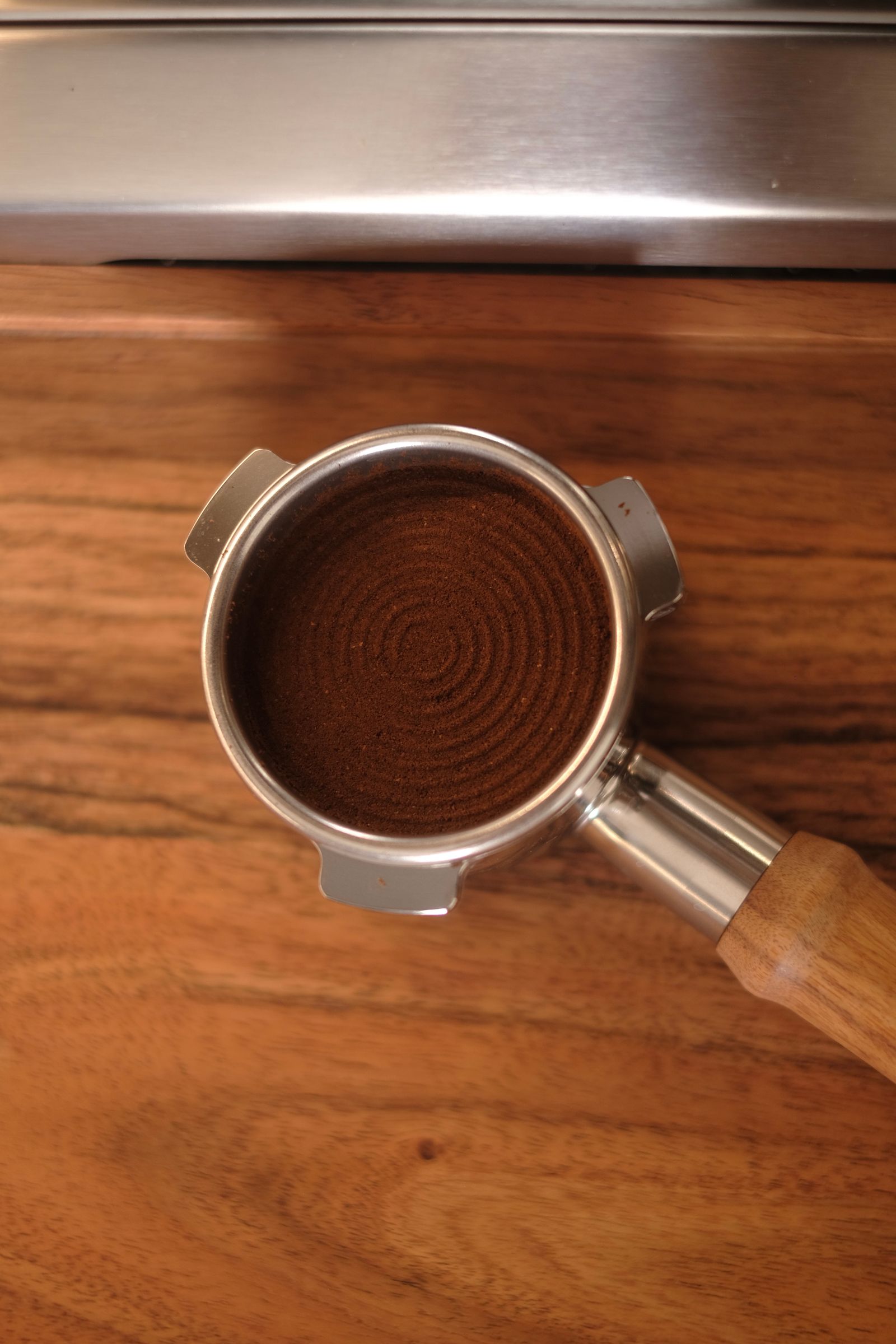
Portafilter compatibility: the checks that prevent a bad replacement
Start by locating the exact machine model code, product manual, official accessory catalog or original part number. Save the maker’s compatibility statement. Then compare the original and proposed replacement using named surfaces and dimensions. Do not compare your basket inner diameter with a seller’s portafilter-head outer diameter: both can be correct measurements that answer entirely different questions.
What to record from the original part
- Machine brand, full model code, market version and original portafilter part number.
- Number of ears; each ear’s width, thickness, projection and angular position.
- Head outer diameter below ears, body height and sealing-plane relationship.
- Basket rim outer diameter/profile, body depth, retaining groove and spring behavior.
- Handle clearance against the machine body and drip tray through normal lock/unlock motion.
A correct listing identifies the exact machine, documents compatible part family and states what is included: basket, retaining spring, spouts, handle or bottomless head. A long brand list without these details is not a reliable compatibility claim.
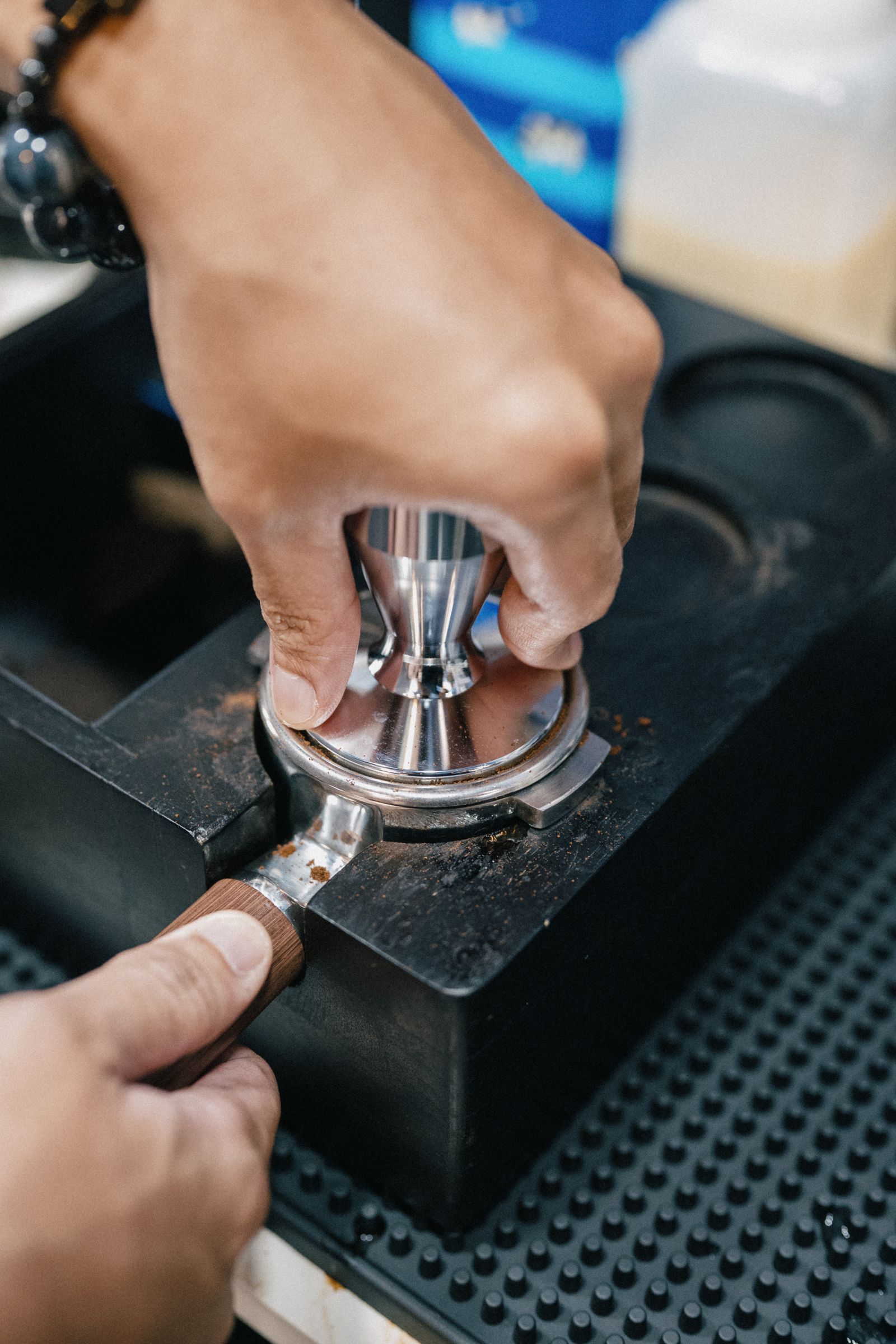
Why a correct part may lock at a different angle
Group gaskets compress and age. With a correctly installed new gasket, the handle may initially stop earlier than it did with the old one. That is not a reason to use extra force. Follow the machine maker’s service instructions and only use the normal lock range. If the handle will not engage smoothly or the group leaks, verify gasket orientation, thickness, cleanliness and part number before declaring the portafilter compatible.
How to measure a portafilter safely
Measurements are useful when official confirmation is unavailable or when an importer needs a controlled interface specification. Use a digital caliper where possible. A ruler can distinguish a broad family such as approximately 51mm versus 58mm, but it cannot resolve ear thickness, basket taper or the small clearance needed for a tamper.
Basket size, dose and tamper fit
A filter basket is removable. Its nominal diameter, rim, wall profile, hole field and depth all matter. Basket capacity, often described by a coffee-dose range, is not another name for portafilter diameter. A deeper basket can hold more coffee in the same nominal family, while two equal-depth baskets can recommend different doses because coffee density and basket geometry differ.
Is tamper size the same as portafilter size?
No. A portafilter label names a system family, while a tamper must fit inside a particular basket. IMS’s current Competition line, for example, recommends 58.4–58.5mm precision tampers for its stated 58mm Competition filters with straight walls; this is a basket-line recommendation, not a rule for every nominal 58mm product. Select the largest practical base that reaches normal puck depth without scraping, sticking or suction that lifts the puck.
| Accessory | Main reference surface | Check before buying |
|---|---|---|
| Tamper | Basket internal wall at working depth | Taper, edge gap, low/high dose travel and puck removal |
| Basket | Portafilter head, spring and rim seat | Rim profile, body depth, groove, bottom clearance and dose range |
| Dosing funnel | Basket rim and/or portafilter ears | Grinder cradle access, twist/magnetic engagement and tamping clearance |
| Distributor | Basket interior and rim | Working diameter, depth and compatibility across the dose range |
| Puck screen | Coffee surface/basket interior | Headspace, basket geometry and recipe compatibility |
Use Coffmach’s coffee tamper guide for broader context on basket measurement, tamper types and common tool formats.
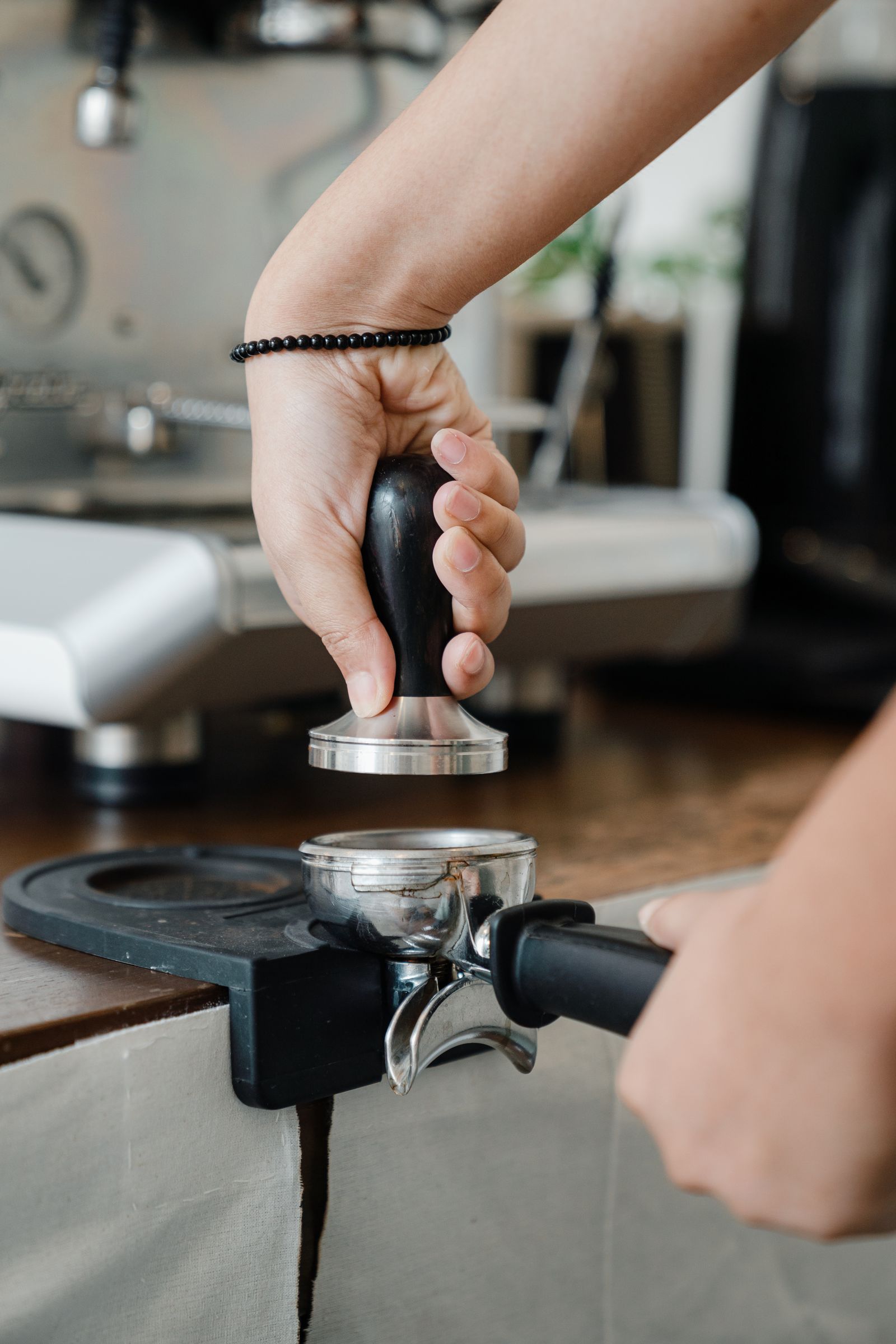
Pressurized, non-pressurized, spouted and bottomless
These labels answer different questions. A pressurized basket/system creates additional downstream restriction; a non-pressurized or single-wall basket relies more directly on coffee and basket holes for resistance. This affects grinder requirements and dial-in behavior, but not the bayonet locking fit. A spouted portafilter directs espresso through one or two outlets. A bottomless body removes the floor and spouts beneath the basket, exposing the underside during extraction.
Pressurized basket
Designed to add resistance beyond the coffee bed. Verify its exact machine/portafilter compatibility and cleaning instructions.
Non-pressurized basket
Relies more directly on grind, dose, distribution and basket holes; it still must seat correctly in the compatible portafilter.
Bottomless portafilter
Can reveal uneven flow and spraying, but it does not improve extraction by itself. It needs the correct model-level lock and basket fit.
Do not buy “any bottomless 58mm” or “any 51mm” unit. The bottomless body still needs the correct head diameter, ears, insertion depth, gasket surface, basket rim, retaining spring and handle clearance. It is a diagnostic tool only after it is a mechanically compatible portafilter.
Need a tamper after confirming the basket?
Send Coffmach the machine model, basket family, working diameter, dose range, base profile, material, finish and packaging requirement for a compatible tamper or OEM/ODM discussion.
Replacement buying checklist and OEM specification
For a replacement, the best listing is the one that identifies exact machines, provides useful mechanical data, explains included components and allows a clean, unmodified fit assessment. Do not file, grind, bend or force an incompatible part into a pressure-bearing group head.
- Exact machine brand, full model code and market version—not only a similar series name.
- Official part number, approved replacement number or documented compatible part family.
- Nominal size plus matching ear geometry and sealing-plane relationship.
- Included basket type, rim, depth, dose guidance and pressurized/non-pressurized status.
- Clear distinction between portafilter, basket, tamper, funnel and puck-screen compatibility.
- Material, finish and care instructions suitable for repeated hot-water and coffee contact.
- Handle clearance through insertion/removal and a return process for a clean, unmodified fit check.
For OEM/private-label projects
Build a controlled interface specification, not a spreadsheet that says only “51/54/58mm.” Use an approved machine or group fixture, verified original portafilter, drawing revision, material requirement, basket specification and inspection gauges. Define critical-to-fit tolerances for head, ears, sealing plane, basket seat, retaining spring, handle joint and outlet. Test insertion, lock angle, leakage, thermal cycling, basket retention and repeated use on representative machines. Keep a compatibility matrix when model revisions differ.
Frequently asked questions
How do I know what size my portafilter is?
Start with the exact machine model, manual, official accessory catalog or original part number. If confirmation is unavailable, document the basket opening, head outer diameter and every locking ear with a digital caliper. Compare the same named dimensions with the listing and require model-level compatibility.
Are all 58mm portafilters the same?
No. A 58mm label does not standardize ear count, thickness, position, head height, insertion depth, gasket surface, handle angle or retaining system. Verify a complete portafilter for the exact machine.
Can I use a 58mm portafilter in a 54mm machine?
No. The nominal families describe different group and basket diameters, and locking hardware is not designed to compensate. Use the size and part family specified for the machine rather than an improvised adapter.
Is basket size the same as portafilter size?
They are related but not interchangeable. The portafilter includes the head, ears, handle and possibly spouts; the basket sits inside it. Basket inner diameter affects tamper fit, while rim and exterior affect seating in the portafilter.
What size tamper fits a 58mm portafilter?
Choose for the actual basket, not the portafilter label. Follow the basket maker’s recommendation or measure the internal wall at working depth, then confirm the base enters without rubbing, binding or leaving an excessive edge gap.
Can I put any 58mm basket in any 58mm portafilter?
Not safely by assumption. Compare rim outer diameter/profile, body shape, depth, retaining groove, bottom clearance and maker instructions. A basket can share a nominal diameter but fail to seat, retain or preserve correct headspace.
Does portafilter size affect espresso taste?
Size can influence puck geometry and accessory options, but it does not determine taste by itself. Coffee, grinder, basket design, dose, distribution, headspace, water, temperature, pressure/flow and recipe remain important. Keep the compatible system stable before treating a diameter change as an upgrade: a correctly fitted basket and tamper give a more useful baseline for testing recipe changes.
Are pressurized and non-pressurized baskets interchangeable?
Only when the machine and portafilter maker allow the exact basket. The designs create resistance differently and can require different grinder capability, depth, outlet parts or cleaning. Verify the part number and operating instructions.
Why does my new portafilter lock at a different angle?
Possible causes include a new/wrong gasket, different ear thickness or ramp geometry, residue, different sealing plane or an incompatible part. Do not force the handle. Compare with the original and seek maker or qualified service confirmation.
Technical sources and image credits
- Breville — The Dosing Funnel. Official page naming selected 54mm portafilters and compatible machine models.
- De’Longhi — DLSC085 Bottomless Portafilter. Official 51mm product example with named compatible machine families.
- Gaggia North America — Classic Pro E24. Official machine page identifying its 58mm stainless-steel portafilter.
- IMS Filtri — Competition Filter Baskets. Basket-line-specific dimensions and stated tamper guidance within nominal espresso families.
- IMS Filtri — Competition Catalogue. Official catalog with basket-specific dimensions.
- Coffmach — Coffee Tamper. Product and OEM/ODM context.
- Coffmach — Coffee Tamper Guide. Internal guide to sizes, types and use.
- Coffmach — How to Choose a Coffee Tamper. Internal guide to basket fit and selection.
- Coffmach — Coffee Machine Accessories for Cafés and Shops. Internal café accessory/workflow context.
- All five article photographs are real, unbranded coffee-workflow images from Pexels. Each photograph is credited in plain text directly below the image; neither the image nor its credit is a clickable link.