C o f f e e - f a c t o r y
Have you ever wondered how many coffee beans are hidden behind a cup of fragrant coffee? Whether you’re a curious beginner or an old connoisseur who aims for the highest, “how many coffee beans to grind” is the crucial first step in making a good cup of coffee. This not only determines the flavor and strength of the coffee but is also the secret to using your beloved machine correctly.

Table of Contents

How many coffee beans does a cup of coffee approximately require?

  • Average: The weight of a single Arabica coffee bean is approximately 0.1 to 0.12 grams .
  • Simple calculation: Taking the commonly used 15 grams of coffee beans for a cup of hand-brewed coffee as an example, you will need approximately 125 – 150 coffee beans!
  • Emotional Prompt: Imagine that each cup of coffee in your hand is the essence of hundreds of coffee beans after roasting, grinding, and extraction. Doesn’t it instantly seem even more precious?
⚠️ But please note! The number of beans is just a fun reference. Because the size, variety (Arabica vs. Robusta), and roast level (dark roast beans are lighter) of coffee beans can all greatly affect the weight of a single bean. Relying on the number of beans can easily lead to unstable coffee flavor. Therefore, the true universal language in the coffee world is —— grams (g) .

The golden ratio is in grams, not in pieces

Forget about the number of beans! If you want to consistently replicate every delicious cup, remember this “golden rule” guarded by baristas worldwide: the ratio of coffee grounds to water .
  • Universal Golden Ratio: 1 : 15 ~ 1 : 18 (i.e., 1 gram of coffee grounds corresponds to 15 – 18 grams of water)
  • Practical Conversion Table (Taking Common Cup Measurements as an Example):
Coffee TypeRecommended coffee bean dosage (grams)Corresponding water volume (ml)Approximate Number of Pieces (Estimated)
Espresso (1 shot)18g – 20g30g – 40g150 – 180 pieces
Hand-brewed Coffee (1 cup)15g – 18g225g – 300g125 – 150 pieces
American Drip (1 cup)12g – 15g180g – 225g100 – 125 pieces
French Press (1 cup)15g – 17g225g – 255g125 – 140 pieces
The moment you use a scale, you evolve from a “coffee drinker” to a “coffee creator.” This mastery of precision can bring you an unprecedented sense of accomplishment and a reproducible delicious experience.

Three Key Factors Affecting Flavor

Three Key Factors Affecting Flavor
  1. Coffee Machine Type:
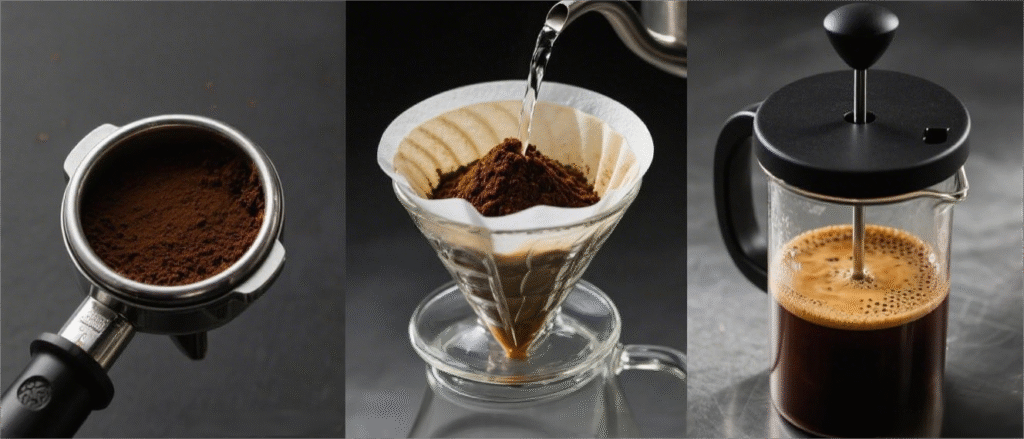
    1. Espresso Machine: Requires the highest precision, fine grinding, and a high coffee dose (18-21g) to withstand high-pressure extraction.
    2. Hand-drip/Filter: The range is relatively loose, medium grind, and can be flexibly adjusted according to the above-mentioned golden ratio.
    3. French Press: Coarse grind, slightly more coffee grounds can be used due to lower extraction efficiency.
  2. Grind fineness:
    1. Rule: The finer the grind, the faster the extraction, and the amount of coffee grounds required can be slightly reduced (and vice versa). However, please prioritize adjusting the grind size rather than easily changing the amount of coffee grounds to correct the taste.
  3. Your personal taste!
    1. Prefer a rich and mellow taste? Try increasing the coffee-to-water ratio, for example 1:13 – 1:15 .
    2. Prefer a refreshing fruit acid taste? Try reducing the coffee-to-water ratio, for example 1:16 – 1:18 .

Practical Tips: From Novice to Expert


  • Essential Gadget: Electronic Scale – A kitchen scale accurate to 0.1 grams is your best investment, far more reliable than measuring spoons or counting beans.
  • Weigh the beans first, then grind: This better ensures the freshness of the flavor and avoids the impact of residual powder in the grinder on accuracy.
  • Bean Variety and Freshness: Dark roasted beans and beans that have been stored for a long time are lighter, so the same weight will appear to be more. Freshly roasted beans, on the other hand, have more flavor.

Final Recommendations for Different Users


  • Home Beginners: Start with a ratio of 1:16 (e.g., 15g of beans with 240ml of water), which is the safest starting point.
  • Coffee Lover: Each time, fine-tune one variable (either adjust only the coffee dose or only the grind size), record the flavor changes, and find your exclusive recipe.
  • Commercial/Brand Customers: A high-quality coffee machine that can precisely control the grinding dose and extraction process is crucial. It ensures consistent quality in every cup, serving as the cornerstone of your brand’s reputation. This is precisely the core value of high-end coffee machines – standardizing complex variables to effortlessly deliver the ultimate flavor.

Conclusion

The amount of ground coffee used plays a crucial role in the aroma, taste, and strength of coffee. While the standard ratio can serve as a reference, everyone has different taste preferences, and only through continuous experimentation can one find their own “golden ratio”.
A high-quality coffee machine not only helps you grind precisely but also ensures stable extraction results. If you are looking for a reliable partner, we, as a professional coffee machine manufacturer, can provide you with customized solutions to help create every perfect cup of coffee.

As a professional manufacturer specializing in the research, development, and production of coffee machines, we not only offer a diverse product selection but also support OEM/ODM customization to meet the needs of diverse markets and customers. With consistent quality control, fast delivery, and innovative designs, our coffee machines are used by numerous brands and channels worldwide. Whether you're a distributor, wholesaler, or brand owner, we can provide you with reliable solutions to help you grow your business. Contact us to explore potential collaboration opportunities.
Facebook
LinkedIn
WhatsApp
Twitter

Contact Us

FIll out the form below and we will cantact you as soon as possible