COFFEE ACCESSORIES · PRIVATE LABEL · WHOLESALE
Custom Milk Pitcher: Wholesale Solution for Your Coffee Brand
Build a custom milk pitcher as a controlled brand product—not a stock jug with a logo. Define the barista use case, product geometry, material, marking, package, quality plan and reorder controls before placing a bulk order.
Quick answer: specify the product, not only the logo
Product photos and a low unit price are not enough for a tool that needs to steam, pour, clean and survive retail shipping. A strong first order is based on a physical approval sample plus a controlled specification. That lets the buyer compare suppliers on the same scope and gives both parties a clear reference for reorders.
- Choose user and channel before selecting color, logo process or carton artwork.
- Stock branding is quickest; private label changes selected options; full OEM changes the actual body, handle or spout.
- Capacity, spout, balance, handle, steel grade, thickness, finish and marks are functional requirements.
- Approve a physical sample with written limits—photos cannot prove pouring, welding or packaging performance.
- Compare landed cost per saleable unit, not the factory unit price alone.
- Keep artwork versions, approved samples, lot records and defect rules for reliable reorders.
What a wholesale solution should include
A complete solution links five parts: product, brand, packaging, quality and supply. The pitcher must work for the intended milk volume and pouring style; the mark must remain presentable after normal cleaning; the package must protect the spout and handle; the quality plan must define pass/fail; and the supply plan must allow a repeat order without redesigning the product.
Product
Capacity, body shape, spout, handle, base, material, wall thickness, finish and measurement marks suited to the actual user.
Brand & pack
Logo process, artwork version, location, retail box, care information, barcode space, individual protection and export carton.
Control
Approved sample, dimensional limits, defect examples, inspection method, lot identification, change control and remedy terms.
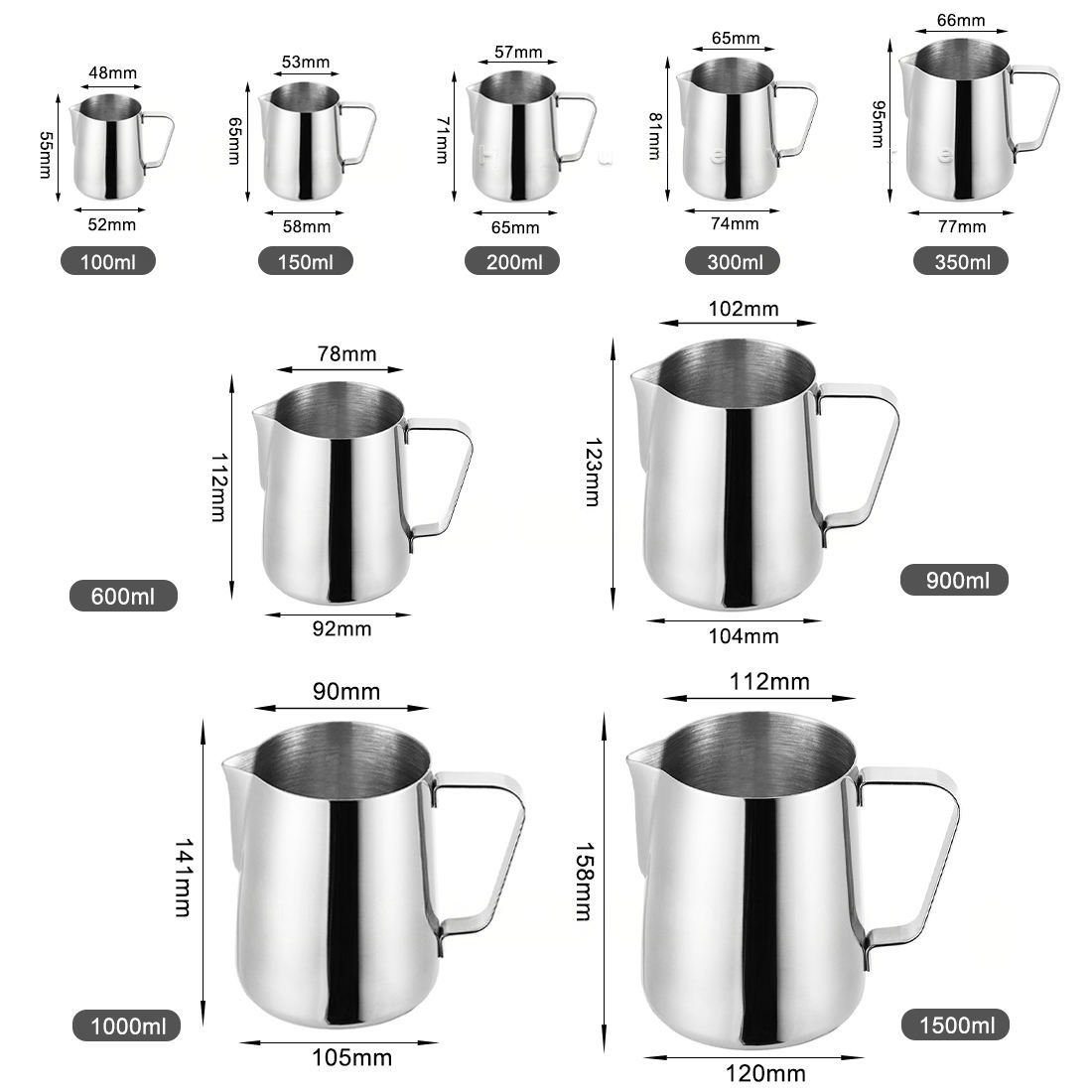
Coffmach’s coffee milk jug page lists current custom capacities, decoration and packaging options. Treat that range as a project starting point; reconfirm every option for the selected model, quantity and market.
Start with the customer and a small SKU plan
A home-barista gift set, a busy café replacement program and a distributor’s retail range do not need the same pitcher. Define the customer, drink menu, primary sales channel, skill level, cleaning method, target retail price and replenishment plan before issuing an RFQ.
| Buyer situation | Useful starting focus | Risk to avoid |
|---|---|---|
| Consumer or gift set | Clear capacity, comfortable grip, recognisable finish and protective retail pack | Launching too many sizes and colours before demand is known |
| Café or chain | Pour control, durability, cleaning, easy replacement and plain service packing | Choosing an attractive finish that is hard to keep presentable in service |
| Distributor/private label | Simple hero SKU, barcode control, carton data, reorder consistency and documented variation | Mixing small MOQ variants that complicate forecasting and inspection |
A practical first launch often uses one core size and one supporting size, with a consistent finish and markings. This is an illustrative assortment strategy, not a universal rule. Add a sharp-spout, large-capacity or special-colour variant only when a channel or customer requirement justifies its inventory and quality-control burden.
Choose the right customization path
| Path | What changes | Best use | Main control point |
|---|---|---|---|
| Stock plus logo | Existing body; logo and possibly standard box/label | Testing demand quickly | Verify logo contrast, wash durability and actual product quality |
| Private label / ODM | Supplier design with selectable capacity, colour, finish, marks and packaging | Distinct range without new body tooling | Ask which features are fixed, selectable or MOQ/tooling dependent |
| Full OEM | New body profile, spout, handle, base or capacity | Proven need for proprietary performance or brand differentiation | Use a drawing, measurable goals and a fixture-based approval process |
“Make it premium” is not a product brief. For full OEM, state the milk volume, dimensions, target mass, grip, pour style, material, finish and acceptance checks. For private label, document every selected option so the final quote does not quietly substitute a different stock pitcher or package.
Write the product specification before asking for price
Capacity, spout and balance
State nominal capacity in millilitres and ounces, and ask how the volume is measured. Nominal capacity is not the recommended steaming fill: milk needs room to expand and circulate. Include body height, top and base diameters, measurement-mark locations and usable fill range. Approve a spout by pouring with the drinks and patterns your customer actually makes—not from a side photograph.
Material, wall thickness and finish
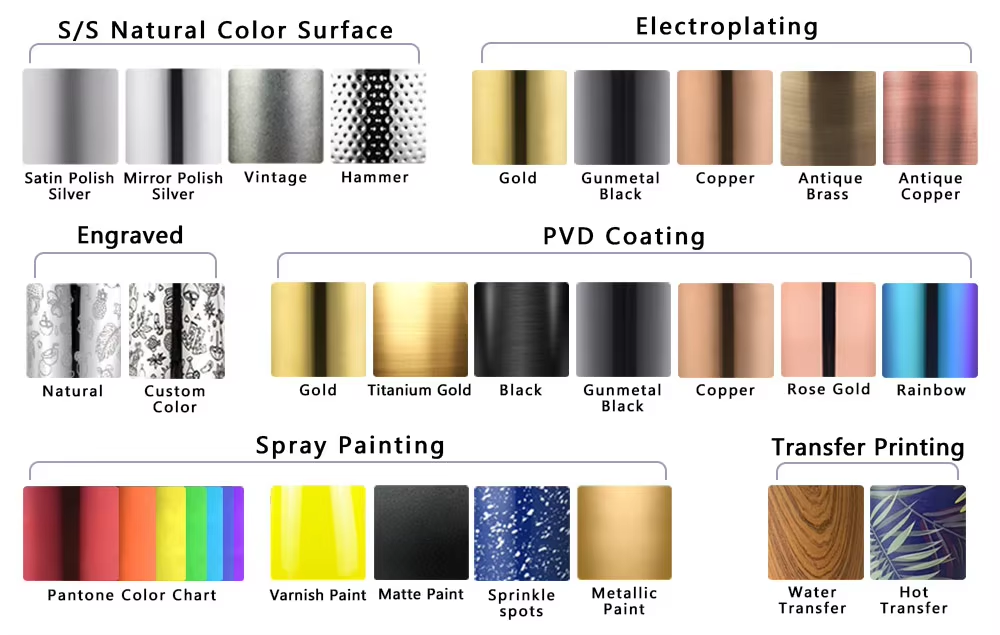
Specify an actual material grade or applicable material requirement rather than the phrase “stainless steel.” The choice depends on intended use, cleaning chemicals, forming, welding, finish, cost and target market. State measurable wall thickness and tolerance, then test the intended sample for balance, dent resistance, heat response and pour control.
For food-contact applications, the FDA Food Code’s multiuse-material criteria include being durable, corrosion-resistant, nonabsorbent, of sufficient strength for repeated washing, and finished smooth and easily cleanable. It is a U.S. model code, not a universal product certificate. Confirm destination-specific requirements with the importer of record or compliance adviser.
Branding and packaging must survive real use
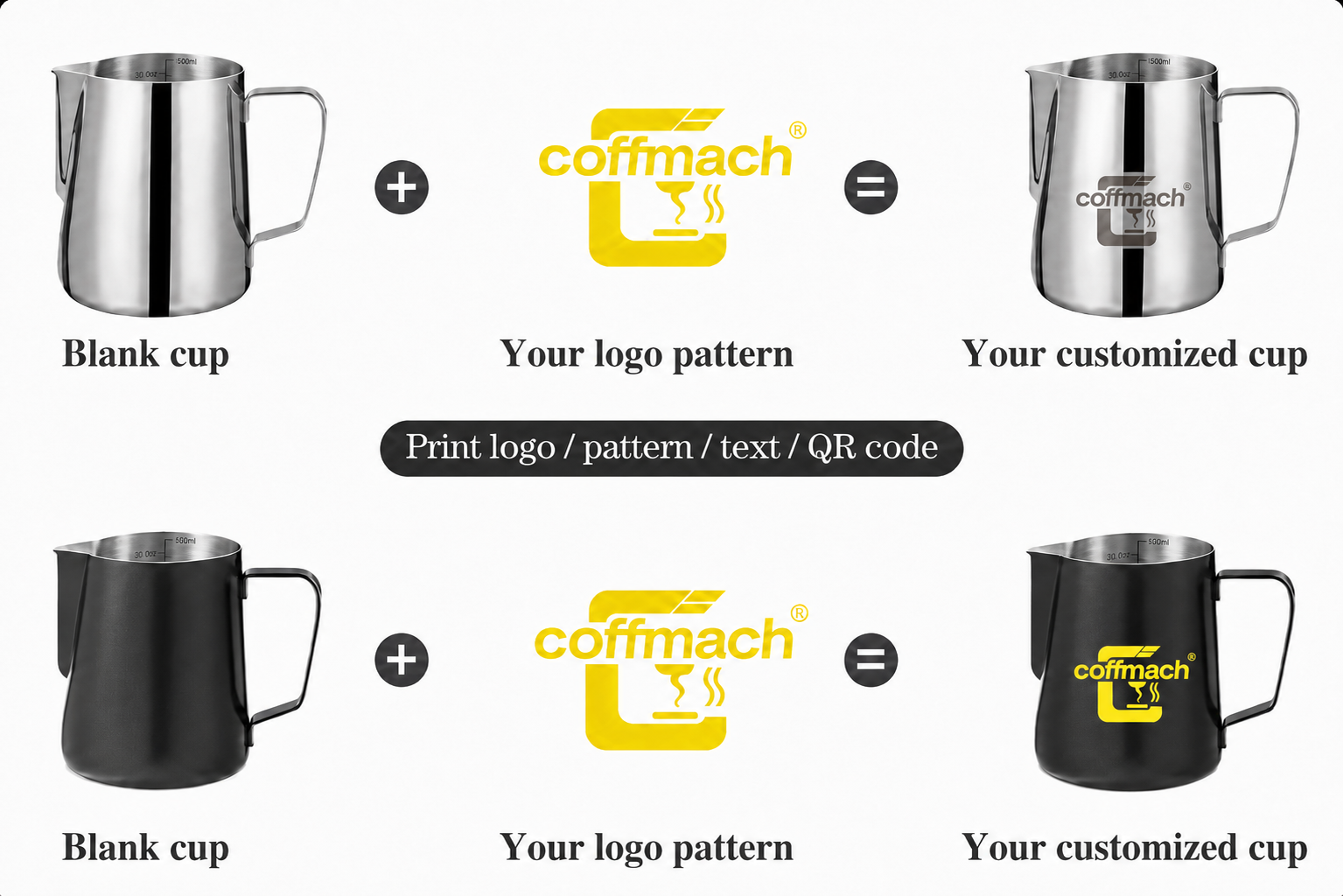
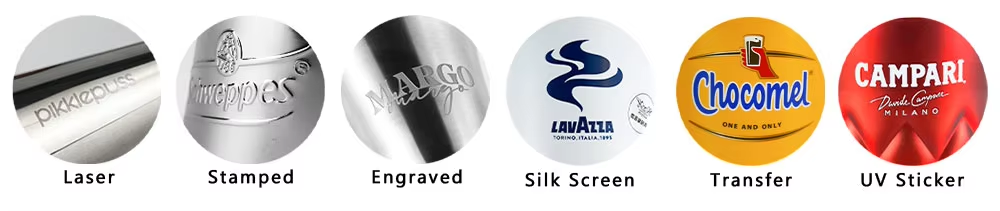
Choose a logo process on the exact finish and approve it on a physical pitcher. Curved reflective surfaces can change contrast and placement. The decoration specification should identify the process, artwork file and revision, colour reference, size, orientation, location, permitted variation and the agreed durability check.
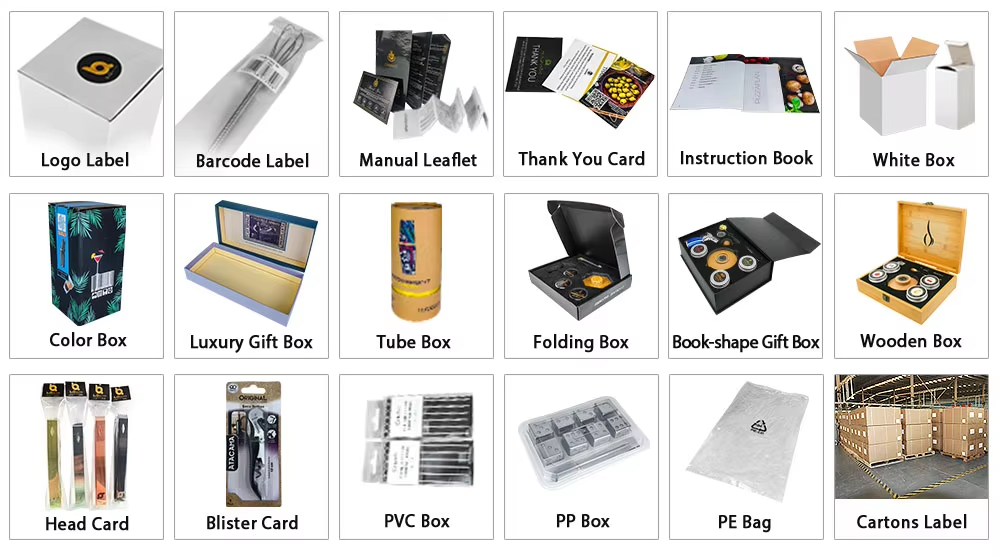
Packaging is part of the product. Define the individual bag, insert, retail box, care card, labels, barcode quiet zone, case pack, carton marks, packing orientation and spout/handle protection. Test the actual pitcher in the actual pack; a good logo cannot compensate for scratches or a bent spout after transit.
Compare landed cost, MOQ and delivery scope
Normalize quotations before comparing them. One offer may include thick steel, custom marks, inspection and a fitted retail insert while another covers only a stock pitcher and plain bulk packing.
| Include | Why it matters | Quote question |
|---|---|---|
| Goods, tooling and setup | Separates one-time development from repeat unit cost | Which charges repeat on the next PO? |
| Packaging and inspection | Protects retail condition and exposes quality scope | What exact pack, sample plan and report are included? |
| Freight, insurance, duty/tax and local handling | Changes the true destination cost | Which named place, Incoterm and charges are excluded? |
| Saleable units received | Accounts for approved damage and unsaleable defects | What is the agreed remedy for failed inspection or shortage? |
MOQ can apply per model, size, colour, logo, box or total order. Ask for the full MOQ structure. Coffmach currently presents low-MOQ custom and OEM/ODM options, but final MOQ, sample time and production timing must be confirmed in the written quotation for the exact design.
Build quality control before mass production
Agree defect categories, measurements, sample selection, inspection timing, pass/fail limits and corrective action before production. An approved sample demonstrates look and feel, but it does not define all acceptable variation. Add limits for capacity, dimensions, thickness, spout symmetry, handle alignment, weld, finish, logo placement, marks and packaging.
- Approve a physical reference sample made with the intended material, finish, decoration and packaging whenever practical.
- Keep version-controlled artwork, drawings, carton data and an approval sheet with every exception resolved.
- Inspect against the sample and written tolerances before shipment; record lot identity and retain production samples.
- Use an acceptance-sampling plan only with defined critical, major and minor defect examples; AQL is not a promise that every unit is defect-free.
- Require change notice before material, finish, tooling, packing or production process changes.
Ready to source a custom milk pitcher?
Send your target customer, capacity range, spout, material, finish, logo file, packaging concept, quantity, market and launch date. Coffmach can help structure a sample and OEM/ODM quotation.
Copy-ready custom milk pitcher RFQ checklist
Send the same request to every supplier and ask each to mark exceptions. A new team member should be able to identify exactly what is being bought, how it will be checked and what the price includes.
- Project: buyer, target market, channel, launch date and forecast.
- Product: model/drawing, capacity, usable fill range, dimensions, spout, handle, base, mass and thickness.
- Material and finish: grade/specification, internal/external finish, colour reference, coating boundary and required documentation.
- Branding and marks: logo method, artwork version, location, size, orientation, measurement units and tolerance.
- Packaging: bag, insert, retail box, care card, barcode, labels, case pack, carton and shipping marks.
- Quality: approved sample, defect examples, inspection plan, reports, lot records and remedy process.
- Commercial terms: MOQ per SKU, price breaks, tooling/setup, sample and production timing, payment, Incoterm and named place.
Frequently asked questions
What is the best wholesale milk pitcher for a coffee brand?
The best pitcher fits the target customer, drink size, pour style, price point and sales channel. Start with a tested stainless platform, purposeful capacity, comfortable grip, durable mark, clear markings and protective packaging, then validate it with real steaming, pouring and cleaning.
What is the difference between private label and OEM?
Private label applies your brand and selected options to an existing supplier design. Full OEM changes the product itself, such as the body, spout, handle or tooling. Private label is usually faster; OEM needs a clearer brief, more validation and greater investment.
What MOQ should I expect for a custom milk pitcher?
There is no universal MOQ. It depends on the base model, finish, colour, logo process, packaging, tooling and number of variants. Ask whether the minimum applies per SKU, colour, box or the combined order, then confirm the result in the quotation.
Should I approve a sample before placing a wholesale order?
Yes. Confirm that the sample uses the intended material, thickness, finish, logo method, marks and packaging. Test pouring, grip, cleaning, barcode scan and retail protection. Record any difference between sample and production before approval.
Is 304 or 316 stainless steel better?
Neither is automatically best for every project. Select based on cleaning chemicals, environment, construction, finish, documentation, cost and destination requirements. Ask for the exact grade and supporting production evidence instead of accepting a generic “food-grade” claim.
Which logo method is most durable?
Durability depends on the exact process, finish, mark depth or adhesion, artwork and cleaning routine. Evaluate the proposed method on the chosen pitcher and agree a realistic durability test and pass/fail appearance standard.
How do I compare two pitcher quotations?
First normalize grade, capacity, thickness, finish, logo, marks, packaging, quantity, inspection, documentation, Incoterm and delivery point. Then compare landed cost per saleable unit with sample quality, change control, lead-time evidence and remedy terms.
What should be checked before shipment?
Check identity, quantity, dimensions, material documents, spout symmetry, handle/weld, sharp edges, finish, logo, measurement marks, packaging, barcode, carton marks and functional samples. Compare against the approved sample and written tolerance list.
Technical sources and image credits
- Coffmach — Coffee Milk Jug. Product and customization context for capacities, materials, branding, packaging and OEM/ODM projects.
- FDA — Food Code 2022. U.S. model-code context for durable, corrosion-resistant and easily cleanable multiuse food-contact materials.
- European Commission — Food Contact Materials. EU regulatory overview for food-contact material requirements and GMP.
- GS1 — Responsibility for Numbering Trade Items. Brand-owner guidance for GTIN assignment.
- ISO — ISO 2859-1. Official reference for AQL-indexed acceptance sampling by attributes.
- Coffmach — Coffee Accessories Supplier Audit Checklist. Internal supplier-review and sourcing context.
- All five product images are from the Coffmach coffee milk jug landing page and show pitcher customization, capacity, finish, logo methods or packaging. Images and image credits are not clickable.