ESPRESSO GUIDE · PUCK PREP · OEM/ODM
Coffee Tamper vs Distributor: Do You Need Both?
A tamper is the essential final-compaction tool for a conventional manual espresso workflow. A spinning distributor is optional: keep it only if it improves your actual preparation, while WDT is the more relevant option when clumps extend through the coffee bed.
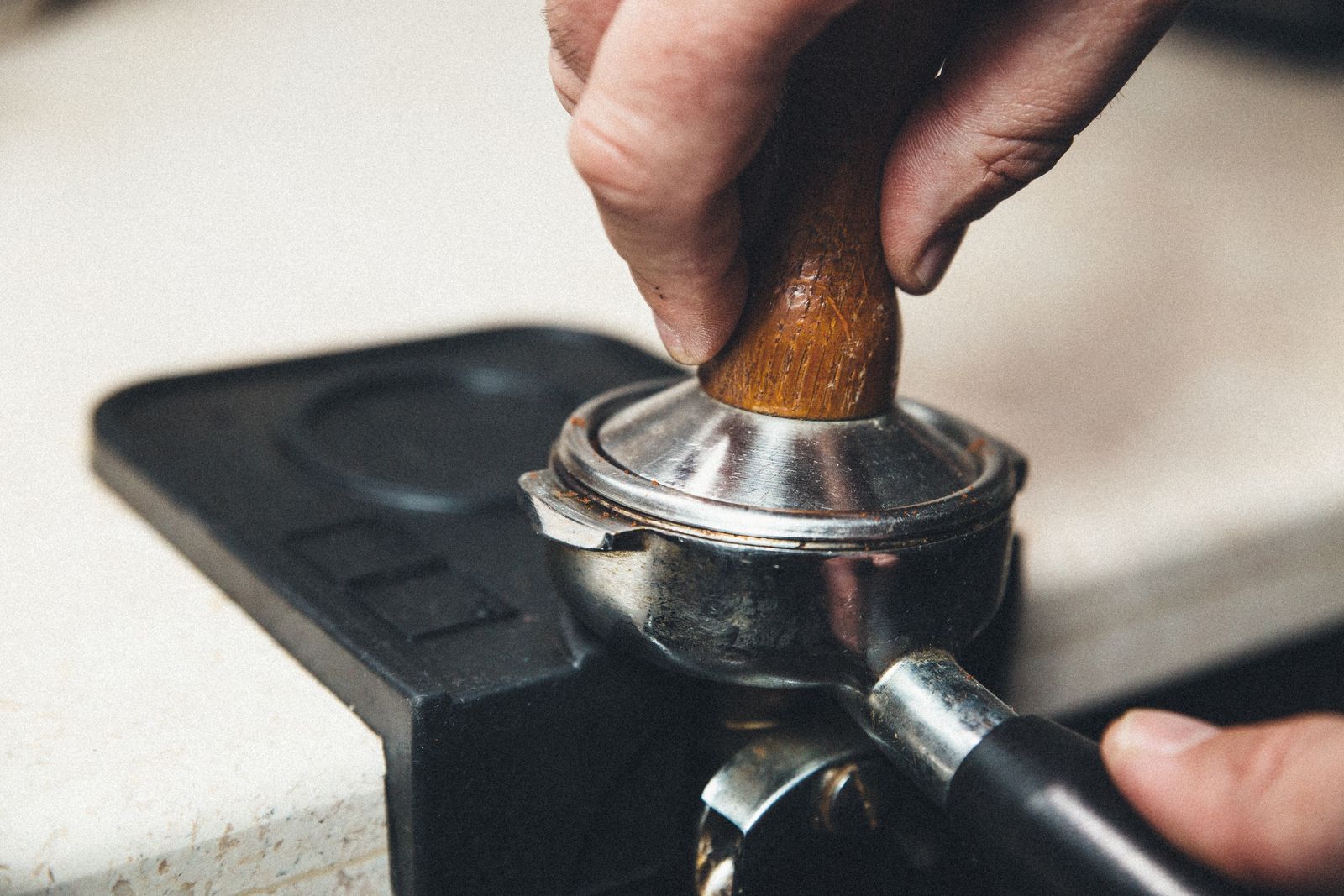
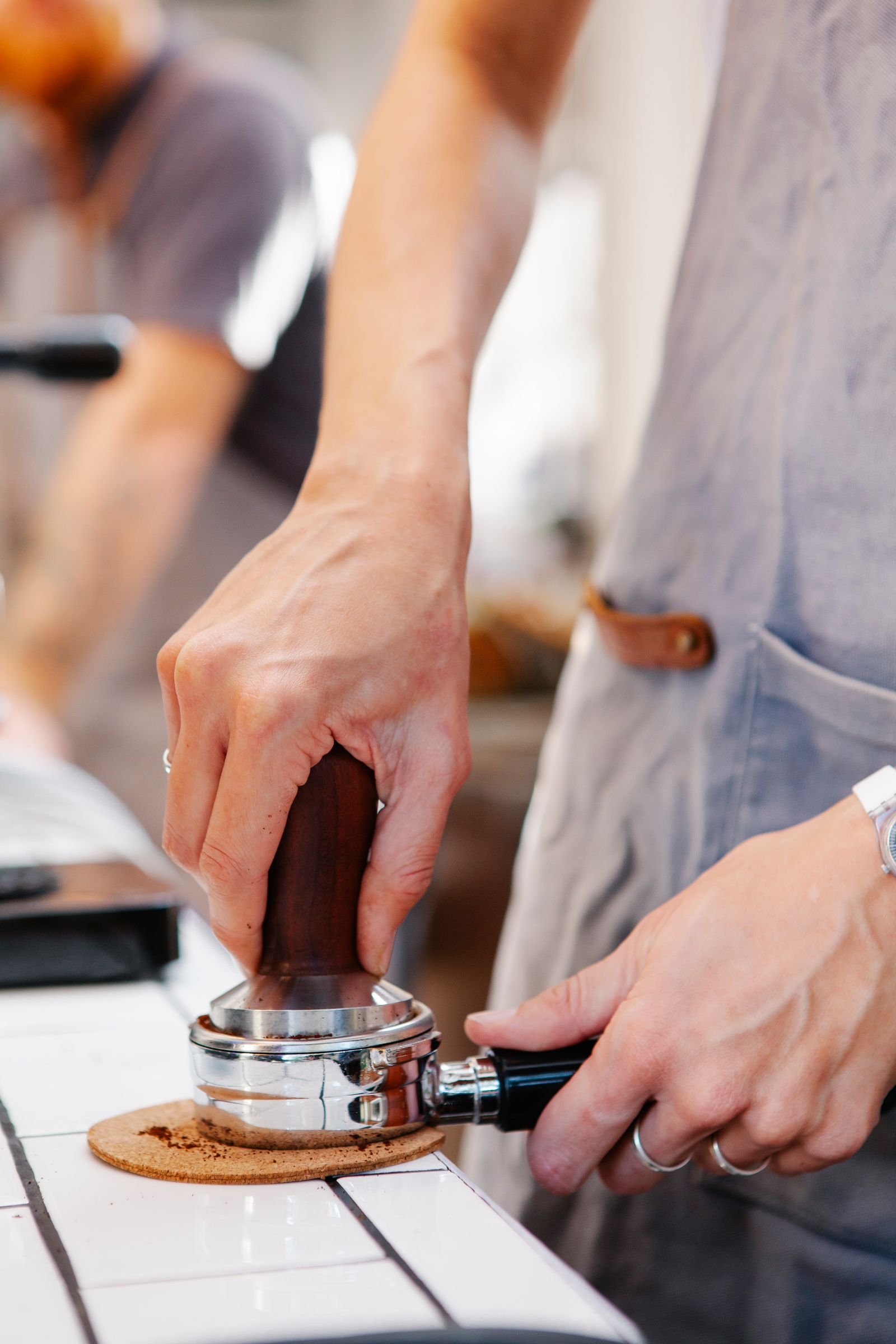
The short answer: buy the tamper first
If coffee is already dosed evenly and settles consistently, a correctly sized, level tamper may be enough. If clumping or uneven density exists deeper in the bed, a needle tool using the Weiss Distribution Technique (WDT) is usually a more direct diagnostic option than a surface-leveling spinner. The decision is not “more tools equals better espresso”; it is whether a specific tool removes a specific, measured failure point.
- Distribution prepares the bed; tamping gives the prepared bed its final compact, level geometry.
- A smooth top surface does not prove even density from the basket floor to the puck surface.
- For a limited budget, prioritize basket fit, dose consistency and a properly sized tamper before a spinner.
- Use WDT when clumps or unevenness extend through the coffee bed, not merely across its surface.
- A two-in-one tool still performs two actions: distribute with one face, then tamp with the other.
- For cafés, keep the fewest steps that demonstrate repeatable quality at service speed.
| Decision factor | Coffee tamper | Spinning distributor / leveler |
|---|---|---|
| Primary job | Compacts the prepared bed into a stable, level puck | Grooms or redistributes the upper surface before tamping |
| Normal workflow position | Last preparation action before optional screen and brewing | After dosing or WDT, before tamping |
| Deep clump control | No; it compresses the bed already present | Usually limited; fins mainly work near their contact depth |
| Essential tool? | Normally yes in conventional manual preparation | Optional; only useful if it improves the tested workflow |
| Critical fit check | Base diameter, edge coverage and level entry | Diameter, adjustable contact depth, fin geometry and rim reference |
| Main failure risk | Tilt, poor fit or compressing an uneven bed | Flat-looking top with uneven density below; deep grooves or pre-compression |
Distributor is an umbrella term—specify the mechanism
In espresso preparation, “distributor” can describe several quite different tools. A spinning surface leveler, a fine-needle WDT tool, a blind shaker, a dosing-cup transfer, a planetary needle mechanism and an automatic distribution machine do not act on the coffee bed in the same way. A product specification should name the mechanism instead of approving a generic “distributor” label or an attractive silhouette.
Traditional tamper
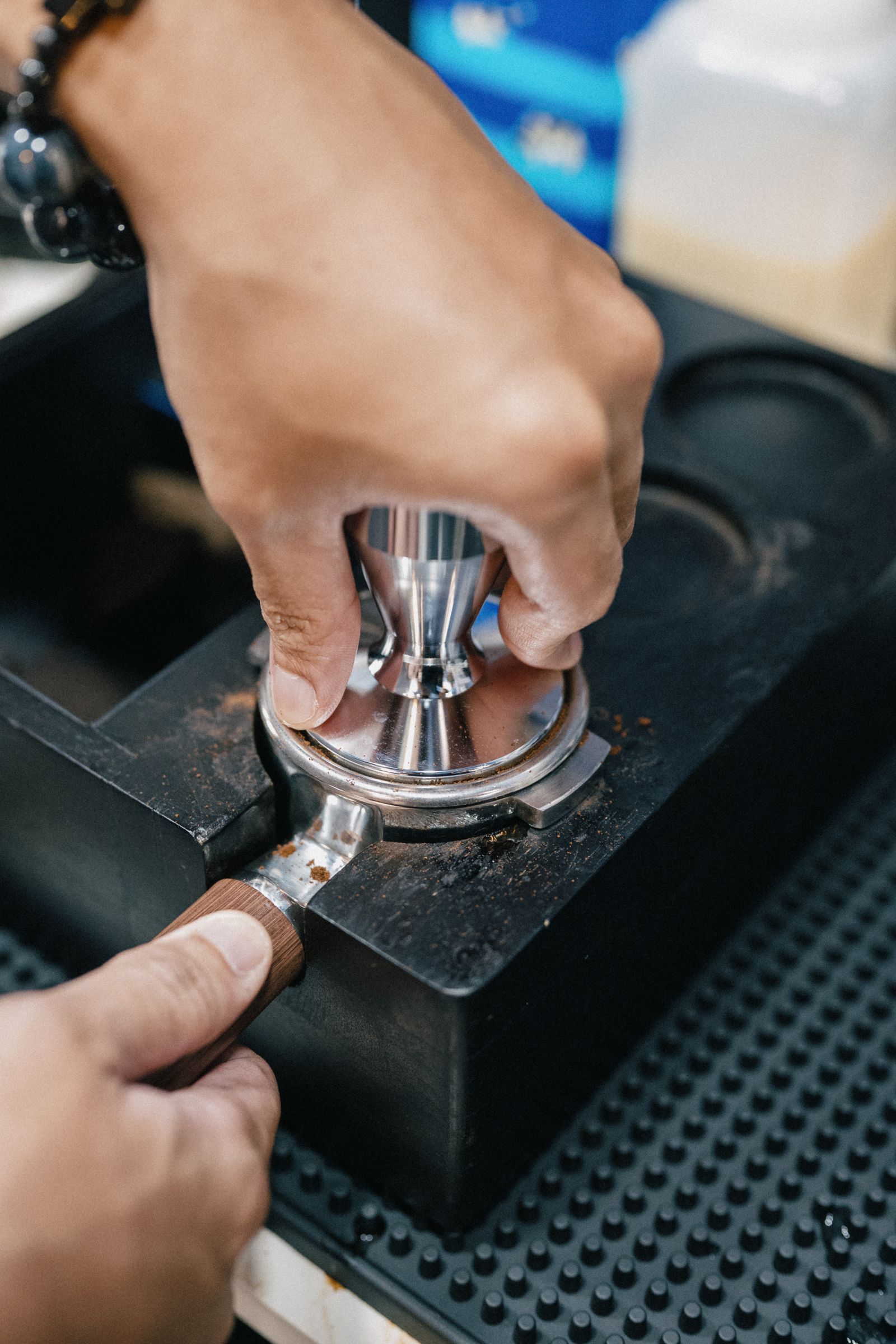
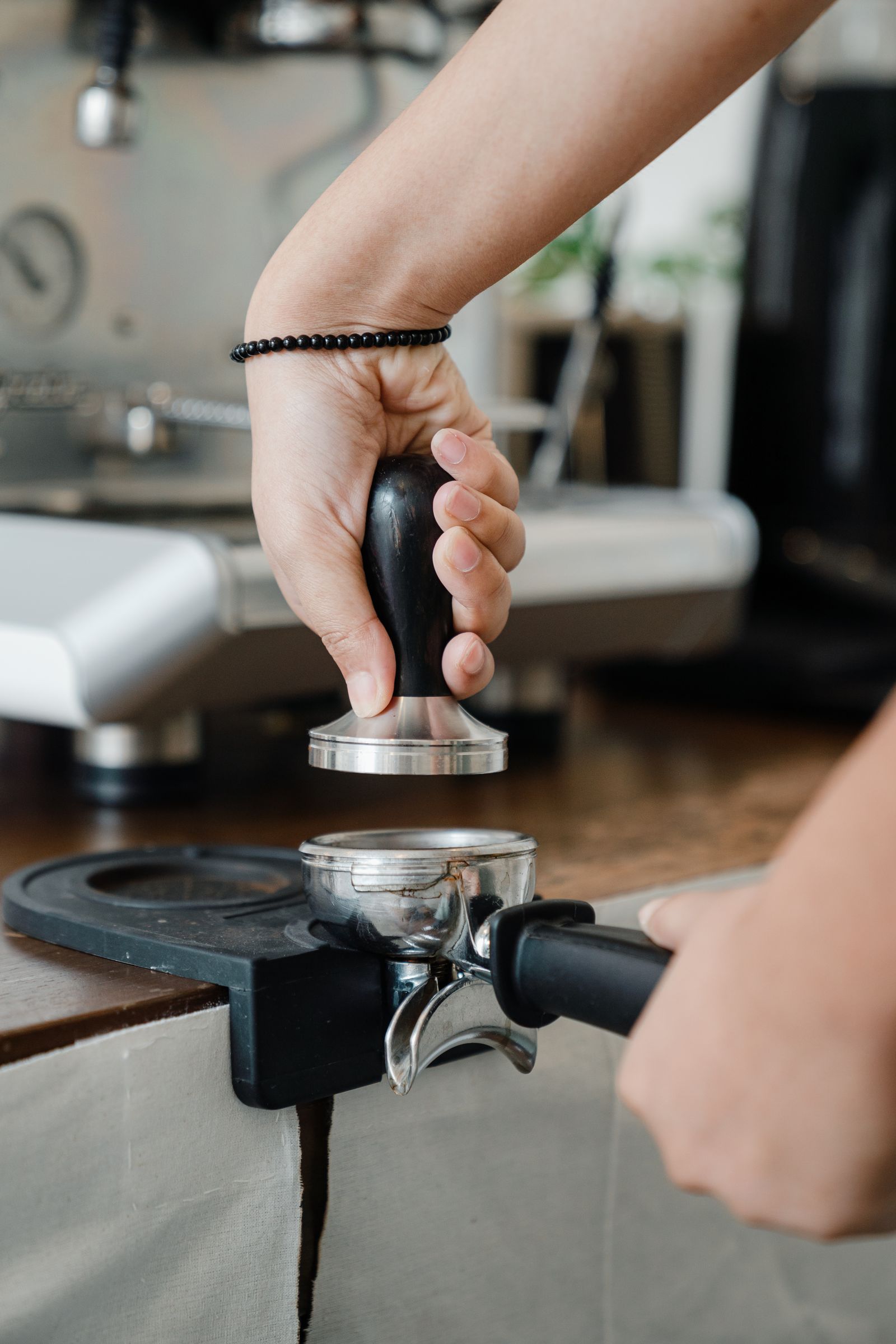
A flat, convex or patterned base presses the loose coffee downward. Its central job is final compaction, perimeter coverage and a repeatable puck angle for the selected basket and dose.
Spinning leveler
Angled fins or wedges rotate across the top of the grounds. It may move high spots and create a visually flat surface, but its direct action is concentrated near fin depth.
WDT / needle tool
Fine needles stir through the bed. When used consistently, they can break clumps and change distribution through more of the puck depth; poor technique can also create trenches.
Shaker or dosing transfer
A covered cup mixes grounds before release. It can change how coffee lands in the basket without using fins or needles directly on the loose bed.
Automatic distribution
Commercial systems may use controlled needles, vibration or motion. They require separate review of cycle time, cleaning access, service, noise and portafilter compatibility.
Dual-head combo
One end distributes and the other tamps. It saves counter space, not operations: both working faces need independent, usable travel across the intended dose range.
Do not confuse surface grooming with full-bed distribution
Barista Hustle distinguishes even density throughout the puck from simply grooming the top. A surface tool can provide a useful visual cue and make a level tamp start easier, yet a good-looking surface alone cannot reveal a deeper clump, void or uneven packing pattern. This is why a spinner should be evaluated by the result of the entire workflow, not by appearance alone.
For a broader overview of manual, calibrated, spring-loaded and precision-fit tampers, see Coffmach’s coffee tamper guide.
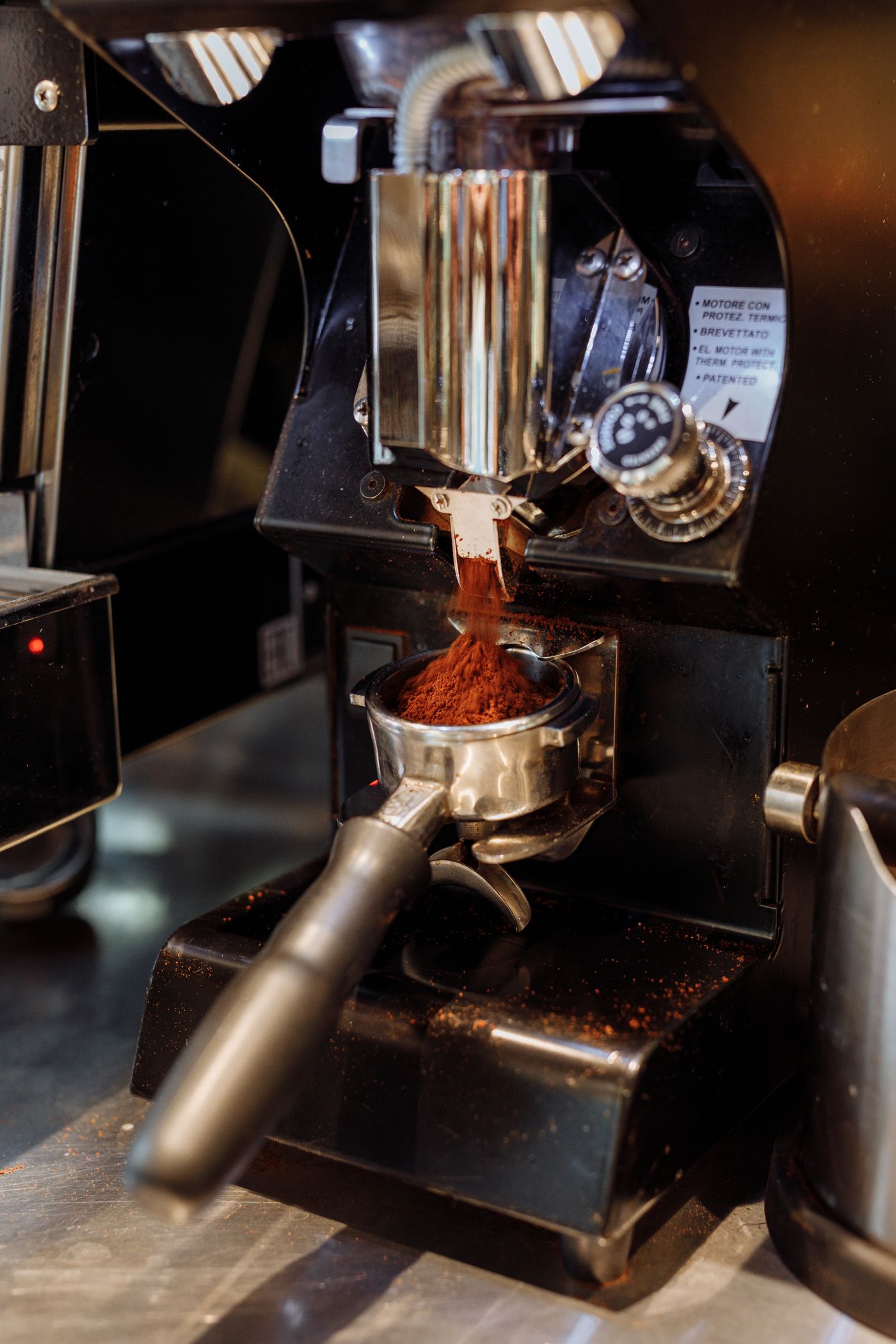
What changes in the coffee bed?
Distribution targets spatial uniformity
Before tamping, grinder output can leave a mound, crater, clumps, static-bound particles or more coffee on one side of the basket. The aim is not merely a horizontal top; it is reasonably even mass and particle arrangement across the width and depth of the bed, so the later tamp does not lock substantial density differences into place. Particle size, fines, moisture, basket shape, deposition pattern and handling all affect this starting condition.
Tamping targets consolidation and final geometry
The tamper reduces the volume of the loose bed, creates a coherent puck, sets the final surface angle and affects perimeter coverage. It cannot selectively move enough coffee from a dense area to a low-density area once its base starts to compress the bed. A beautifully tamped puck can therefore still begin with an uneven interior if distribution was not addressed first.
Why the sequence matters
A distributor used without a final tamp can leave the top flat but not fully consolidated. A tamper used after poor preparation can make the top look finished while locking in the unevenness below. Controlled research workflows likewise keep levelling and final tamping as separate preparation stages; this does not prove that every leveler improves extraction, but it does preserve the distinction between the two operations.
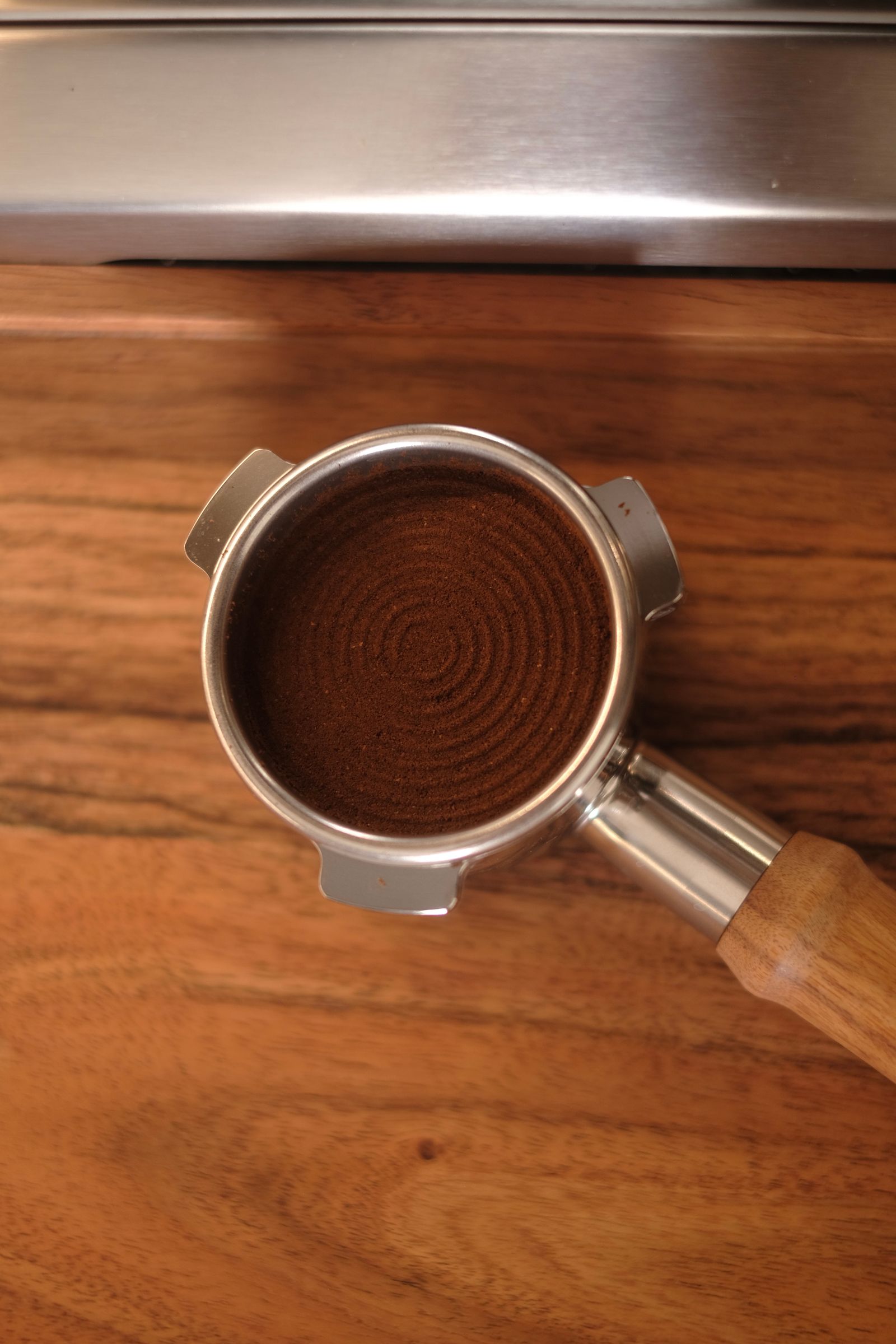
Do you need both tools?
| User or setting | Recommended starting setup | Add a spinner when… |
|---|---|---|
| New home barista | Correct-size tamper; simple settling; WDT only if the grinder clumps | The top repeatedly stays uneven after a consistent distribution step |
| Budget-focused setup | Tamper first | A small A/B test shows less mess or variation |
| Single-dose workflow | Tamper plus WDT or shaker if transfer creates clumps or a mound | A shallow final level makes tamp alignment easier without slowing preparation |
| Multi-user household | Consistent distribution method and a level-entry or self-leveling tamper | Users can set and use the added tool identically |
| Busy café | Fewest validated steps; a manual or automatic tamper | Cycle-time and quality data justify its cleaning and training burden |
| Private-label brand | Specify individual functions, dimensions and acceptance tests | Both faces meet the basket and dose-range requirements |
When a tamper alone can be enough
A separate spinner may add little when the grinder deposits evenly, the barista uses a reliable transfer or tapping routine, clumping is manageable and the tamper enters straight. “Tamper only” does not mean no preparation: controlled transfer, gentle vertical settling and the grinder’s own output already influence the loose bed. The meaningful comparison is one controlled distribution method against another—not a tool against careless preparation.
When a distributor plus tamper can help
A surface leveler can be useful when large high and low areas repeatedly make level tamp entry difficult, or when a shared station needs a simple visual and tactile setup cue. In a retail set, a dual-head tool can reduce counter clutter. Keep the extra step only if it improves repeatability, cleanliness, training or speed enough to justify the time and adjustment risk.
When WDT is a better test than a spinner
Choose WDT before a surface spinner when the grinder produces visible clumps, a bottomless portafilter repeatedly shows early localized flow despite level tamping, or the unevenness appears to extend through the bed. WDT can reach deeper coffee when performed consistently, but manual WDT may be too slow for a café unless it is standardized or automated.
Need samples matched to your basket and workflow?
Send Coffmach your basket family, working diameter, dose range, intended distribution method, tamper type, material, finish and target user. We can help turn the workflow into a clear product specification.
Correct order: distribute before you tamp
Use the same sequence every time before deciding whether a new tool helps. It should support the recipe and basket rather than introduce another variable.

How deep should a coffee distributor be?
There is no universal millimeter setting. Contact depth depends on dose, basket diameter and taper, coffee bulk density, fin geometry and how the loose bed settles. Start at the shallowest setting that reliably contacts and levels high spots without leaving spiral trenches or forcing a dense top layer.
Validate the tool at the lowest and highest intended doses. At a low dose, fins may never contact; at a high dose, they can pre-compress aggressively or the collar can contact before the bed is prepared. Mark or lock the approved setting for shared stations and revalidate it when coffee, dose or basket changes materially.
How to test whether a distributor actually helps
The answer is local. Compare a baseline method against the same method with the spinner added; do not compare a careful distributor routine against hurried, inconsistent tamping. Hold dose, grind, basket, coffee age, extraction recipe, machine condition and operator as stable as practical.
| Step | What to control | What to record |
|---|---|---|
| Baseline | Use one fixed basket and a correctly fitted tamper | Recipe, preparation time and visible handling errors |
| Method A | Controlled WDT or settling method, then tamp | Flow, yield, extraction time, taste notes and variation |
| Method B | The same method plus one shallow distributor step | Same observations, plus tool setting and contact behavior |
| Order | Alternate A and B across more than one session | Cross-user differences, spills, tilt, sticking and cleanup |
| Decision | Compare average performance and variation | Whether the benefit justifies time, cost, training and maintenance |
Use a bottomless portafilter as one diagnostic view, not as the only score. Early jets or asymmetric flow can be informative, yet one visually attractive extraction is not a complete measurement of taste or uniformity. Similarly, a dry, smooth or intact spent puck is not reliable proof of even extraction because pressure release and basket geometry can change its appearance.
Troubleshooting table
| Symptom | Likely cause | Check | Corrective action |
|---|---|---|---|
| Flat top but unstable shots | Unevenness or clumps below the surface; recipe drift | Audit dose, grinder output and distribution before tamping | Stabilize the recipe; test WDT or transfer method before deeper spinning |
| Spiral grooves or dense top | Distributor set too deep or pressed down | Inspect the loose bed after a controlled rotation | Reset shallower; use minimal downward force |
| Tamper starts tilted | Mounded surface, poor posture or incompatible base | Check rim clearance, basket taper and starting bed | Improve settling, use a compatible base or guided tamper |
| Combo bottoms out | Shared body height limits travel at the current dose | Test both faces at minimum and maximum dose | Change geometry, dose range or choose separate tools |
| Tool setting moves during use | Loose threads, poor lock or grounds ingress | Clean and check adjustment retention | Service, redesign or define an adjustment-retention acceptance check |
Buying guide: select each function separately
Choose the tamper by the actual basket
The base must match the basket’s internal diameter at working depth without binding. Confirm basket taper, ridge, coating and manufacturing variation, then review base flatness, profile, concentricity, perpendicularity, handle geometry, leveling reference, effective stroke and cleaning design. A nominal portafilter size alone is not a full compatibility specification.
Choose a spinner by mechanism and dose range
Compare working diameter, fin pattern, minimum and maximum depth, adjustment resolution, locking method, rim-contact surface, underside clearance, weight, finish and grounds ingress into threads. A large adjustment range is not useful if the setting moves in service or the fins do not contact the low end of the intended dose range.
Choose a combo only after testing both faces
Confirm that the distributor contacts the minimum dose without over-compressing the maximum dose, and that the tamper reaches full compaction without its body or collar stopping early. Check balance, grip, adjustment retention and contamination transfer when flipping the tool. An official Normcore combo example publishes separate maximum depth values for its distribution and tamper sides; those values are model-specific, but they illustrate why the two functions require separate checks.
Cleaning and maintenance
Brush or wipe dry coffee from working faces and follow the manufacturer’s care instructions. Do not assume dishwasher safety from a stainless-steel base: complete tools can include anodized aluminum, coatings, springs, lubricants, polymers, wood, bearings or threaded cavities with different limits.
Inspect fins, threads, locks and rim-contact surfaces for packed coffee or damage. Inspect tamper bases for dents, corrosion, sharp edges, loose handles or off-axis assembly. Stop using a tool that binds, sheds material, exposes a damaged mechanism or cannot be cleaned as intended.
OEM and wholesale specification guide
For importers and private-label brands, “tamper versus distributor” is a functional specification problem. A purchase order should not use terms such as leveler, distributor, calibrated, self-leveling or two-in-one as undefined marketing labels. Identify each working face, its reference surface, travel, adjustment, intended dose range and acceptance test.
| Function | What to specify | Why it matters |
|---|---|---|
| Tamper base | Working diameter, profile, flatness, edge geometry, material and finish | Controls basket fit, edge coverage and clean removal |
| Distributor face | Mechanism, fin/needle geometry, contact depth, rim reference and locking | Defines what the tool can reach and how setting changes are controlled |
| Travel | Effective tamp stroke plus min/max distributor contact across intended doses | Prevents early bottoming, missed contact and excessive pre-compression |
| Moving assembly | Play, friction, return, threads, lock retention and grounds ingress | Separates durable function from a short-term sample impression |
| Claims | Fixture, measurement point, loading rate, sample quantity and tolerance | Prevents unqualified force, leveling or “consistent distribution” claims |
| Packaging and care | Impact protection, cleaning instructions, spare parts and inspection triggers | Reduces transit damage, corrosion, contamination and service claims |
RFQ checklist
- Target user, machine and basket family, measured working diameter, dose range, skill level and daily use volume.
- Separate tamper and distributor mechanism; base, fin, needle, collar, shaft, spring, guide, thread, lock, handle and stand requirements.
- Materials, finish, colors, branding, packaging, reference sample, order quantity, destination and commercial terms.
- Golden-sample approval, controlled drawings, geometry checks, functional basket fixtures, cycle testing and defect definitions.
- Cleaning limits, spare parts, warranty path, supplier change control, traceability and corrective-action expectations.
Ready to specify a tamper, leveler or combo?
Send your reference basket, dose range, mechanism, desired travel, materials, finish, packaging and proposed test method. Coffmach can review the information for sample and OEM/ODM planning.
Frequently asked questions
Do I need both a coffee tamper and a distributor?
You need a tamping function for conventional manual espresso, but a separate spinning distributor is optional. Keep both when the distributor measurably improves leveling, tamp entry, cleanliness, speed or cross-user consistency. If clumping is the problem, test WDT before a surface spinner.
Can a coffee distributor replace a tamper?
A normal spinning leveler does not replace a tamper. It grooms the top with shaped fins rather than applying final full-face compaction. A dual-head tool can supply both functions, but the user still distributes with one end and tamps with the other.
Do you tamp after using a coffee distributor?
Yes. The usual order is distribute first, then tamp. Use the distributor shallowly and with minimal downward force, then tamp once with a correctly fitted base. Do not tamp before distributing because later movement can disturb the compacted bed.
Is WDT better than a spinning distributor?
WDT is usually the more relevant test for breaking clumps and changing distribution through the bed. A spinner can be faster and provide a flat surface, but its direct action is generally shallow. The better choice depends on grinder output, workflow speed and controlled results.
How many times should I spin a distributor?
Use the minimum repeatable rotation that your tested workflow requires. Extra spinning can waste time, deepen grooves or move coffee repeatedly. There is no universal number because fin geometry, depth, dose and basket geometry differ.
How deep should an espresso distributor be?
Set it at the shallowest depth that consistently contacts and levels high spots without carving furrows or heavily compressing the top. Validate the setting at the lowest and highest intended doses instead of copying a setting from another basket or coffee.
Should I use a distributor before or after WDT?
If both are used, perform WDT first, settle the bed, use the surface distributor second and tamp last. WDT addresses clumps and deeper density; the spinner provides a surface reference. Skip the spinner if WDT and settling already create an easy, repeatable tamp.
Are two-in-one tamper-distributor tools good?
They can be useful when both faces fit correctly and offer enough independent travel across the intended dose range. Their trade-offs include shared body geometry, adjustment errors, extra weight and the risk that one face fits while the other misses or bottoms out.
What is the best puck-prep setup for a busy café?
Use the fewest steps that deliver repeatable quality at service speed. A strong grinder output or controlled transfer plus a reliable manual or automatic tamper may outperform a long routine. Test cycle time, errors, cleaning, maintenance, shot variation and staff usability before rollout.
Technical sources and image credits
- Barista Hustle — Distribution Techniques. Training reference distinguishing whole-bed density from surface grooming and discussing WDT and OCD-style tools.
- Barista Hustle — Weiss Distribution Technique. Background on WDT and the depth limits of surface-leveling tools.
- Barista Hustle — Tamping and Brewing Technique. Practical reference for straight, level tamping.
- Technical University of Munich — Influence of Flow Rate, Particle Size, and Temperature on Espresso Extraction Kinetics. Peer-reviewed espresso preparation and extraction research record.
- Normcore — Tamper & Distributor Combo. Model-specific example of separate distribution and tamper faces, depth limits and care guidance.
- Coffmach — Coffee Tamper. Product and OEM/ODM context.
- Coffmach — Coffee Tamper Guide. Internal reading on types, sizes and use.
- Coffmach — How to Choose a Coffee Tamper. Internal reading on basket fit and selection.
- Coffmach — Coffee Accessories Supplier Audit Checklist. Internal sourcing and factory-review context.
- All seven article photographs are real, unbranded coffee-workflow images from Pexels. Each photograph is credited in plain text directly below the image; neither the image nor its image credit is a clickable link.