


05.03.2026
Busy professionals often ask how to choose the right coffee milk jug for commercial use. The answer is simple. Focus on three things: durability, efficiency, and consistency. This decision affects your workflow. It impacts product quality. And it influences long-term costs.
This guide gives you the definitive answer. Whether you’re a cafe owner, purchasing manager, or B2B seller, we’ve got you covered. We’ll examine every critical factor. From material science to ergonomic design. Your next purchase will be an investment, not just an expense.
Table of Contents
Your Quick Selection Guide
Most cafes should choose a 600ml (20 oz) jug. This size strikes the perfect balance. It handles one large beverage or two small-to-medium drinks. It’s a true workhorse.
For material, there’s only one choice: 304-grade stainless steel. This food-safe, rust-resistant metal is essential. It’s the only viable option for demanding commercial environments.
Does your cafe emphasize latte art? Choose a narrow, sharp spout. It gives you control and detail. For speed and basic patterns, a wider, rounded spout works better.
Here’s the key insight: invest more upfront for better construction. A thicker, well-made jug costs more initially. But it offers superior durability and performance. You’ll save money on replacements. And you’ll reduce operational headaches.
A Critical Business Decision
Your milk jug is more than a container. It’s a barista’s primary tool for controlling milk texture and temperature. These are the two pillars of quality milk-based coffee.
The right jug ensures consistency. Every latte, cappuccino, and flat white meets your quality standard. Consistency builds customer loyalty. The jug is key to achieving it.
Picture a busy morning rush. A barista with wrong-sized jugs faces constant bottlenecks. They waste milk using large jugs for small drinks. Or they waste time steaming multiple small batches for large orders. Correct sizing means speed and efficiency.
Excellent latte art is powerful marketing. A quality jug enables this art. It signals a high-quality coffee program. It enhances customer experience. This directly impacts your brand’s perception. As reports from outlets like Perfect Daily Grind show, aesthetics and quality are deeply connected in modern cafes.
Choosing the Right Capacity
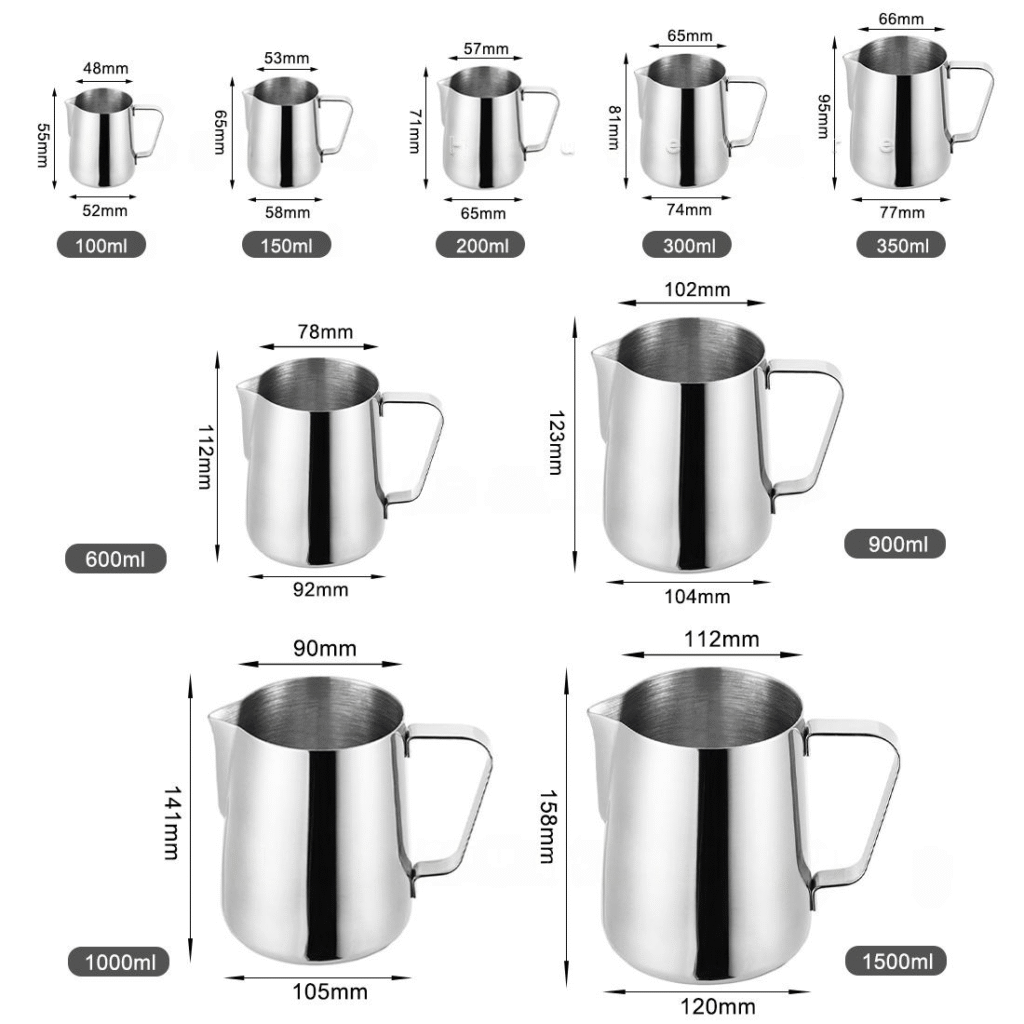
Selecting correct jug capacity is fundamental. It drives efficient, low-waste workflow. Your decision should consider your menu, average drink sizes, and service pace.
Wrong choices cost money. Too large? You waste milk with every pour. Too small? Your baristas lose precious seconds during peak periods.
Let’s examine the three industry-standard sizes for commercial use.
The 350ml (12 oz) Jug
This smaller jug is built for precision and single servings. Use it to steam just enough milk for one small drink. Think flat white, cortado, or macchiato.
The main advantage is minimal milk waste. This adds up significantly over thousands of orders. It also heats milk very quickly. Experienced baristas appreciate this for single orders.
It’s ideal for intricate latte art on smaller canvases. Lower volume is easier to control. However, it’s highly inefficient for multiple drinks or larger cups. It’s a specialized tool, not a primary one.
The 600ml (20 oz) Jug
The 600ml jug is the undisputed commercial workhorse. This is the industry standard for good reason. It offers maximum versatility.
It’s perfectly sized for two typical 8-10 oz drinks simultaneously. It can also handle a single large 16-20 oz latte comfortably.
This balance of efficiency and waste-reduction makes it essential. It handles approximately 90% of a cafe’s needs. The only minor drawback? It can waste some milk if consistently used for single small cortados.
The 1000ml (32 oz) Jug
The largest standard size is built for high-volume batching. It’s not intended for crafting individual, high-quality beverages.
Use it for catering, morning rushes of simple lattes to-go, or large pitchers of hot chocolate. A barista can steam large quantities at once. This prioritizes throughput over nuance.
The significant cons are poor microfoam control. Detailed latte art becomes nearly impossible. There’s also high risk of milk waste if the entire batch isn’t used immediately. This jug should be supplementary. Only get one if you have specific high-volume needs.
Capacity | Best For | Pros | Cons | Typical Ratio Per Station |
350ml / 12oz | Single small drinks (Flat White, Cortado), Latte Art Practice | Minimizes waste, Quick heating | Inefficient for multiple orders | 1 per barista station |
600ml / 20oz | The all-rounder, 2 small or 1 large drink (Latte, Cappuccino) | Versatile, Efficient, Industry Standard | Slight waste on single small drinks | 3-4 per barista station |
1000ml / 32oz | Batch steaming, Catering, Hot Chocolate | High throughput for simple drinks | Poor microfoam control, High waste risk | 1 per cafe, if needed |
Understanding Jug Materials
Material science behind your milk jug is critical. It affects safety, durability, and performance. Don’t cut corners here. Wrong materials lead to equipment failure and safety concerns.
Let’s explore steel grade differences and the crucial role of wall thickness.
304 vs. 201 Stainless Steel
This choice is non-negotiable for commercial food service. You must select 304 stainless steel.
304 “Food-Grade” Stainless Steel is also called 18/8 steel. It contains approximately 18% chromium and 8% nickel. These elements create a passive, corrosion-resistant layer on the surface. This provides excellent protection against rust from daily exposure to milk acids, water, and harsh cleaning chemicals.
The cheaper alternative is 201 stainless steel. This is a trap for unwary buyers. It reduces cost by replacing expensive nickel with manganese and nitrogen. This significantly compromises corrosion resistance.
In demanding cafe environments with constant moisture and acidity, 201 steel jugs develop rust spots and pitting. This is unsightly and unhygienic. These pits harbor bacteria.
The global standard for food and beverage equipment is 304 grade steel. Material science authorities like the British Stainless Steel Association confirm this. Any jug that doesn’t explicitly state 304 or 18/8 steel should be immediately disqualified for professional use.
The Role of Wall Thickness
Wall thickness is the unsung hero of heat control and durability. It directly affects a barista’s ability to texture milk. It also determines the pitcher’s ability to withstand commercial rigors.
Thin-walled jugs have thickness below 0.7mm. They’re cheaper to manufacture. Their primary drawback is rapid heat transfer. The metal gets hot almost instantly. This gives baristas a very narrow window to properly aerate and texturize milk before it overheats.
These thin jugs are prone to denting and warping when dropped. A dent disrupts the internal vortex during steaming. This makes consistent, silky microfoam harder to create.
Thick-walled jugs are typically 0.8mm to 1.0mm range or thicker. They offer superior performance. They provide better thermal insulation, absorbing heat more slowly and evenly.
This gives baristas a wider, more forgiving timeframe to create perfect microfoam. The tactile difference is immediate. A thick jug feels substantial and provides control. A thin one feels flimsy and becomes too hot to handle.
Thicker walls mean greater resistance to dents and dings from drops. This ensures much longer service life. It’s a wiser investment. Professional setups demand that every component, from tampers to the full range of coffee machine accessories, is built to last.
Design for Performance
Beyond size and material, physical design matters. The spout, handle, and body shape directly impact performance, ergonomics, and drink quality.
These elements determine how easy it is to pour detailed latte art. They also affect how comfortable the tool is for baristas during long, repetitive shifts.
The Spout for Latte Art
Spout shape is your primary tool for controlling milk foam flow. Choose between spout types based on your cafe’s service style.
A narrow, sharp spout is sometimes called “needle nose” or “sharp” spout. It’s best for intricate, high-contrast latte art. This includes complex patterns like detailed rosettas, multi-layered tulips, and swans.
This design restricts milk flow. It allows baristas to pour fine lines and precisely place foam on the espresso canvas. It offers the highest degree of control for artistic expression.
A wider, more rounded spout is designed for speed and simplicity. It’s perfect for cafes where complex art isn’t a priority. It’s also good for baristas still developing skills.
This spout allows faster, higher-volume pours. It makes basic patterns like hearts and simple monk’s heads quick and easy. For demonstrations of how different spout shapes affect pouring, resources from world-class educators like James Hoffmann are invaluable.
Handle Ergonomics and Welds
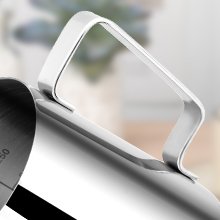
The handle may seem minor, but its design is crucial for barista comfort and jug longevity. An open-handle design is generally preferred. This means space between the handle and jug body.
This style allows various grip styles. Baristas can hold the handle or pinch the jug itself. It accommodates different hand sizes and pouring techniques. A poorly designed, cramped handle causes significant wrist strain over eight-hour shifts.
The weld connecting handle to body is a critical failure point. Look for full, clean welds. Often created by laser welding, these cover the entire contact point.
Avoid jugs with cheap “spot welds.” These are just small connection points. They’re weak spots prone to breaking after repeated heating and cooling cycles. This renders the jug useless. Weld quality indicates a professional-grade coffee milk jug.
Advanced Commercial Features
Beyond basics of size, material, and spout shape, several advanced features distinguish truly professional-grade jugs. For B2B buyers, distributors, and brands, these features improve consistency, reduce waste, and offer brand reinforcement opportunities.
Internal volume markings are game-changers for commercial operations. These are measurement lines, etched or stamped inside the jug. They often show both milliliters and ounces. They eliminate guesswork. Baristas use the correct milk amount for every drink, every time. This drastically reduces milk waste and streamlines new staff training.
Consider body shape. A jug with tapered body—wider at base, narrowing towards top—is scientifically superior for steaming. This shape promotes more effective vortex or whirlpool during steaming. Better vortex more efficiently incorporates air and breaks down larger bubbles. This makes silky, glossy microfoam easier to create. It’s the hallmark of great lattes.
Weight and balance are subtle but important ergonomic factors. Well-balanced jugs feel like natural extensions of baristas’ hands. They’re controllable and stable during pours. This contributes to better latte art and less physical fatigue over long shifts.
For chains, distributors, or private-label brands, customization is key value-add. This is where partnering with OEM/ODM capable suppliers becomes crucial. Customization options include laser-etching company logos onto jug sides for brand consistency.
It can involve requesting specific colors or finishes. Think durable Teflon coatings, matte black powder coating, or iridescent titanium plating. Advanced partnerships can even specify unique spout or handle designs. This creates proprietary tools for your brand.
For businesses seeking suppliers with these advanced options, partner with specialist manufacturers. A supplier like Coffmach focuses on B2B solutions. They provide high-quality Coffee Milk Jugs with comprehensive OEM/ODM customization support. This meets your specific brand and operational needs.
Calculating the True Cost
One common purchasing mistake is prioritizing upfront price over long-term value. In commercial equipment, a $10 jug often costs far more than a $25 jug.
This concept is Total Cost of Ownership (TCO). It’s critical framework for purchasing managers. TCO accounts for more than initial purchase price. It includes all costs associated with an asset over its entire lifespan. This covers replacement, maintenance, and operational impact.
The Low-Price Trap
A cheap, thin-walled jug made from 201 stainless steel exemplifies the low-price trap. It might last only 3-6 months in busy cafes. Then it dents, develops rust, or the handle snaps.
Hidden costs begin accumulating. There are direct costs of frequent reordering and shipping fees. More importantly, there are indirect operational costs. These include negative impact on drink consistency when dented jugs fail to steam milk properly. There are workflow disruptions when tools break mid-shift. And there’s damage to brand perception. Understanding Total Cost of Ownership (TCO) is fundamental to smart procurement.
Calculating Long-Term Value
Now consider a quality, thick-walled 304 stainless steel jug. Its initial cost is higher. But it’s engineered to withstand commercial environment abuse for years.
Let’s use a simple TCO example to illustrate.
Jug A costs $10. In busy cafes, it needs replacement three times yearly. Annual cost is $30, not including shipping or operational headaches. Over three years, cost is $90.
Jug B costs $25. It’s robust and well-made, lasting minimum three years. Effective annual cost is just $8.33.
The choice is clear. Investing in quality equipment drastically lowers total cost over equipment lifespan. This principle is cornerstone of effective food service management. It’s often discussed in resources related to equipment maintenance and durability.
Your Final Purchasing Checklist
To consolidate this guide into actionable tool, use this final checklist before making any purchase or sourcing decision for commercial coffee milk jugs.
This ensures you cover all critical points. You’ll select equipment that serves your business well.
- Size: Is the primary size 600ml, supplemented with 350ml jugs as needed for your menu?
- Material: Does the product specification explicitly state 304 Grade or 18/8 Stainless Steel? If not, do not purchase.
- Thickness: Does the jug feel substantial? Aim for wall thickness of 0.8mm or greater for durability.
- Spout: Does the spout shape (narrow vs. wide) align with your cafe’s service style, prioritizing either art or speed?
- Handle: Is the weld between handle and body clean, complete, and strong? Is the handle designed for ergonomic comfort?
- Features: Does the jug include value-add features like internal measurement markings to improve consistency?
- Supplier: Can the supplier provide reliable information, offer bulk pricing, and support customization if required for your brand?
If you need to discuss specific bulk ordering requirements, custom branding, or expert advice on outfitting your operation, it’s best to reach out to an expert supplier. This ensures you get perfect equipment tailored to your business needs. You’ll maximize your return on investment.
As a professional manufacturer specializing in the research, development, and production of Coffee machine accessories, we not only offer a diverse product selection but also support OEM/ODM customization to meet the needs of diverse markets and customers. With consistent quality control, fast delivery, and innovative designs, our coffee machines are used by numerous brands and channels worldwide. Whether you're a distributor, wholesaler, or brand owner, we can provide you with reliable solutions to help you grow your business. Contact us to explore potential collaboration opportunities.

Facebook
Twitter
LinkedIn
X
Categories: Uncategorized


