


25.12.2025
For any coffee business that values quality, consistency, and skilled manual brewing, the answer is a clear yes. Gooseneck kettles are essential tools, not optional extras.
We don’t see them as luxury items. They’re critical investments in quality control. Think of them like a calibrated grinder or commercial espresso machine. The real question isn’t “are gooseneck kettle necessary,” but “how vital are they to our profits?”
This guide breaks down the why. We’ll explore everything from coffee extraction science to real returns on investment for cafés, wholesalers, and private label brands.
The Science of the Pour
Precision matters in specialty coffee. How water hits coffee grounds determines your final cup quality. Only a gooseneck kettle gives you the control you need.
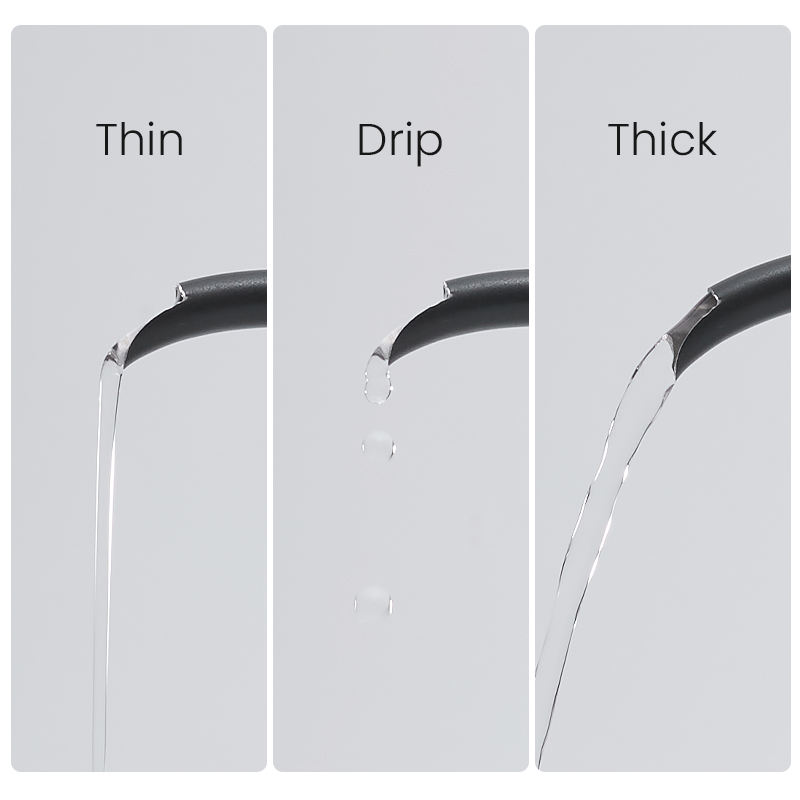
Picture a standard kettle as a fire hose. It’s powerful but chaotic and messy. A gooseneck kettle works like a precision sprinkler system. It delivers water exactly where you want it, exactly how you need it.
Mastering Flow Rate
The first pour, called the “bloom,” is crucial. A controlled, gentle flow from a gooseneck wets all coffee grounds evenly at the same time.
This stops dry clumps from forming. It allows CO2 to escape uniformly and prepares the entire coffee bed for even extraction.
Eliminating Channeling
A harsh, heavy pour from a standard kettle disturbs the coffee bed too much. It carves channels through the grounds. Water rushes through these channels, bypassing most of the coffee.
This creates uneven extraction. Some grounds get over-extracted and release bitter compounds. Others stay under-extracted and add sour, undeveloped flavors. The smooth, gentle flow from a gooseneck reduces this disturbance and promotes uniform extraction.
Achieving Thermal Stability
Consistent extraction needs stable temperature. The Specialty Coffee Association (SCA) recommends water between 90°C and 96°C (195°F to 205°F). You can check their standards on the SCA Protocols & Best Practices page for more details.
A slow, controlled pour from a gooseneck kettle helps maintain steady temperature in the brewer. A fast, large pour can cause rapid temperature drops. This shocks the grounds and stops extraction.
Poor pouring technique, often caused by using the wrong tool, leads to:
- Sour, underdeveloped flavors from under-extraction
- Harsh, bitter notes from over-extraction and channeling
- Inconsistent cups that don’t meet brand standards
Gooseneck vs. Standard Kettle
Both types boil water, but their roles in professional coffee are completely different. For businesses, this choice affects product quality and staff efficiency.
Here’s a direct comparison focusing on what matters for commercial operations.
Feature | Gooseneck Kettle | Standard Electric/Stovetop Kettle | Business Impact |
Flow Control | Excellent: Precise, laminar flow. | Poor: Turbulent, wide, and uncontrollable pour. | High consistency vs. High variability in cup quality. |
Extraction Consistency | High: Enables repeatable, even extraction. | Low: Prone to channeling and uneven extraction. | Predictable product vs. Unpredictable, often flawed product. |
Workflow Efficiency | High: Designed for pour-over workflow. | Low: Awkward and slow for controlled pouring. | Faster, more focused baristas vs. Inefficient, frustrating workflow. |
Ergonomics (for Baristas) | Good to Excellent: Counter-balanced for long shifts. | Poor: Often heavy and unbalanced for precision tasks. | Reduced staff fatigue and strain vs. Increased risk of RSI. |
Customer Perception | Professional & Theatrical: Signals craft and quality. | Unprofessional: Looks out of place on a specialty brew bar. | Justifies premium pricing and enhances brand image. |
Training Requirement | Moderate initial learning curve. | Low for boiling, but impossible for technique. | Investment in a scalable skill vs. a non-scalable, poor-quality process. |
The message for any business is clear. For manual brewing applications, the gooseneck kettle isn’t just better. It’s the only professional option. Its design is built specifically for the techniques high-quality coffee requires, as discussed in publications like Perfect Daily Grind.
The Business Case: Analyzing ROI
We encourage businesses to see gooseneck kettles as investments, not expenses. The return comes through consistency, brand value, and operational efficiency.
The most successful cafés treat their brew bar as an integrated system. Every component, including the kettle, contributes to final product quality and profitability.
Driving Consistency, Reducing Waste
Repeatable, controlled pours create predictable, delicious products. This means fewer “bad” cups that baristas must taste and throw away.
With expensive single-origin or geisha varietals, reducing brew waste by just 5-10% creates significant annual savings on raw materials. More importantly, consistent products ensure customers return. They know they’ll get the same excellent experience every time.
Elevating Brand Perception
Watching a barista carefully prepare pour-over with a gooseneck kettle is like theater. It’s a powerful visual signal that communicates craft, care, and quality to customers.
This perceived value is critical. It helps justify premium pricing for hand-poured coffee. It strengthens your brand’s position as a specialty coffee provider. As experts in customer experience marketing note, the process is part of the product.
Streamlining Staff Training
A gooseneck kettle requires technique, but it’s a standardized tool. Training staff on consistent brewing processes is much easier when they have the right equipment.
Trying to teach precision pouring with a standard kettle is pointless and frustrating for everyone involved. A well-designed gooseneck improves barista workflow, reduces physical strain, and makes manual brewing skills scalable across your team.
A Scenario-Based Analysis
Different roles in the coffee industry have unique needs. Here we analyze who absolutely needs a gooseneck kettle based on their specific business context.
For Café Owners & Operators
- Core Focus: Product quality, customer experience, profitability
- Key Considerations: A manual brew bar makes a quality statement. Using a standard kettle undermines this message and produces inferior, inconsistent products. The visual appeal and resulting quality justify premium menu pricing
- Conclusion: Essential. A gooseneck kettle is non-negotiable for a professional café’s quality promise to customers
For Coffee Trainers & Baristas
- Core Focus: Teaching correct technique, achieving competition-level standards, personal craft
- Key Considerations: High-level pour-over technique is impossible without a gooseneck kettle. Flow rate control, pulse pouring, and gentle saturation are core concepts that demand this tool. This is clear at the highest competition levels, like the World Barista Championship
- Conclusion: Absolutely mandatory. It’s the fundamental instrument for manual brewing craft
For Private Label & OEM Brands
- Core Focus: Market demand, product positioning, feature sets
- Key Considerations: Demand for gooseneck kettles from specialty cafés and “prosumers” (professional consumers) is strong and stable. Offering a gooseneck kettle is critical for any brand targeting the specialty coffee market
- Conclusion: A vital catalog product. Your differentiation should focus on durable, reliable, and aesthetically distinct models that meet commercial and high-end consumer standards
For Procurement Managers & Wholesalers
- Core Focus: Durability, supply chain reliability, value proposition for clients
- Key Considerations: Your clients (cafés, roasters, retailers) expect you to stock professional-grade equipment. The kettle must withstand high-volume, all-day use
- Conclusion: A core inventory item. Your selection criteria must prioritize commercial-grade materials, ergonomic design for heavy use, electrical safety certifications, and supplier stability. Your reputation depends on the quality of products you distribute
Selecting a Professional Kettle
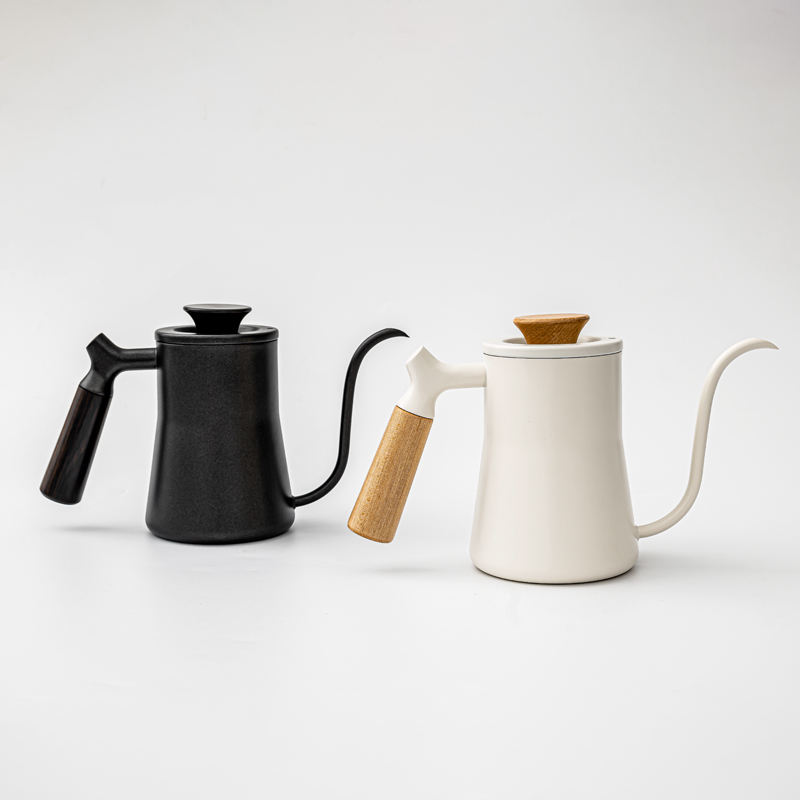
Once you’ve established the need, focus shifts from “if” to “how to choose.” A professional kettle must meet criteria far beyond consumer-grade models.
Material & Durability
Material is crucial for commercial use. We advise against kettles made with lower-grade steel or plastic components that contact water.
Look for 304 (18/8) food-grade stainless steel. This is the industry standard for durability and high resistance to rust and corrosion. It won’t taint water flavor. Its benefits in food applications are well-documented in material science sources on 304 stainless steel.
For businesses, sourcing kettles built for longevity is key. Suppliers like Coffmach specialize in commercial-grade gooseneck kettles. They craft them from durable 304 stainless steel, designed specifically for high-volume café demands or for brands seeking robust OEM products.
Temperature Control & Stability
Efficiency is crucial in commercial settings. A kettle with integrated variable temperature control offers significant advantages over stovetop models.
It lets baristas set precise target temperatures and hold them. This eliminates guesswork and removes the need for separate thermometers. It saves time during busy service and ensures every brew starts at the correct, repeatable temperature.
Ergonomics and Balance
Baristas may use a gooseneck kettle hundreds of times daily. Ergonomics aren’t luxury features. They’re health and safety considerations.
Well-designed professional kettles feature counterbalanced handles. This design distributes water weight, reducing wrist and forearm strain during slow, controlled pouring movements. It makes the tool feel like an extension of the barista’s hand.
Capacity and Certifications
For single-cup pour-over service, capacity between 0.8L and 1.0L is ideal. It holds enough water for a full brew cycle, including pre-heating the vessel, without being unnecessarily heavy.
For any business, ensure the kettle has appropriate electrical safety certifications for your region. Look for UL (North America) or CE (Europe). This is critical for business insurance, compliance, and workplace safety.
Sourcing for Scale
For wholesalers, brand owners, and large café chains, selecting the right manufacturing partner matters as much as selecting the kettle itself. Your decision impacts supply chain stability, product quality, and brand reputation.
Wholesale & Bulk Purchasing
When buying in bulk, look for suppliers who understand B2B client needs. This includes tiered pricing structures, reliable stock levels to prevent disruptions, and clear communication on lead times.
Your supplier should function as a partner. They should help you manage inventory and meet your own customers’ demands effectively.
OEM/Private Label Capabilities
For private label brands, your OEM partner’s capabilities are crucial. Strong partners offer extensive customization options. These range from laser-etching logos to developing unique handle materials or color finishes.
Insist on partners with robust quality control processes at every manufacturing stage. This ensures final products consistently meet your brand’s high standards.
Supply Chain Reliability
Great products are useless if they’re unavailable. Emphasize partnering with manufacturers who can demonstrate stable, reliable supply chains. This is the foundation of business continuity.
Choose manufacturers with proven track records in producing high-quality coffee accessories. For businesses looking for wholesale or custom solutions, partnering with a specialist is wise. We provide end-to-end manufacturing and support for coffee businesses worldwide.
If you’re exploring custom OEM or bulk orders for your brand, contacting an expert can help clarify your options. This ensures you source products that align perfectly with your business goals.
A Pillar of Quality
We return to the initial question: are gooseneck kettles necessary? In professional coffee contexts, the question isn’t if they’re necessary. It’s how they function as foundational tools for quality.
The gooseneck kettle is a direct investment in product consistency, brand image, staff efficiency, and ultimately, profitability. It’s the instrument that unlocks potential in both coffee and baristas.
For professionals, it’s not just a kettle. It’s a commitment to the craft.
As a professional manufacturer specializing in the research, development, and production of Coffee machine accessories, we not only offer a diverse product selection but also support OEM/ODM customization to meet the needs of diverse markets and customers. With consistent quality control, fast delivery, and innovative designs, our coffee machines are used by numerous brands and channels worldwide. Whether you're a distributor, wholesaler, or brand owner, we can provide you with reliable solutions to help you grow your business. Contact us to explore potential collaboration opportunities.
Facebook
Twitter
LinkedIn
X
Categories: Buying/Customization Guide Product Knowledge


