ESPRESSO PARTS · COMPATIBILITY GUIDE · OEM SOURCING
What’s the Difference Between a Portafilter and a Group Head?
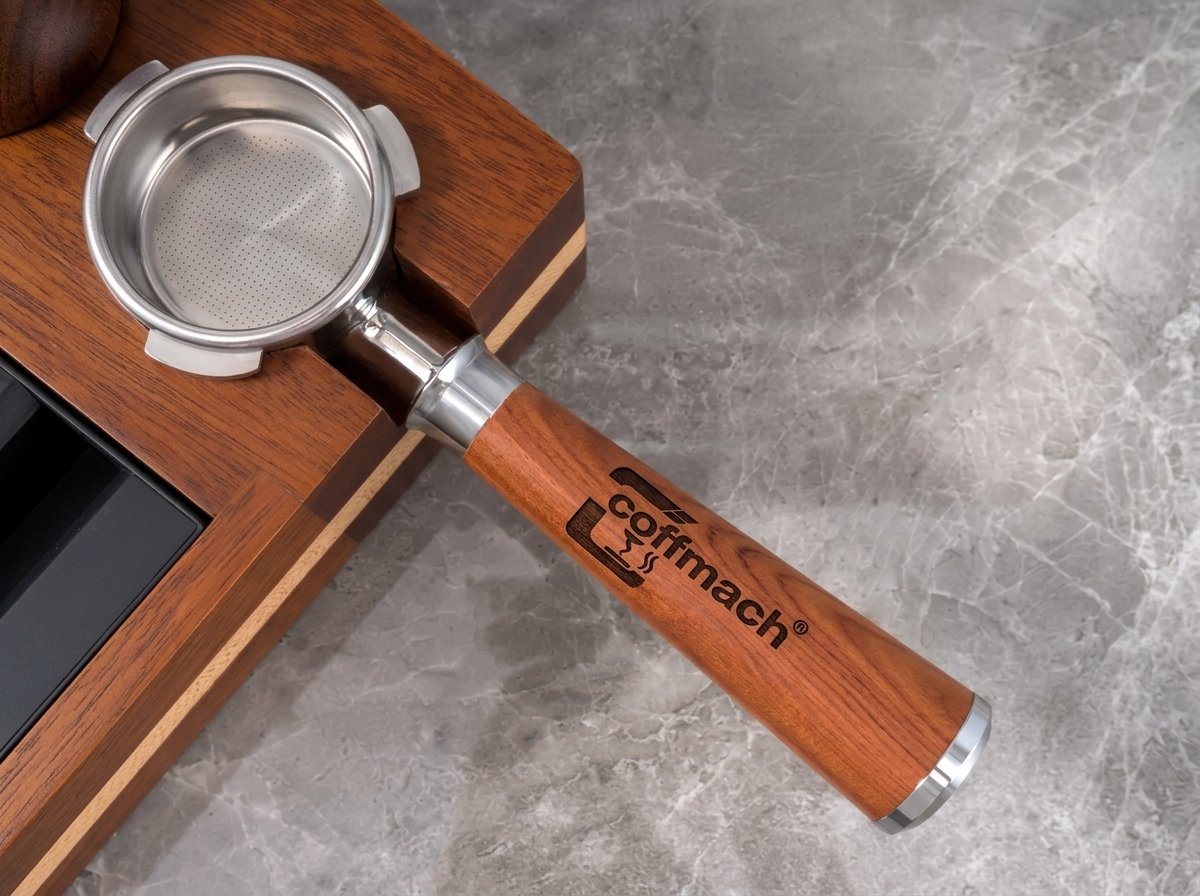
The group head is the fixed brewing assembly on the espresso machine. The portafilter is the removable handled assembly that holds the filter basket and coffee puck. They lock together to form the brewing chamber, but they are different parts with different replacement, cleaning and compatibility rules.
Quick answer: fixed group head, removable portafilter
- Group head = fixed machine-side water, seal and locking assembly.
- Portafilter = removable handled basket holder with lugs/ears that rotate into the group.
- The group gasket makes the fluid seal; the lugs provide mechanical retention.
- “51 mm,” “54 mm” and “58 mm” are useful families, not universal locking standards.
- A leak at the edge may come from coffee on the basket rim, a worn gasket, incorrect dose or an incompatible portafilter—not one cause only.
- Choose a replacement by exact machine model and part interface first; never force a portafilter into a group.
Portafilter vs group head: side-by-side
| Feature | Portafilter | Group head | Why it matters |
|---|---|---|---|
| Location | Removable; handled by the barista | Fixed to or integrated with the machine | One is an accessory assembly; one is machine hardware |
| Main job | Holds basket and coffee puck; guides beverage to the cup | Receives water, distributes it and supports locking and sealing | Extraction depends on the complete water-to-puck path |
| Typical parts | Handle, body, lugs, basket spring, basket, optional spout | Group body, water path, diffuser, shower screen, gasket and locking tracks | Correct names prevent ordering the wrong replacement |
| Normal service issue | Damaged lug, loose handle, worn basket spring, incorrect fit | Dirty screen, worn gasket, blocked water path or worn locking surface | Similar symptoms can originate on different sides of the interface |
| How to specify | Machine model plus diameter, lug geometry, basket fit, depth and handle | Machine model, group type, screen, gasket, valve and mounting details | A single diameter is not sufficient for either part |
Think of the group head as the machine’s fixed water-delivery socket and the portafilter as the removable holder that enters that socket. They work together, but neither name can replace the other.
What is a portafilter?
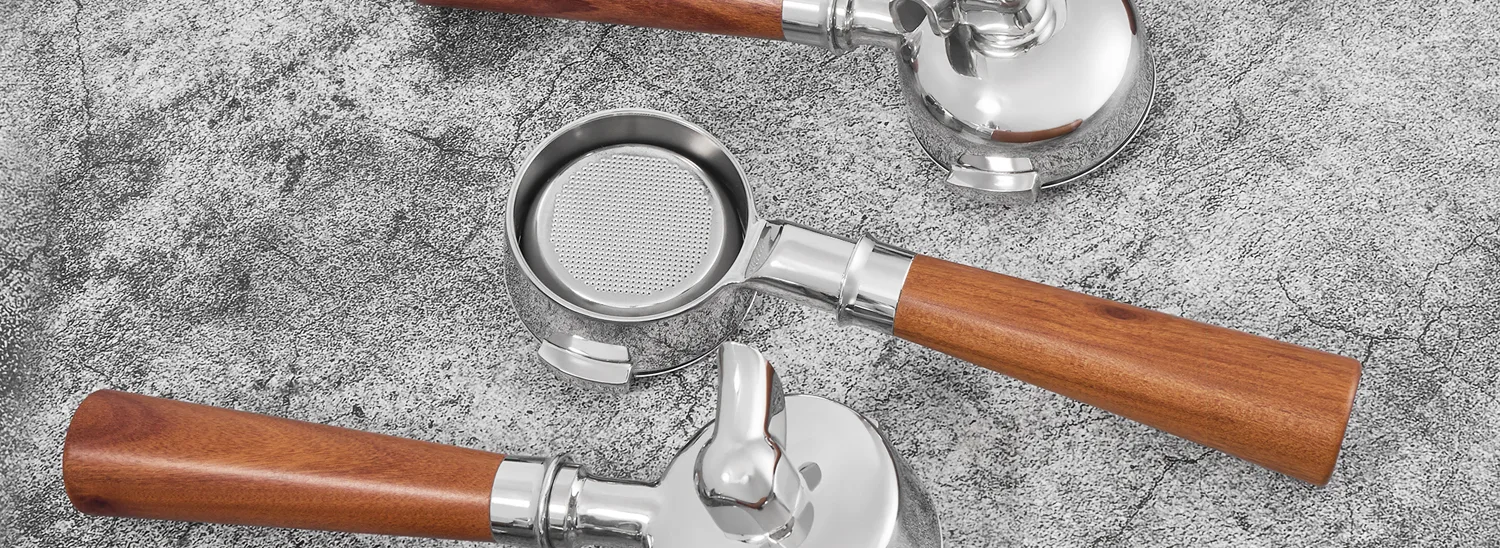
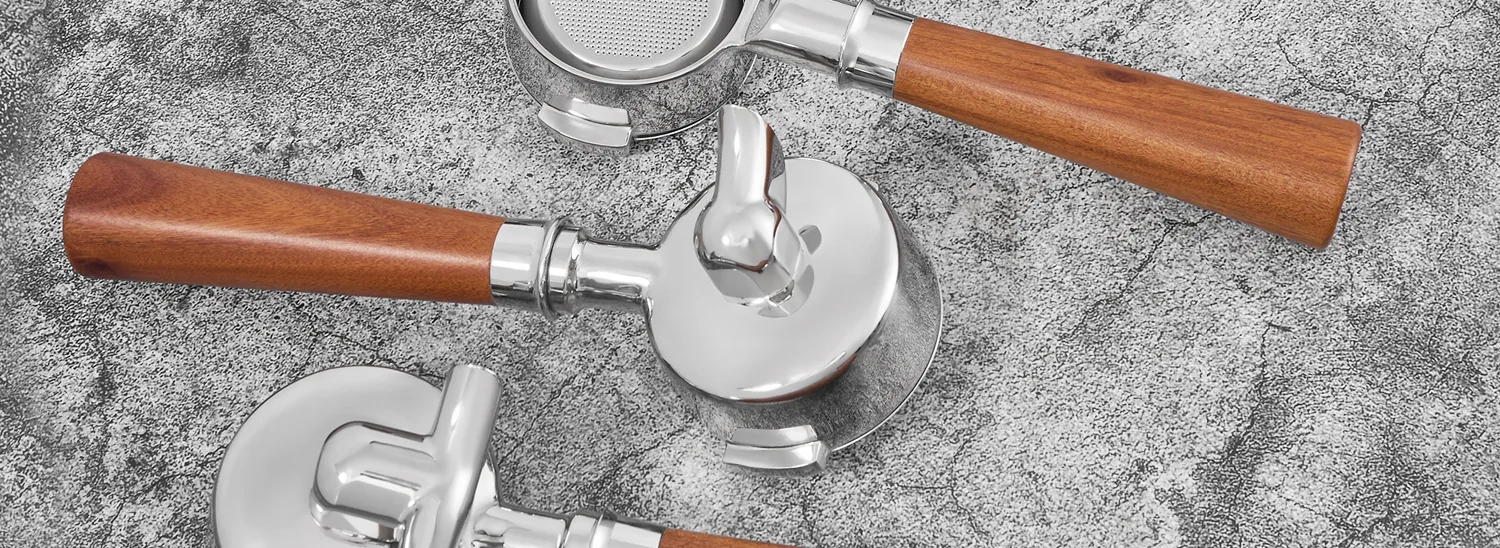
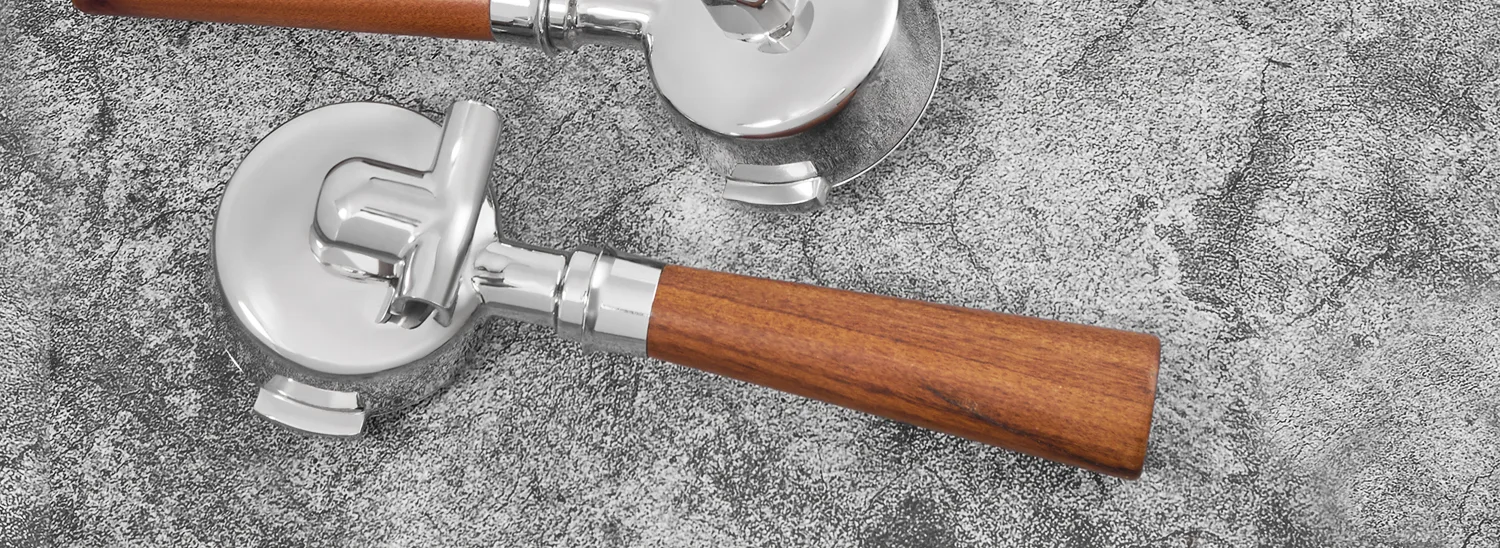
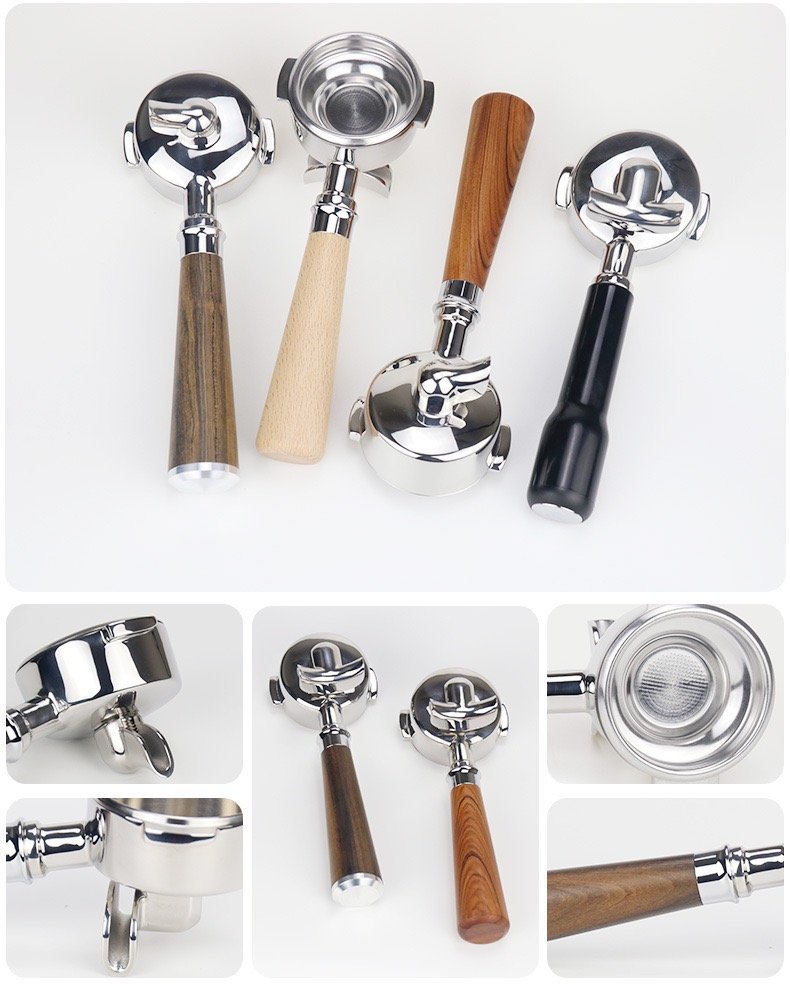
A portafilter—also called a group handle in some markets—is the metal assembly a barista fills, tamps, locks into the machine and removes after brewing. Its round head supports the filter basket. Lugs, also called ears, around the outside engage matching group-head tracks. The handle gives the user leverage to rotate the assembly into the gasketed seal.
Bottomless
Leaves the basket underside visible. It helps training and diagnosis because extraction can be observed directly.
Single spout
Guides the beverage toward one cup. It changes serving format, not the group-head locking interface.
Double spout
Divides the espresso after extraction. It can support two-cup workflow but does not define compatibility.
Bottom style is an outlet decision, not a fit standard. Two bottomless portafilters can look alike while having entirely different lug positions, body diameters or insertion depths.
What is a group head?
The group head—also written grouphead or called a brew group—is the machine-side assembly where espresso extraction occurs. It connects the controlled hot-water system to the portafilter. Its visible underside often includes a shower screen, group gasket and the recess or slots that accept portafilter lugs. Internal passages, valves, diffusers and heating architecture depend on the specific espresso machine.
What the group head does
- Accepts the compatible portafilter and provides the mechanical lock.
- Provides a gasketed seal around the brewing chamber.
- Receives hot water from the brew circuit.
- Spreads water through a diffuser and shower screen before it reaches the coffee.
- Supports pressure-release or backflush functions where the machine design provides them.
- Contributes to brew-temperature behavior through its material, heating or boiler connection.
Multi-group commercial machines have multiple brewing stations, each with its own group head. The portafilter moves between prep and brewing; the group head normally remains on the machine.
Basket, shower screen and gasket: three parts often confused
The filter basket is a separate perforated insert inside the portafilter. It holds the coffee puck. The shower screen is on the group-head side above the puck and spreads water before it reaches the coffee. The group gasket is the resilient ring inside the group head that seals the brewing chamber as the portafilter locks.
| Part | Where it sits | Its primary role | Common buying mistake |
|---|---|---|---|
| Portafilter | Removable, below the group head | Holds basket; locks into machine; directs espresso | Calling it the group head |
| Filter basket | Inside the portafilter | Contains the coffee puck and controls its outlet area | Assuming basket size proves portafilter compatibility |
| Shower screen | Underside of the group head, above the puck | Spreads machine water across the coffee bed | Calling it a basket |
| Group gasket | Inside the group head around the brewing interface | Creates the edge seal during locking | Replacing the portafilter when the gasket is the real fault |
Gaggia’s maintenance guidance describes the group gasket as a rubber gasket inside the group head that creates a seal to prevent leaks. It also advises cleaning the gasket seat before fitting a replacement. This supports a practical diagnostic rule: an edge leak may come from the fixed group-head seal rather than the removable handle.
Why 51 mm, 54 mm and 58 mm do not guarantee compatibility
In everyday coffee language, people say a machine uses a 51 mm, 54 mm or 58 mm portafilter. Those labels are helpful starting categories, but they do not describe every surface that must fit. The basket’s nominal family, portafilter-head outside diameter, lug count, lug angle, lug width, thickness, projection, insertion depth, basket rim and gasket contact are all separate checks.
| Item | What to verify | What happens if it is wrong |
|---|---|---|
| Machine identity | Brand, exact model, market version, serial revision and original part reference | Search begins in the wrong product family |
| Lug geometry | Count, angular position, width, thickness, projection and profile | Part may not enter, rotate or lock securely |
| Head dimensions | Outside diameter, height and clearance in the group recess | Body can bind before the seal reaches the gasket |
| Seal stack | Basket rim, gasket contact and normal lock behavior | Water can leak around the edge or the handle may over-rotate |
| Basket system | Rim, depth, dose range, retention spring and screen clearance | Puck can contact the screen or basket may not seat correctly |
Manufacturer examples show why model-level fit matters. Breville’s manual tells users to align the portafilter at the marked insert position, rotate it until resistance is felt and keep coffee off the basket rim so it can seal in the group head. De’Longhi’s DLSC085 is a 51 mm bottomless portafilter, yet its compatibility is named for particular La Specialista and Dedica Maestro machine families—not every 51 mm product.
Fit and leak problems: diagnose the interface before replacing parts
Leaking water, a loose lock or a basket that stays in the group head can result from the basket, portafilter, gasket, screen, dose or machine interface. Applying more force is not a fix; it can damage the locking surfaces or hide an incorrect part.
| Symptom | Likely causes | Safe check | Correct direction |
|---|---|---|---|
| Portafilter will not enter | Wrong head diameter, lug position, debris, damaged lug or basket not seated | Compare the part number and unloaded geometry with machine cool | Stop; clean or use the correct model-specific assembly |
| Enters but will not rotate | Wrong lug profile, obstruction, new gasket or incorrect basket stack | Remove coffee and accessories; compare with original part | Identify interference; do not grind lugs to make a part fit |
| Water leaks around the rim | Coffee on rim, dirty/worn gasket, under-locking, damaged basket rim, high dose or mismatch | Clean rim and gasket; test correct dose with known-compatible part | Service the actual cause instead of tightening harder |
| Basket stays in the group | Weak retention, rim catches gasket, vacuum or fit issue | Inspect basket spring, rim, gasket and headspace | Restore correct basket and gasket compatibility |
| Bottomless extraction sprays | Uneven puck, grind/dose error, basket condition or water-distribution issue | Repeat controlled puck preparation and approved no-coffee flow check | Fix preparation first; then inspect basket and group flow if repeated |
Breville’s current Bambino instructions explicitly list incorrect insertion, coffee grounds on the basket rim and an excessive coffee dose among reasons espresso may run around the edge of the portafilter. These are useful first checks, but follow the exact guidance for the machine you are servicing.
Clean the portafilter and group head differently
The two parts share the same coffee-and-water path, but they are maintained differently. Remove the basket and clean the portafilter body, basket, spring groove and metal spouts according to the maker’s material guidance. For the group head, purge or flush as directed, brush the gasket area, clean the shower screen and backflush only when the machine design and manual permit it.
Fellow’s Series 1 backflushing instructions show the division of roles clearly: the backflush disc is placed in the portafilter, then the portafilter is locked into the group head so the machine-side path can be cleaned. Do not assume every espresso machine supports the same procedure.
Need a model-matched portafilter?
Send Coffmach the exact espresso-machine model, original part reference, interface measurements, required bottom style, basket system, handle design and quantity. We can help plan a sample and OEM/ODM quotation.
Buying and OEM compatibility checklist
For wholesale or private-label portafilters, a product photo and “58 mm” are not enough. Convert the approved part into measurable geometry, a functional fit test and a retained reference sample so the factory and buyer evaluate the same interface.
| Specification block | What to define | How to verify |
|---|---|---|
| Target interface | Machine brand, model, market version, serial range and OEM part reference | Manual, parts catalog, approved original and named compatibility list |
| Lock geometry | Head diameter/height; lug count, clocking, width, thickness, projection and insertion depth | Dimensioned drawing, fixture and sample fit |
| Seal stack | Basket rim, gasket contact and approved lock behavior | Controlled leak test against the golden sample |
| Basket system | Nominal family, rim, depth, dose range, spring, tamper and puck-screen compatibility | Approved basket and dimensional inspection |
| Outlet & handle | Bottomless/single/double style, spout thread, handle length, material and balance | Functional pour and repeated-use inspection |
| Branding & packaging | Logo, artwork, individual protection, barcode and carton requirements | Signed artwork and packed abrasion/drop assessment appropriate to channel |
Frequently asked questions
Is a portafilter the same as a group head?
No. The group head is fixed to the espresso machine and provides water delivery, sealing and locking. The portafilter is removable, holds the basket and coffee puck, and locks into the group head for brewing.
Does the portafilter attach to the group head?
Yes. In a conventional design, lugs on the portafilter enter matching openings and rotate under locking surfaces in the group. This pulls the brewing interface against the group gasket. The exact lug geometry and lock motion vary by machine.
Is the filter basket part of the portafilter or group head?
The basket sits inside the portafilter and holds the coffee puck. The shower screen is on the group-head side above the puck. Keeping the two perforated components distinct helps when choosing baskets, tampers, screens and cleaning tools.
Are all 58 mm portafilters compatible?
No. The 58 mm label is a starting category, not a universal lock standard. Confirm the exact machine, compatible part number, lug count and geometry, head dimensions, insertion depth, basket rim and gasket contact before use.
Is an E61 group head the same as a 58 mm portafilter?
No. E61 describes a group-head design family, while 58 mm is a nominal portafilter/basket size category. Many E61-style machines use 58 mm accessories, but aftermarket parts still require model-level verification.
Why does water leak around my portafilter?
Start with coffee grounds on the basket rim, a dirty or worn group gasket, incomplete locking, damaged basket rim, excessive dose or incompatible portafilter geometry. Clean and inspect first; do not use extra force as the first response.
Can a new portafilter fix uneven espresso flow?
Sometimes, but not by itself in most cases. Uneven flow can come from grind, dose, distribution, tamping, basket condition, puck headspace, group-screen contamination or water-distribution faults. A bottomless portafilter makes the symptom easier to observe but does not automatically correct the cause.
Can I replace the group head myself?
Usually this is a service decision rather than a normal accessory swap. A group head can involve hot-water passages, valves, heating, electrical systems and pressure safety. Follow official service information; internal repairs should be handled by a qualified technician.
Technical sources and image credits
- Coffmach — Coffee Portafilter. Product and OEM context for bottomless, single-spout, double-spout and custom portafilters.
- Breville — Bambino Instruction Manual. Official group-head insertion, locking and basket-rim seal guidance.
- Gaggia — Semi-Automatic Maintenance. Group gasket location, sealing purpose and group-head maintenance context.
- De’Longhi — DLSC085 Bottomless Portafilter. Model-specific 51 mm and compatibility example.
- Fellow — How to Backflush Series 1. Current example of a disc placed in the portafilter and locked into the group head for cleaning.
- La Marzocco — The Importance of Dual Boilers and Saturated Groups. Manufacturer explanation of one group-head architecture.
- All five article images are real Coffmach portafilter product images. Captions are plain text and images are not clickable.