


10.12.2025
The best way to find affordable coffee milk jugs for bulk purchasing is to work directly with specialized manufacturers. This cuts out the middleman. You get better prices, consistent quality, and more control over your supply chain. Plus, you can ensure you’re getting food-grade 304 stainless steel.
This guide helps procurement managers, distributors, and coffee business owners. We’ll show you how to check product quality and find the right suppliers. You’ll learn to vet manufacturers and cut procurement costs. This boosts your profits and makes operations smoother.
Table of Contents
A Critical Business Asset
A coffee milk jug isn’t just a container. It’s a key tool in your daily operations. Buying the right jugs affects your profits and brand reputation, even when you’re focused on affordability.
Operational Efficiency: Good jugs have ergonomic handles and precise spouts. This helps baristas work faster and more accurately. Less milk gets wasted. Service times drop during busy periods.
Consistency in Quality: The jug’s shape and material affect how milk textures. High-quality commercial milk frothing pitchers ensure every latte and cappuccino meets the same standard.
Durability and Long-Term ROI: Cheap, low-quality jugs made from thin 201 steel dent and rust easily. They need frequent replacement. A durable jug is a one-time investment that saves money long-term. It’s one of the most cost-effective coffee accessories you can buy.
Brand Perception and Professionalism: Your baristas’ tools reflect your brand’s commitment to quality. Clean, professional equipment builds customer trust and improves perception.
Anatomy of a High-Value Jug
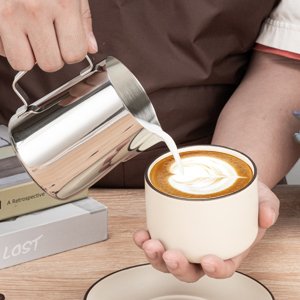
Understanding milk jug specs helps you make smart decisions. This knowledge is crucial when sourcing barista milk jugs. It lets you look past the price and assess real value.
Material Matters: 304 Steel
Material is the most important factor for safety, durability, and performance. When buying bulk stainless steel milk jugs, steel grade is non-negotiable.
304 Stainless Steel (18/8): This is the industry standard for good reason. It resists rust and corrosion from coffee and milk acidity. The British Stainless Steel Association confirms this. It’s non-reactive, so no metallic taste gets into drinks. This is the food-grade standard you should demand for any 304 stainless steel milk jug bulk order.
201 Stainless Steel: A cheaper option with less nickel and more manganese. It rusts and corrodes much more easily, especially with acidic substances and harsh cleaners. We strongly advise against it for professional coffee use.
Feature | 304 Stainless Steel | 201 Stainless Steel |
Corrosion Resistance | Excellent | Poor to Fair |
Food Safety | High (Industry Standard) | Lower (Risk of rust) |
Durability | High | Low (Prone to pitting) |
Cost | Higher | Lower |
Best For | Professional Cafes, High-Volume Use | Non-food applications |
Sizing for Success
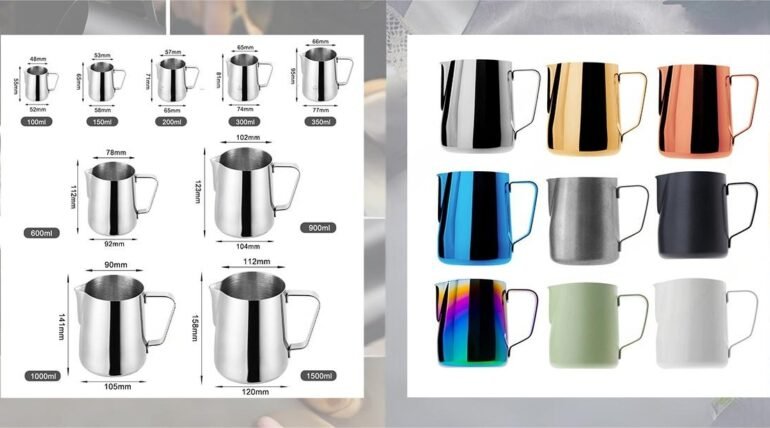
Choosing the right sizes makes workflow smoother and reduces waste. A good milk jug supplier for cafes should offer standard capacities.
350ml (12oz): Perfect for single small lattes, cappuccinos, or flat whites. Every cafe needs this size. It allows precise milk steaming with minimal waste.
600ml (20oz): The most versatile size and workhorse of most coffee bars. It’s perfect for two small drinks or one large one. It balances efficiency and control.
900ml+ (32oz+): Best for high-volume scenarios. Use it for batch-steaming milk for multiple drinks during rushes or in training environments where larger quantities are needed for practice.
Many cafes buy too many large jugs. This leads to significant milk waste when baristas only need to steam for one drink. A balanced inventory of 350ml and 600ml jugs is the most cost-effective setup for daily operations.
Design and Craftsmanship
Look beyond basic shape. Small details make a big difference in performance and longevity, especially in commercial environments.
The Spout: A sharp, well-defined spout is crucial for latte art. A poorly formed or thick spout makes detailed pouring impossible. It also shows poor manufacturing quality.
The Handle: It must be securely welded. Look for clean, full welds, not just small spot welds. These can break under busy cafe stress. An ergonomic design prevents barista fatigue and improves pouring control.
Wall Thickness: A thicker wall, typically around 1mm, provides better insulation. This gives baristas more time to texture milk before it gets too hot. Thicker walls also resist dents from accidental drops.
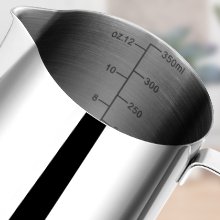
Internal Markings: Etched or stamped volume markings inside the jug help with consistency and reduce milk waste. They ensure every barista uses the correct amount of milk for each drink. But they must be accurate to be useful.
Sourcing Channels Analysis
Choosing your sourcing channel is as important as choosing the product. Each has different implications for cost, quality, and logistics when following a coffee equipment procurement guide.
Option 1: Factory-Direct
This means partnering directly with the coffee milk jug manufacturer that produces the jugs. It’s the most direct method for bulk purchasing.
Pros: This channel offers the lowest per-unit cost. You can potentially customize orders, like adding custom logo milk pitchers. You also get direct communication on quality control.
Cons: This route typically requires high Minimum Order Quantities (MOQs). Lead times are longer. It demands more effort from your team in vetting suppliers and managing international logistics.
Best For: Coffee chains, wholesale coffee milk pitchers distributors, high-volume independent cafes, and e-commerce sellers looking for stable supply chains.
Option 2: Wholesalers
This means buying from regional or national companies that stock products from various manufacturers.
Pros: Wholesalers offer lower MOQs, making them accessible for smaller businesses. They provide faster delivery times and simplified, transactional ordering processes.
Cons: Per-unit cost is higher due to middleman markup. You have less control over stock availability and specific product quality. Customization is generally not an option.
Best For: Small to medium-sized cafes, new businesses, or any operation needing smaller quantities quickly without the complexity of direct importing.
Option 3: B2B Marketplaces
This involves using online platforms like Alibaba or Global Sources to find numerous manufacturers in one place.
Pros: These platforms offer wide supplier selection and transparent, competitive pricing. You can compare many options quickly.
Cons: There’s high risk of scams or receiving products that don’t meet quality specifications. Communication can be challenging due to language barriers. It’s difficult to verify supplier claims without robust vetting processes, as noted by the U.S. International Trade Administration’s guide to e-commerce.
Sourcing Channel Comparison
Factor | Factory-Direct | Wholesaler/Distributor | Online Marketplace |
Per-Unit Cost | Lowest | Medium-High | Low-Medium (Variable) |
MOQ | High | Low | Varies (Often high) |
Quality Control | High (Direct oversight) | Medium (Rely on distributor) | Low (High risk) |
Customization | Yes (Logo, packaging) | No | Sometimes, with risk |
Lead Time | Long (4-8 weeks) | Short (Days) | Very Long (Can be 8+ weeks) |
Communication | Direct & Detailed | Simple & Transactional | Often difficult |
Ideal User | Chains, Distributors | Small/Medium Cafes | Experienced Importers |
The Supplier Vetting Checklist
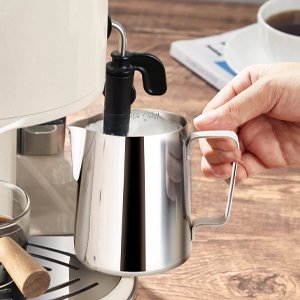
A low price means nothing without a reliable partner. Use this checklist to thoroughly vet potential direct-sourcing suppliers. This secures a truly affordable coffee milk jugs for bulk purchasing deal.
Production and Quality
Your main concern should be the supplier’s ability to consistently produce high-quality products.
Ask for Material Certifications: Can they provide documentation or test reports for their 304 stainless steel? A legitimate manufacturer will have this readily available.
Inquire about their QC Process: What quality checks do they perform at each stage—raw material inspection, forming, welding, polishing, and final packaging? Ask if they follow recognized quality management systems like ISO 9001.
Request Production Samples: Always get physical samples before placing bulk orders. Test them rigorously in real-world cafe environments. Check weight, finish, weld quality, and spout precision.
Discuss Wall Thickness & Weight: Specify your required thickness (e.g., 1.0mm) and ask for standard weight of finished units. Significant deviation in samples can indicate quality control issues.
Communication and Service
Clear and professional communication strongly indicates a reliable long-term partner.
Evaluate Responsiveness: How quickly and clearly do they respond to technical and business inquiries? Are their representatives fluent in your business language? Slow or confusing responses are major red flags.
Ask about their Experience: Who are their main markets? Have they worked with brands in your country before? Experience with international clients simplifies logistics and reduces misunderstanding risks. This is a key point in cross-cultural business dealings, as highlighted by sources like the Harvard Business Review.
Discuss Customization Options: If you need it, ask detailed questions about their logo etching or printing process. Inquire about custom packaging options. Get clear information on associated costs and MOQs for these services.
Logistics and Supply Chain
Understanding logistics is critical to calculating total cost and ensuring smooth delivery.
Confirm Production Lead Time: Get clear timelines from order confirmation to when goods are ready for shipment. Factor this into your inventory planning.
Clarify Shipping Terms (Incoterms): It’s vital to understand if they’re quoting EXW (Ex Works) or FOB (Free On Board). This choice majorly impacts your total cost and responsibilities. The International Chamber of Commerce provides official definitions for these terms.
Assess their Packaging: How will bulk orders be packaged? Will each jug be individually boxed? How many units will be in master cartons? Proper packaging is essential to prevent dents and scratches during long-distance transit.
Finding a Reliable Partner
Finding a supplier who excels in all these areas is key. For businesses seeking reliable partners for affordable coffee milk jugs for bulk purchasing, it’s crucial to work with manufacturers who have proven international experience and robust quality systems.
A manufacturer with streamlined processes for businesses can make all the difference. For instance, a specialist like coffmach provides high-quality 304 stainless steel Coffee Milk Jugs with flexible MOQs and clear, established communication frameworks designed for international clients.
Pro Tips for Maximizing ROI
Securing the best price involves more than just negotiating per-unit costs. Strategic planning is key to maximizing return on investment.
- Leverage MOQ for Better Pricing: While high MOQs can be barriers, always ask if slightly larger orders qualify for lower price tiers. Sometimes a 10-15% increase in quantity can yield a 5-10% decrease in unit cost, improving your overall margin.
- Build a Long-Term Partnership: One-time orders always get standard, transactional prices. Discuss your annual estimated volume with suppliers. Committing to long-term purchasing agreements can unlock preferential pricing, better service, and priority production slots.
- Consolidate Shipments: If you’re also sourcing other small coffee accessories like tampers, portafilters, or knock boxes, ask if the milk jug manufacturer can produce or source them for you. Consolidating multiple items into single shipments dramatically reduces per-unit shipping costs.
- Understand Landed Cost, Not Just FOB Price: Your true cost is the “landed cost.” This includes product price plus all associated costs of shipping, insurance, customs duties, and local taxes. Always calculate this full cost to accurately compare suppliers. Low FOB prices can be misleading if shipping or duties are high.
- Order Off-Season: Manufacturing demand has cycles. In many industrial regions, periods after major holidays (like Chinese New Year) can be slower. Inquire if placing orders during slower production periods can result in better pricing or faster lead times.
A Smart and Sustainable Supply Chain
Sourcing affordable coffee milk jugs for bulk purchasing is a strategic process. It balances cost, quality, and supplier reliability.
Prioritize food-grade 304 stainless steel. Understand the pros and cons of different sourcing channels. Rigorously vet your manufacturing partners using detailed checklists. This builds resilient supply chains that support your business growth.
This approach transforms simple procurement tasks into competitive advantages. It ensures you have professional tools when you need them, at prices that make sense for your bottom line.
Ready to build a better supply chain for your coffee accessories? Explore our manufacturing solutions and see how we can help your business.
As a professional manufacturer specializing in the research, development, and production of Coffee machine accessories, we not only offer a diverse product selection but also support OEM/ODM customization to meet the needs of diverse markets and customers. With consistent quality control, fast delivery, and innovative designs, our coffee machines are used by numerous brands and channels worldwide. Whether you're a distributor, wholesaler, or brand owner, we can provide you with reliable solutions to help you grow your business. Contact us to explore potential collaboration opportunities.
Facebook
Twitter
LinkedIn
X


