


01.11.2025
B2B buyers in the coffee industry face a challenging balancing act when sourcing products. Margins are tight. The threat of bad reviews looms large. High return costs can destroy profits overnight.
Your brand’s success depends entirely on product reliability. When you’re sourcing a manual coffee grinder, one factor rises above all others: durability. Understanding manual coffee grinder durability: what matters most is crucial for reducing business risk.
This guide isn’t for coffee enthusiasts at home. It’s a detailed breakdown of grinder durability from a manufacturing and buying perspective. We’ll help you analyze spec sheets, assess suppliers, and make smart sourcing choices. These decisions will protect your profits, strengthen your brand, and keep your supply chain reliable.
Table of Contents
The Anatomy of a Durable Grinder
A grinder works as a connected system of parts. When one component fails, the entire product suffers. Here’s what determines a grinder’s lifespan, consistent performance, and true cost. This knowledge helps you see past marketing claims and judge real quality.
The Heart: The Burr Set
The burr set is the most important component. It controls both grind quality and the grinder’s operational life. You should examine burr material and manufacturing process first.
Material Science
Different materials create clear trade-offs between cost, performance, and lifespan.
Ceramic burrs appear in many entry-level grinders. They resist rust and create little heat while grinding. But they’re brittle. A small stone or unroasted bean can chip or crack them, causing complete failure.
Standard stainless steel, like food-grade 420 steel, offers a major upgrade. These burrs are sharper than ceramic ones. They provide more consistent grinding with fewer fine particles. They’re much more durable and resist chipping, making them reliable for mid-range products.
Coated stainless steel burrs represent the premium level. Titanium or black nitride coating dramatically increases surface hardness and reduces friction. Titanium coating can make surfaces 3-5 times harder than standard steel. This leads to much longer life and smoother operation. This is the choice for high-performance, private-label coffee tools.
Manufacturing Process
How a burr is made matters as much as its material.
Casting or molding costs less. It produces burrs that are less precise with duller cutting edges. This creates inconsistent grinding and shorter lifespan as edges wear quickly.
CNC (Computer Numerical Control) machining is the better process. It mills burrs from solid steel blocks to extremely tight tolerances. This creates very sharp, uniform cutting edges that grind consistently and last much longer. The higher manufacturing cost pays off through vastly improved performance and burr grinder durability.
Burr Material Comparison for Sourcing
Feature | Ceramic Burrs | Standard Steel Burrs (420) | CNC-Machined Coated Steel |
Lifespan | Moderate | Good | Excellent (3-5x Standard) |
Grind Consistency | Good | Very Good | Exceptional |
Cost Impact | Low | Medium | High |
Best For | Entry-level, budget-conscious brands | Mid-range, specialty coffee focus | Premium, private-label branding |
The Backbone: Axle and Bearings
A grinder’s internal structure forms its backbone. This system keeps the central burr stable during the intense rotational forces of grinding. Any wobble in this system will create inconsistent grinding, regardless of burr quality.
The Central Axle
The central axle must be rigid and perfectly straight. A durable grinder features a thick, single-piece metal axle. Cheaper designs use thinner or multi-part axles that can bend or loosen over time. This introduces wobble and destroys grind consistency.
The Bearing System
The bearing system is where low-quality grinders most often fail.
Bushings, made from plastic or soft brass, are a cheap solution for centering the axle. They wear down quickly with use, creating space for the axle to wobble. This is why grinders start feeling “loose” and producing inconsistent grinds over time.
A dual ball bearing system is the gold standard for durability. Two sets of steel ball bearings—typically one near the top and one near the bottom of the axle—eliminate friction and keep the axle perfectly centered. This prevents wobble from developing, ensuring burrs stay perfectly aligned for thousands of uses.
In our experience, grinders returned for “inconsistent grinding” almost always have worn-out bushing systems. A dual-bearing design costs more upfront but virtually eliminates this common failure point. It significantly reduces after-sale problems and negative reviews. Investing in quality coffee grinder bearings is essential for a premium product.
The Foundation: Body Construction
The grinder’s body does more than hold components together. Its material and construction affect overall rigidity, perceived quality, and long-term durability.
Materials
Plastic is the cheapest option. While lightweight, it cracks under stress, especially at thread points. It also suggests lower value, which can hurt brand perception.
Aluminum alloy provides an excellent balance of weight, strength, and premium feel. For superior durability, look for a “unibody” design milled from a single aluminum block. This is far more rigid and precise than a die-cast body, which is formed by injecting molten metal into a mold and can have inconsistencies.
Stainless steel is the heaviest and most durable option. It’s often used for premium, professional-grade models where weight matters less than absolute strength.
Finish
The finish protects the body from scratches and corrosion. An anodized finish on aluminum is much better than paint. Anodizing is an electrochemical process that makes surfaces harder and more scratch-resistant. Paint finishes can easily chip or peel, cheapening the product’s appearance over time.
The Control: Adjustment Mechanism
The grind adjustment mechanism must be both precise and durable. It needs to let users select specific grind sizes and hold those settings firmly during use.
A stepped adjustment system uses “clicks” to lock into specific settings. Durability here depends on the quality of the internal spring and detent. A weak mechanism will feel mushy and can allow settings to slip during grinding—a major user frustration.
A stepless adjustment system offers infinite settings between finest and coarsest points. This provides maximum control but requires a very strong locking mechanism to prevent setting drift from grinding vibrations. Test this thoroughly when evaluating samples.
The adjustment location—internal (often at the top, under the lid) or external (a ring on the body)—is a design preference. A well-engineered internal adjustment is just as durable and reliable as an external one. Component quality is what matters.
Vetting Supplier Reliability
The spec sheet only tells part of the story. A truly durable product comes from a manufacturer with disciplined quality commitment. As a procurement manager, your ability to vet the supplier’s process is as crucial as evaluating the product itself. This is core to successful coffee equipment procurement.
Key Questions for Manufacturers
When engaging with potential manufacturing partners, their answers to technical questions will reveal their true capabilities. Use this checklist during initial discussions.
- ☐ Material Sourcing: “Can you provide material certification for your 420 stainless steel burrs or your food-grade aluminum alloy?” A confident supplier will have this documentation ready.
- ☐ Manufacturing Tolerances: “What are your CNC machining tolerances for the axle and bearing housing?” Specific, tight tolerances (e.g., +/- 0.02mm) indicate precision commitment.
- ☐ Quality Control Process: “Describe your QC process. At how many stages is the grinder inspected during assembly, from raw materials to final packaging?” Look for multi-stage inspection.
- ☐ Durability Testing: “Do you perform life cycle testing on your designs? For example, simulating 5,000 grind cycles? Can you share the results or methodology?” This separates serious manufacturers from assemblers.
- ☐ Part Traceability: “How do you ensure consistency between production batches?” This speaks to their ability to manage a stable supply chain and deliver consistent quality over time.
Red Flags and Green Lights
Pay close attention to how they communicate.
Green lights include transparency and willingness to share technical data. A good partner provides detailed answers, welcomes tough questions, and readily offers samples for your testing, even destructive testing. They’re proud of their process.
Red flags include vague answers like “we use high-quality steel.” They may be unable to provide material certifications or hesitate when asked about their QC process. If a supplier consistently pushes you toward the lowest-cost materials without clearly explaining durability trade-offs, they’re prioritizing their sale over your brand’s long-term health.
A trustworthy partner will be proud to showcase their capabilities. At Coffmach, we believe in transparency from design to delivery. Learn more about our manufacturing philosophy.
The Importance of Certifications
Certifications aren’t just logos for boxes. They’re external validation of a manufacturer’s quality and safety systems.
ISO 9001 is a globally recognized standard for Quality Management Systems. A supplier with this certification has proven processes for ensuring consistency and quality. You can learn more about what this entails from the International Organization for Standardization (ISO).
RoHS (Restriction of Hazardous Substances) and FDA/LFGB (for food-contact materials) are critical for consumer safety and market access in Europe and North America. They prove that materials used are safe and non-toxic, protecting both your customers and your business from liability.
Strategic Sourcing: Matching Tiers
Not every business needs a flagship-level grinder. The key is aligning the product’s durability tier with your specific brand strategy, target market, and business model. Understanding this alignment is fundamental to smart sourcing coffee grinders.
Tier 1: Mass-Market E-commerce
This tier serves high-volume sellers on platforms like Amazon or Shopee, where price drives decisions.
The durability focus here is “good enough” to minimize immediate returns. This often means using cast steel or ceramic burrs and a bushing-based stabilization system. The primary goal is passing initial quality checks and surviving the first few months of use.
The business implication is lower sourcing cost, which allows competitive retail pricing. However, this comes with higher risk of long-term negative reviews as components wear out, potentially damaging your seller rating and brand. This model requires a business that can absorb higher customer service and return costs.
Tier 2: Specialty & Private Label
This tier targets coffee shop chains, specialty e-commerce stores, and entrepreneurs building quality-focused private label brands. The customer is more discerning and values performance and longevity.
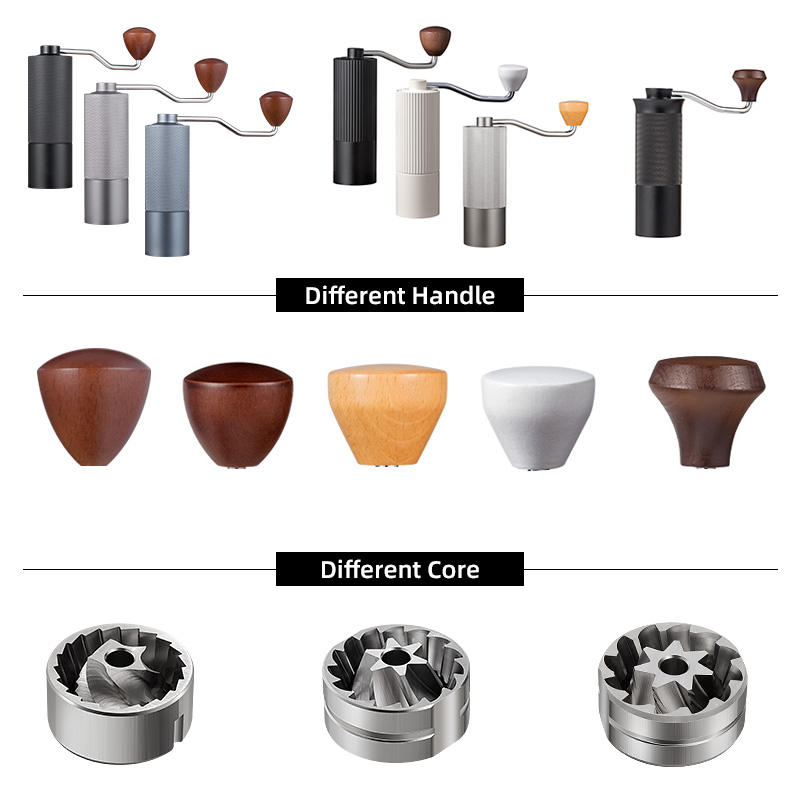
The durability focus is excellent, reliable performance that builds customer trust. This is the sweet spot where engineering delivers tangible ROI. Must-have features include CNC-machined steel burrs, a dual-ball-bearing system for stability, and sturdy aluminum alloy unibody construction. These features directly address the most common failure points.
This tier is where precision engineering delivers tangible ROI. For instance, a model like the Coffmach Manual Coffee Grinder is a prime example for this segment. It combines CNC-cut stainless steel burrs with a dual-bearing stabilized axle, offering the durability and consistency that builds brand loyalty, all within a cost structure suitable for private labeling.
The business implication is higher upfront sourcing cost. However, this investment leads to superior customer satisfaction, glowing reviews, repeat business, and much stronger brand. The growing market for specialty coffee at home, as noted by publications like Perfect Daily Grind, is increasingly populated by consumers willing to pay for this level of quality.
Tier 3: Premium “Prosumer” Models
This tier serves high-end brands aiming for market leadership, targeting the “prosumer” who demands the absolute best.
The durability focus is best-in-class, uncompromising quality. This means titanium-coated CNC burrs, oversized bearings, premium materials like solid stainless steel or high-grade unibody aluminum, and flawless fit and finish. Every component is over-engineered for exceptional coffee grinder lifespan.
The business implication is the highest sourcing cost, targeting less price-sensitive consumers. This strategy builds a halo product that elevates the entire brand, demonstrating technical mastery and commitment to ultimate performance.
The Hidden Costs of Poor Durability
Poor durability isn’t just a product flaw. It’s a financial liability that appears on your balance sheet in both direct and indirect ways. Calculating this true cost is essential for justifying investment in higher-quality manufacturing.
Direct Costs: Returns & Shipping
The most obvious cost is handling returns and replacements. Let’s run a simple, realistic scenario to illustrate the financial impact.
Scenario: You sell 1,000 units of a grinder. Your cost-of-goods is $20 per unit.
- Grinder A (Low Durability): Experiences an 8% return rate due to component failure (80 units).
- Direct Loss (Cost of Goods): 80 units x $20 = $1,600.
- Reverse Logistics & Labor (Est. $5/unit): 80 units x $5 = $400.
- Total Direct Loss = $2,000.
- Grinder B (High Durability): Has a 1.5% return rate (15 units).
- Direct Loss (Cost of Goods): 15 units x $20 = $300.
- Reverse Logistics & Labor: 15 units x $5 = $75.
- Total Direct Loss = $375.
In this scenario, investing in the more durable grinder saves your business $1,625 in direct costs on just 1,000 units sold.
Indirect Costs: Negative Reviews
The indirect costs of poor durability are often far greater. In e-commerce, reviews are currency. A stream of 1- and 2-star reviews complaining about wobbly handles or inconsistent grinding can be devastating.
Studies consistently show the power of social proof. As highlighted by e-commerce platforms like Shopify’s blog, a drop in average star rating from 4.7 to 4.2 can significantly decrease your product page’s conversion rate.
Furthermore, platform algorithms on Amazon and other marketplaces favor products with higher ratings. Poor reviews can lead to lower visibility in search results. This creates a downward spiral of declining sales and damaged reputation that’s incredibly difficult to reverse.
Long-Term Costs: Brand Erosion
The most valuable asset you have is your brand. Consistently selling unreliable products is the fastest way to destroy it.
For wholesalers and distributors, this brand damage extends to business relationships. Retail partners won’t continue stocking products that generate complaints and returns. A reputation for poor quality can lead to lost contracts and closed doors.
Building a lasting brand starts with a reliable product foundation. It’s about making a promise to your customer and keeping it with every single product. Explore our full range of durable coffee equipment designed for long-term partnerships and brand success.
Conclusion: A Strategic Advantage
In the competitive world of B2B coffee equipment, understanding manual coffee grinder durability: what matters most isn’t an academic exercise. It’s a core business competency.
We’ve broken down the grinder to show that true durability lies in the details: the material and cut of the burrs, the presence of dual ball bearings over bushings, and the integrity of body construction. This technical knowledge is your first defense against poor quality.
Just as importantly, we’ve shown that vetting your supplier’s processes, certifications, and transparency is as critical as vetting the product itself.
Durability isn’t an expense. It’s a strategic investment. It’s an investment in lower return rates, higher profit margins, five-star reviews, and most importantly, a brand that customers and partners trust for the long haul.
Making the right sourcing decision is critical. When you’re ready to build a product line defined by quality and durability, you need a partner who understands what matters most. Talk to a Coffmach expert today at [+86 15117661332] to discuss your private label or wholesale needs and build a product that lasts.
As a professional manufacturer specializing in the research, development, and production of Coffee machine accessories, we not only offer a diverse product selection but also support OEM/ODM customization to meet the needs of diverse markets and customers. With consistent quality control, fast delivery, and innovative designs, our coffee machines are used by numerous brands and channels worldwide. Whether you're a distributor, wholesaler, or brand owner, we can provide you with reliable solutions to help you grow your business. Contact us to explore potential collaboration opportunities.
coffmach
contact us
Facebook
Twitter
LinkedIn
WhatsApp
Categories: Buying/Customization Guide Product Knowledge


