C o f f e e - f a c t o r y

21.10.2025

You might own the best espresso machine. However, without the right tools, creating that silky microfoam feels impossible. This is where a small, often forgotten hero of the coffee world comes in. So, what is a milk frothing pitcher?

Simply put, a milk frothing pitcher is a specially designed container. It’s also called a milk jug or steaming pitcher. You use it to hold milk while steaming and frothing it with an espresso machine’s steam wand.

It’s much more than just a metal cup. Its specific design is crucial for creating the ideal milk texture for specialty coffee drinks.

This guide helps everyone. Whether you’re a curious beginner starting your coffee journey or a home barista wanting to perfect your craft, we’ll explain everything. We will demystify the milk frother pitcher, exploring its parts, how to choose the right one, and step-by-step instructions to transform cold milk into liquid velvet.

Table of Contents

An Essential Tool

You might wonder, “Can’t I just use a coffee mug or small saucepan?” While you can technically heat milk in other containers, you’ll never achieve the quality, consistency, or control needed for true microfoam.
 
A milk frothing pitcher is built specifically for a particular scientific process. Here’s why it’s an essential tool.
 
Temperature Control
 
Most quality pitchers use stainless steel. This material conducts heat excellently. This lets you feel the milk’s temperature with your hand as it heats up.
 
This touch feedback is critical. It helps you stop steaming before the milk scalds (around 150-155°F or 65-68°C). Scalding destroys the milk’s sweet flavor and texture.
 
Facilitating the Vortex
 
The typical frothing pitcher shape is wider at the base and narrows toward the top. This design promotes a swirling vortex when you position the steam wand correctly.
 
This vortex is essential. It breaks down large air bubbles into uniform, silky microfoam. Without it, you get stiff, bubbly foam that sits on top of the coffee.
 
Volume for Expansion
 
Milk can nearly double in volume during steaming. A pitcher is sized to handle this expansion. This prevents messy overflows and ensures enough space for the milk to circulate and texture properly.
 
Precision for Pouring
 
The spout is the pitcher’s most critical feature for latte art. A well-designed spout gives you fine control needed to pour intricate designs like hearts, rosettas, and tulips.
 
A regular mug simply cannot offer this level of precision.
 
Using a proper milk frother pitcher makes the difference between a disappointing, bubbly mess and the rich, creamy texture that defines drinks like:
 
  • Latte: Requires silky, integrated microfoam with a thin layer on top.
  • Cappuccino: Traditionally has a thicker, more distinct layer of airy foam.
  • Flat White: Demands a very thin, velvety layer of microfoam blended seamlessly with the milk.
     
Each drink requires different amounts and textures of foam. The pitcher is your primary tool for controlling that outcome.

Anatomy of the Pitcher

 
A milk frothing pitcher may look simple. But every curve and angle serves a purpose. Understanding its anatomy helps you appreciate its function and choose the best one for your goals.
 
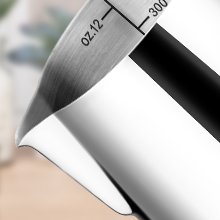
The Spout
The spout is arguably the most defining feature. It controls how frothed milk flows into your cup. It’s also the key to creating latte art.
 
A classic, or rounded, spout is the most common type. It’s versatile and great for beginners. It allows for a steady, consistent pour perfect for basic shapes and drinks where art isn’t the primary goal.
 
A sharp, or pointed, spout is favored by competitive baristas and latte art enthusiasts. This design offers ultimate precision. The narrow, defined tip allows for a very fine stream of milk. This enables the creation of highly detailed and complex art, which you can see at events like the World Latte Art Championship.
 
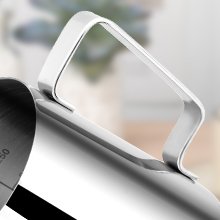
The Handle
The handle is your connection to the pitcher. It must provide a comfortable and secure grip, especially when the pitcher is full of hot milk.
 
Most are “open-ended.” This means they’re not connected at the bottom. This design allows for various grip styles and keeps your knuckles safely away from the hot body of the pitcher.
 
A sturdy, well-welded handle shows high quality. It’s a sign of a durable pitcher that will withstand daily use.
 
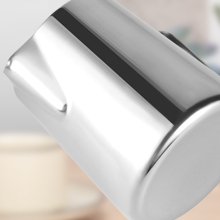
The Body and Base
The pitcher’s body shape is critical for creating silky microfoam. The walls typically slope inward from a wider base.
 
This shape, combined with angled steam from the wand, encourages the milk to roll and fold over itself. This creates a powerful vortex.
 
This swirling motion breaks down large air bubbles and incorporates them evenly. The result is the glossy, “wet paint” texture of perfect microfoam. A narrow, V-shaped pitcher will struggle to create this essential effect.
 
The Material
While pitchers come in various finishes, most are made from food-grade stainless steel. This isn’t just for looks or durability.
 
As mentioned, its excellent heat conductivity lets you gauge the milk’s temperature simply by touch. This is a fundamental skill for any barista.
 
Stainless steel is also highly durable. It resists rust, staining, and impact. A good pitcher can last a lifetime.
 
Finally, its non-porous surface is hygienic and easy to clean. This prevents the buildup of milk residue and bacteria.
 
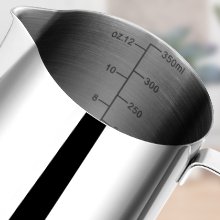
Volume Markings
Many modern pitchers include etched volume markings on the inside. These are incredibly helpful for beginners.
 
They ensure you use a consistent amount of milk for each drink. This reduces waste and helps you achieve predictable, repeatable results time after time.

Choosing Your First Pitcher

Now that you understand what a milk frothing pitcher is and why its design matters, let’s focus on choosing one. Selecting the right pitcher depends on your needs, the types of drinks you make, and your budget.
 
1. Material Deep Dive
 
While stainless steel is the professional standard, you’ll encounter a few other options.
Stainless Steel
Excellent heat feedback, durable, affordable, easy to clean.
Plain appearance (for some).
Everyone. The industry standard for a reason.
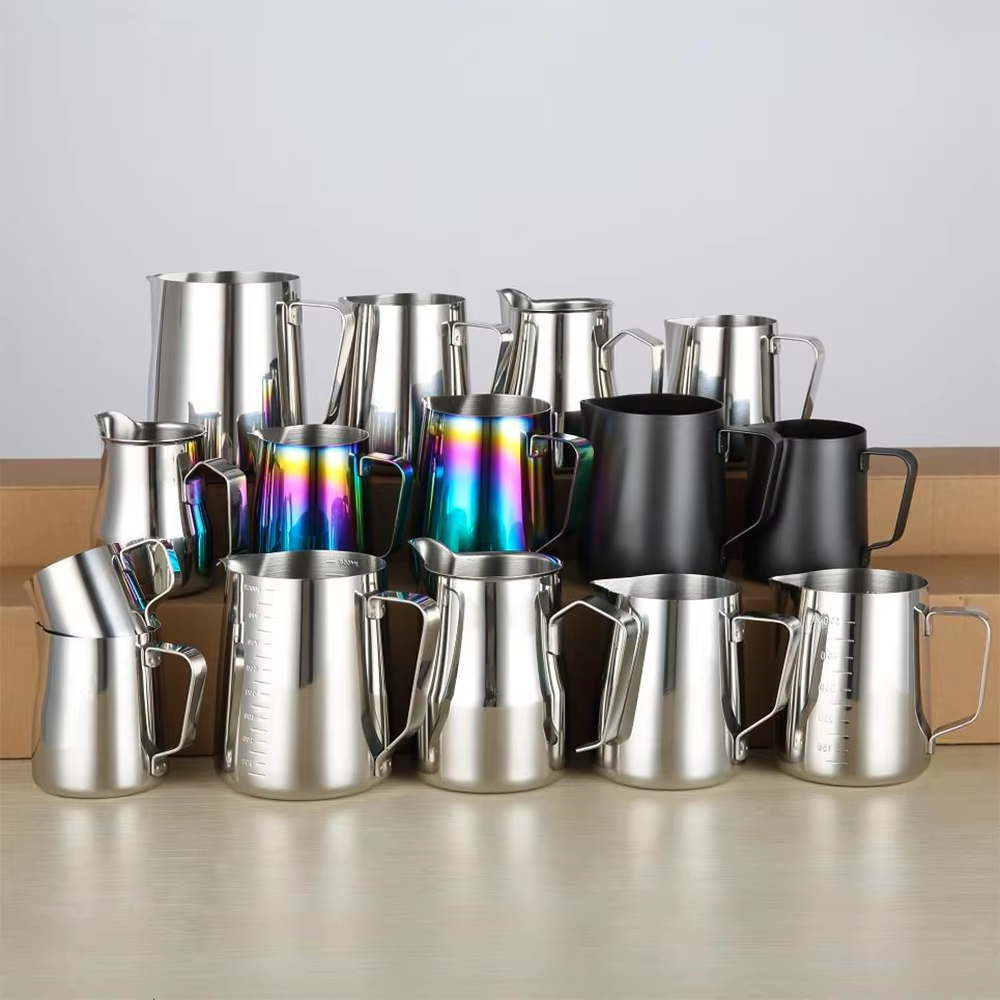
Teflon (Non-Stick) Coated
Extremely easy to clean; milk residue slides right off.
Coating can scratch or wear off over time; harder to feel temperature.
Baristas in high-volume settings or home users who prioritize quick cleanup.
Titanium / Colored
Aesthetically pleasing; available in many colors.
More expensive; color can fade or scratch; often just a coating over steel.
Users who value aesthetics and want to personalize their coffee station.
For your first pitcher, we strongly recommend a classic stainless steel model. It provides the best tactile feedback for learning temperature control. It also offers unbeatable value and durability.
2. Why Size Matters
This is the most common mistake beginners make. Using a pitcher that’s too large or too small for the amount of milk you’re steaming makes frothing nearly impossible.
 
The golden rule is simple. Only fill your pitcher to just below the start of the spout. This is typically about half-full.
 
This guideline ensures enough room for the milk to expand (it can nearly double in volume). It also allows for the crucial vortex to form without overflowing.
 
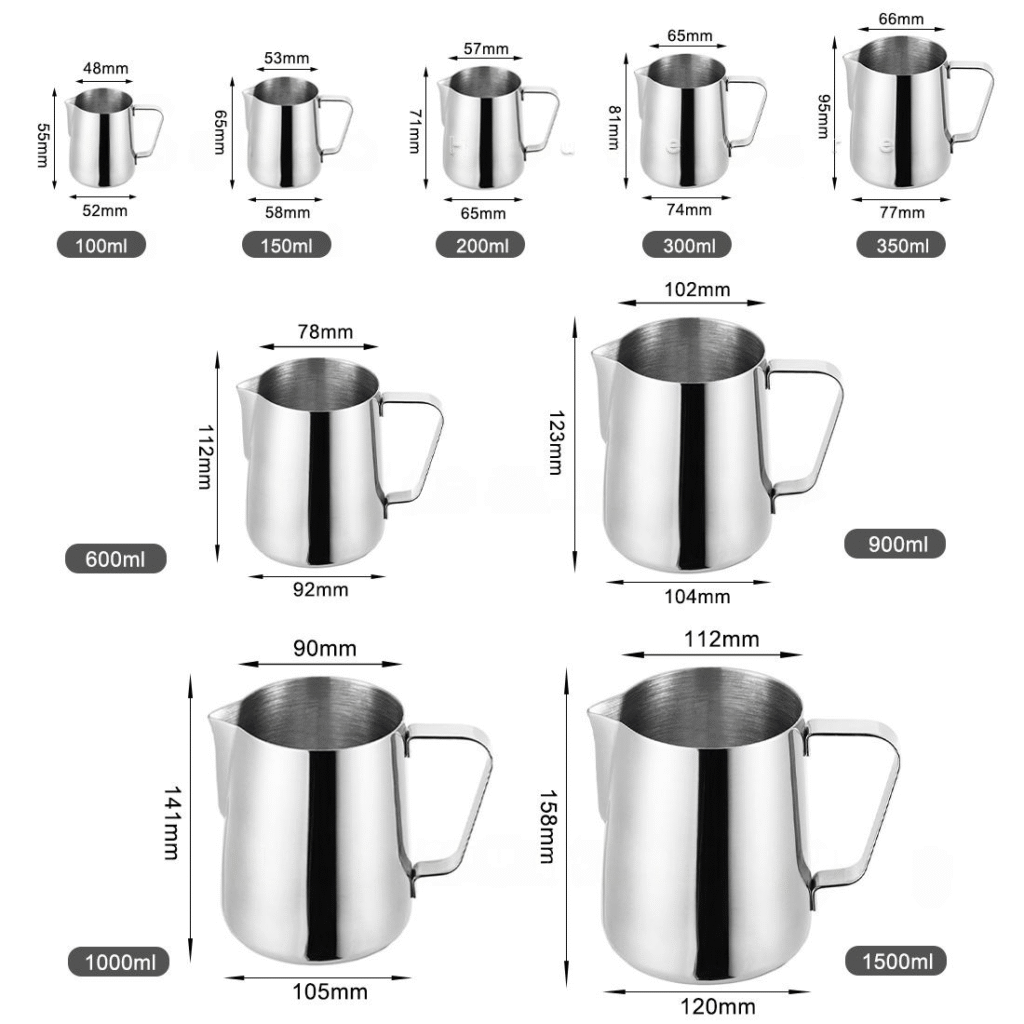
Here’s a simple size guide to help you choose:
 
  • 12 oz / 350 ml: This is perfect for a single small-to-medium drink, like a single 6-8 oz cappuccino or flat white. It’s the most common and versatile size for home use.
  • 20 oz / 600 ml: This size is ideal if you regularly make two drinks at once or prefer large lattes (12 oz or more). It offers more room to work with, which some beginners find easier for controlling the vortex.
  • 32 oz / 1000 ml and up: These are generally reserved for high-volume commercial café use. They are too large to effectively froth the small quantities of milk needed for one or two drinks at home.
     
If you’re unsure where to begin, start with a 12 oz or 20 oz pitcher. You can’t go wrong with either for a home setup.
 
Spout Shape and Ambition
 
Finally, think about your long-term goals.
 
Are you simply aiming to create beautifully textured milk for a delicious morning latte? A classic, rounded spout is perfectly fine and very forgiving for pouring.
 
Do you dream of pouring detailed rosettas and tulips? Consider a pitcher with a sharper, more defined spout. It will give you the fine-stream control you need as your skills develop.
 
For those just starting out, a pitcher from a reputable brand like Rattleware or Fellow is a great place to begin. As you progress, you might explore specialized latte art pitchers. A powerful steam wand is also critical. A quality machine makes all the difference, as detailed in our guide to choosing an espresso machine, which has the steam power you’ll need.

From Cold to Silky

This is where the magic happens. Grab your milk frothing pitcher, your espresso machine, and some cold milk. Let’s make some microfoam.
 
Step 1: The Preparation
 
Start with a cold pitcher and very cold milk. If you can, store your pitcher in the refrigerator for a few minutes before use.
 
Why? Cold milk gives you a longer window to steam it before it gets too hot. This extra time is crucial for properly introducing air and creating superior texture.
 
The science behind this relates to milk proteins. They structure best when steamed from a low temperature. For an in-depth look, the Specialty Coffee Association (SCA) offers great resources on milk science.
 
Pour your cold milk into the cold pitcher. Fill it only to just below the start of the spout. This should be about halfway up the pitcher.
 
Step 2: The Stretch
 
Before you begin, point your steam wand over the drip tray. Turn it on for a second or two. This purges any condensed water from the wand.
 
Now, submerge the tip of the steam wand just below the surface of the milk. Position it slightly off-center in the pitcher.
 
Turn the steam wand on to full power. You should immediately hear a gentle hissing or “paper tearing” sound. This is the sound of air being introduced, or “stretching” the milk.
 
Your goal is to continue stretching until the milk has increased in volume by about 30-50%. The pitcher should feel lukewarm to the touch (around 100°F / 37°C).
 
Step 3: The Swirl
 
Once you’ve introduced enough air, lower the steam wand deeper into the milk. Keep it in that off-center position. This will stop the hissing sound.
 
Angle the pitcher slightly to encourage the milk to spin rapidly in a whirlpool or vortex. This is the most crucial step for creating silky texture.
 
The vortex powerfully folds the larger bubbles you just created into the milk. It breaks them down into seamless, uniform microfoam.
 
Keep one hand on the side of the pitcher to monitor the temperature. As the vortex spins, the milk will heat up very quickly.
 
When the pitcher becomes too hot to comfortably hold for more than a second (this is around 140-150°F or 60-65°C), turn the steam wand off. It’s critical to turn off the steam before you remove the wand from the milk.
 
Step 4: The Finish
 
Immediately wipe the steam wand with a clean, damp cloth. Purge it again to clear any milk residue from the inside.
 
Next, look at your pitcher of milk. Tap the base of the pitcher firmly on the counter once or twice. This pops any remaining large bubbles on the surface.
 
Then, swirl the milk in the pitcher continuously until you’re ready to pour. The milk should have the consistency and brilliant shine of wet paint. If you let it sit for even a few seconds, the foam will begin to separate from the liquid milk.
 
You’re now ready to pour your beautifully textured milk into your fresh espresso. The quality of that espresso is just as important. Ensure you’re starting with a great foundation by learning how to pull the perfect espresso shot.

Pro Tips and Mistakes

Even with the right milk frother pitcher and good technique, things can go wrong. Here are some tips to accelerate your learning curve and a guide to fixing common issues.
 
Pro Tips for Learning
 
Practice with water and a single drop of dish soap. To get a feel for creating a vortex without wasting milk, fill your pitcher with cold water and soap. This mixture behaves very similarly to milk. It’s a technique used by many pro baristas to train their muscle memory. You can get more expert tips from resources like Barista Hustle.
 
Choose the right milk. Whole milk is the easiest to froth due to its higher fat and protein content. This creates rich, creamy, and stable foam. Skim milk creates stiffer, drier foam. For plant-based options, a “barista blend” oat milk is generally the best-performing alternative. It’s formulated for steaming. Perfect Daily Grind has an excellent comparison of different milk types for frothing.
 
Pair with great coffee. The best microfoam deserves to be paired with excellent coffee. The crema on a well-pulled shot of espresso provides a rich, brown canvas for your latte art. It also adds to the overall flavor. Consider using beans known for producing rich crema, as explored in our article on the best coffee beans for latte art.
 
Troubleshooting Your Foam
Problem
Likely Cause(s)
Solution
Big, Soapy Bubbles
 
You introduced too much air (“stretching” for too long) or didn’t create a proper vortex.
Stretch for a shorter period. Focus on submerging the wand deeper after the initial stretch and creating a strong, swirling vortex for the majority of the heating time.
Milk is Screaming/Shrieking
The steam wand is too deep in the milk from the start, essentially just boiling it.
Keep the wand tip just below the surface during the initial “stretching” phase until you hear that gentle hissing sound.
Foam is Thin and Watery
You didn’t introduce enough air, or you overheated the milk, causing the proteins to denature.
Keep the wand tip closer to the surface for a bit longer to introduce more air. Stop steaming as soon as the pitcher is too hot to hold.
Foam Separates Quickly
This is natural, but it’s exacerbated by under-textured milk or letting it sit.
Keep swirling the milk in the pitcher right up until the moment you pour. This keeps the microfoam and liquid milk fully integrated.

Caring for Your Pitcher

A quality milk frothing pitcher is a durable tool. With minimal care, it will last for years, becoming a trusted part of your coffee ritual.
 
Rinse the pitcher with hot water as soon as you’re done pouring. Fresh milk residue washes away easily. Dried-on milk is much harder to remove and can harbor bacteria.
 
For a more thorough clean, use a soft cloth or sponge with warm, soapy water. Avoid using abrasive steel wool or harsh scouring pads. These can scratch the surface, especially on coated or colored pitchers.
 
Most stainless steel pitchers are dishwasher safe. But it’s always best to check the manufacturer’s instructions. A quick hand wash is usually sufficient.
 
To keep a stainless steel pitcher looking its best, you can occasionally polish it. Good Housekeeping offers simple methods for cleaning stainless steel that also apply here.

Your Partner in Creativity

The milk frothing pitcher is far more than a simple container. It’s a precision instrument. It’s a carefully designed tool that bridges the gap between basic coffee and the artful, delicious creations served in the world’s best cafés.
 
It provides the control, feedback, and function necessary to master the science of steaming milk.
 
We’ve explored what a milk frothing pitcher is. We’ve dissected its anatomy, guided you on choosing the perfect one, and walked you through the steps to create beautiful microfoam.
 
You’re no longer a beginner staring at a mysterious piece of metal. You’re now equipped with the knowledge to select, use, and care for this essential tool.
 
It’s time to start your steam wand, embrace the process, and unlock a new level of creativity in your home-brewed coffee.
As a professional manufacturer specializing in the research, development, and production of coffee machines, we not only offer a diverse product selection but also support OEM/ODM customization to meet the needs of diverse markets and customers. With consistent quality control, fast delivery, and innovative designs, our coffee machines are used by numerous brands and channels worldwide. Whether you're a distributor, wholesaler, or brand owner, we can provide you with reliable solutions to help you grow your business. Contact us to explore potential collaboration opportunities.
Facebook
Twitter
LinkedIn
WhatsApp

Leave a Comment

Contact Us

FIll out the form below and we will cantact you as soon as possible