C o f f e e - f a c t o r y
Congratulations on your new coffee machine! There’s something magical about unboxing a fresh machine. You smell that new metal scent. You imagine all the amazing coffee you’re about to make. But then reality hits. That excitement can quickly turn into overwhelm. What else do you actually need?
 
This is your straightforward guide to the top 10 coffee machine accessories for beginners. We want to help you buy smart. We’ll help you avoid flashy gadgets you don’t need. Most importantly, we’ll get you brewing amazing coffee from day one. We’ve watched too many new coffee lovers waste money on the wrong things. We’re here to make sure that doesn’t happen to you.
 
We’ve made this simple with our “Tiered Essentials” system. First, we’ll cover the “Cannot-Start-Without” items you need right away. Then come the “Elevate Your Brew” tools that take your coffee to the next level. Finally, we’ll discuss the “Refine & Maintain” gear for long-term success.
 
Think of us as your experienced guide. We’ll show you exactly where to spend your money and energy. This way, you get the most rewarding results. Let’s dive in.

Table of Contents

Why Bother with Accessories?

You might wonder if all these extra items are really necessary. The answer is yes. Great coffee is all about control. Whether you’re making rich espresso or smooth pour-over, control is the secret.
 
Great coffee comes from managing key variables precisely. You need to control grind size. Coffee dose weight matters. Water weight or liquid espresso weight is crucial. Water temperature must be right. Extraction time needs to be perfect. Without the right tools, you’re just guessing.
 
Picture this: you try to brew without essential coffee machine accessories. One day your espresso tastes bitter. The next day it’s sour. You follow the same steps, but results vary wildly. This inconsistency frustrates beginners more than anything else. Many people give up because of it.
 
Now imagine the accessorized approach. You weigh a precise dose of beans with a scale. You use a quality grinder for uniform grind size. You time your shot and weigh the output. Suddenly, your results become repeatable. If a shot tastes bad, you know exactly which variable to adjust. You gain control. With control comes consistency and deliciousness.
 
Trying to make great espresso without a scale is like trying to bake a cake without measuring cups. You might get lucky once in a while, but you can’t reliably repeat your success.
 
Accessories aren’t just “extras.” They’re the instruments that help you understand the process. They let you diagnose problems and replicate your best cups day after day. They transform brewing from a game of chance into a craft you can master.

The Essential Starter Kit

We’ve organized this list of the top 10 coffee machine accessories for beginners into three tiers. This isn’t random. It’s a prioritized roadmap for your purchases.
 
Start with Tier 1. These are absolute must-haves. Once you have those, move to Tier 2 to improve quality and workflow significantly. Finally, Tier 3 helps you refine skills and protect your investment for years.
 
Tier 1: The “Cannot-Start-Without” Trio
 
These three items form the foundation of your coffee setup. Don’t skip them. Investing here impacts your coffee’s flavor more than the machine itself.
 
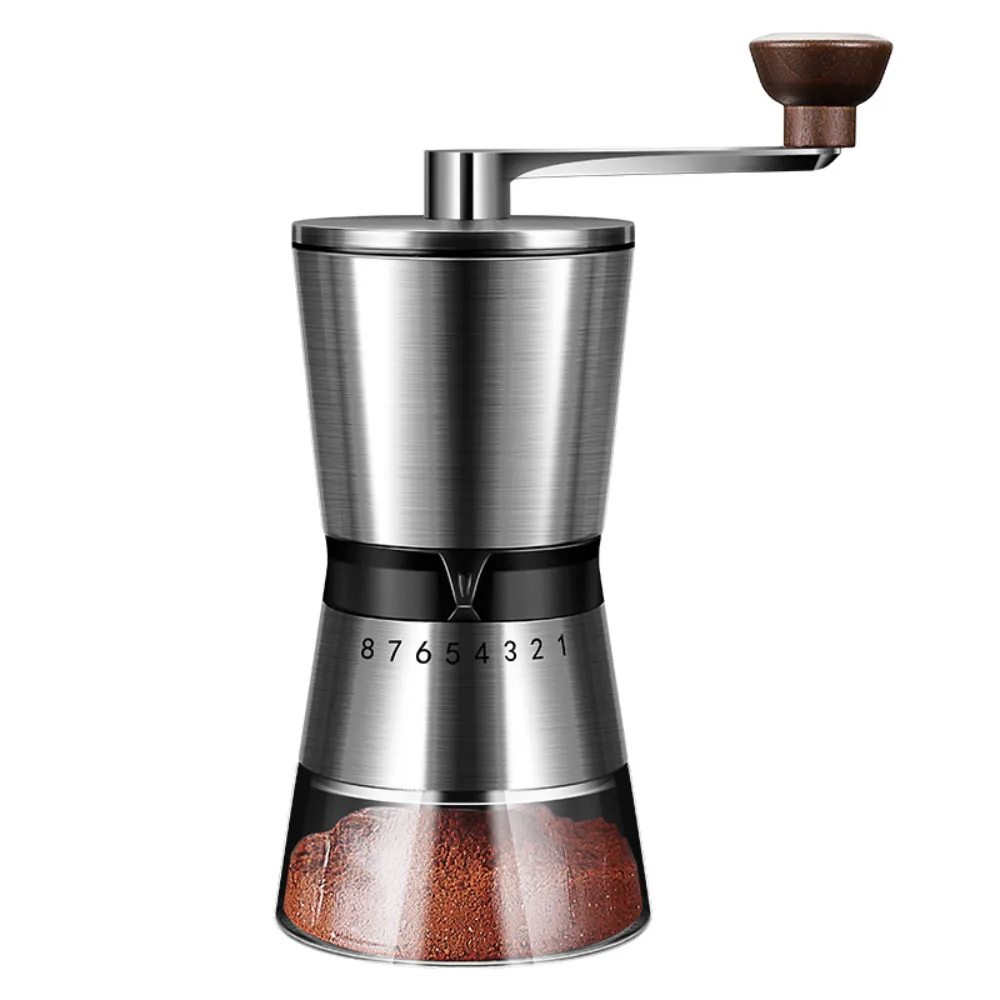
1. A Quality Burr Grinder
What It Is & Why It’s Essential:
A burr grinder uses two revolving surfaces to crush coffee beans uniformly. This is the most important accessory you’ll buy. Cheap blade grinders chop beans chaotically. You get a mix of boulders and dust. This leads to uneven extraction. Some grounds become over-extracted and bitter. Others stay under-extracted and sour. A burr grinder provides the consistency needed for balanced, sweet espresso.
 
What to Look For:
Choose burr grinders, not blade grinders. You can pick conical or flat burrs. Conical burrs appear in entry-level grinders and work excellently. Look for fine-grained adjustment steps or stepless adjustment. This lets you dial in perfect grind size for espresso. Low-retention is also desirable. This means very little old coffee stays inside the grinder.
 
Beginner’s Tip:
Never pair a $1000 espresso machine with a $50 blade grinder. Your grinder affects flavor quality more than your machine. It’s better to have a $400 grinder and $400 machine than a $100 grinder and $700 machine. Your grinder sets the absolute ceiling for your coffee’s potential.
 
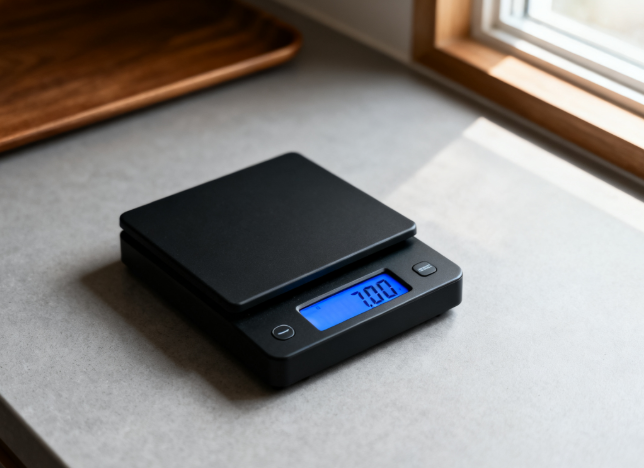
2. A Digital Coffee Scale
What It Is & Why It’s Essential:
A digital scale gives you measurement and consistency. Coffee is all about ratios. You need the right ratio of dry coffee grounds to water or liquid espresso. A scale is the only way to measure these accurately and achieve consistent brew ratios. For espresso, try starting with a 1:2 ratio. That means 18 grams of dry coffee grounds should yield 36 grams of liquid espresso. Without a scale, you’re flying blind.
 
What to Look For:
You need 0.1-gram accuracy. A 1-gram kitchen scale isn’t precise enough for espresso. Look for a built-in timer since timing your shot is critical. Make sure it has fast response time so weight readings don’t lag. Check dimensions to ensure it fits comfortably on your espresso machine’s drip tray.
 
Beginner’s Tip:
Always weigh your dry coffee grounds (dose) and liquid espresso output (yield). This is the fundamental secret to diagnosing bad shots. If your shot runs too fast and tastes sour, grind finer. If it runs too slow and tastes bitter, grind coarser. The scale gives you data to make informed decisions.
 
3. Fresh, Whole Coffee Beans
What It Is & Why It’s Essential:
This might seem obvious, but it’s the most overlooked “accessory.” Coffee is a fresh agricultural product. Once roasted, it immediately begins degrading. Once ground, the process accelerates dramatically. Stale, pre-ground supermarket coffee will never produce good espresso. No matter how expensive your equipment is. The delicate oils and aromatic compounds are already gone.
 
What to Look For:
Always look for a “roasted on” date on the bag. Avoid bags with only “best by” or “expiry” dates. These tell you nothing about freshness. Always buy whole beans and grind just before brewing. Seek out local roasters in your city. Look for reputable online roasters that ship coffee shortly after roasting.
 
Beginner’s Tip:
For best flavor, choose beans roasted within the last two to three weeks. Coffee needs a few days to “de-gas” after roasting. But after a month, it starts losing vibrancy. This is a great time to explore different roast levels. You can understand flavor profiles from light and fruity to dark and chocolatey. Learn more by reading The Ultimate Guide to Coffee Roast Levels.

Tier 2: The "Elevate Your Brew" Kit

 
With Tier 1 fundamentals covered, these tools are your next step. They focus on “puck prep.” This is the process of preparing coffee grounds in the portafilter. They dramatically improve shot consistency and reduce channeling issues.
 
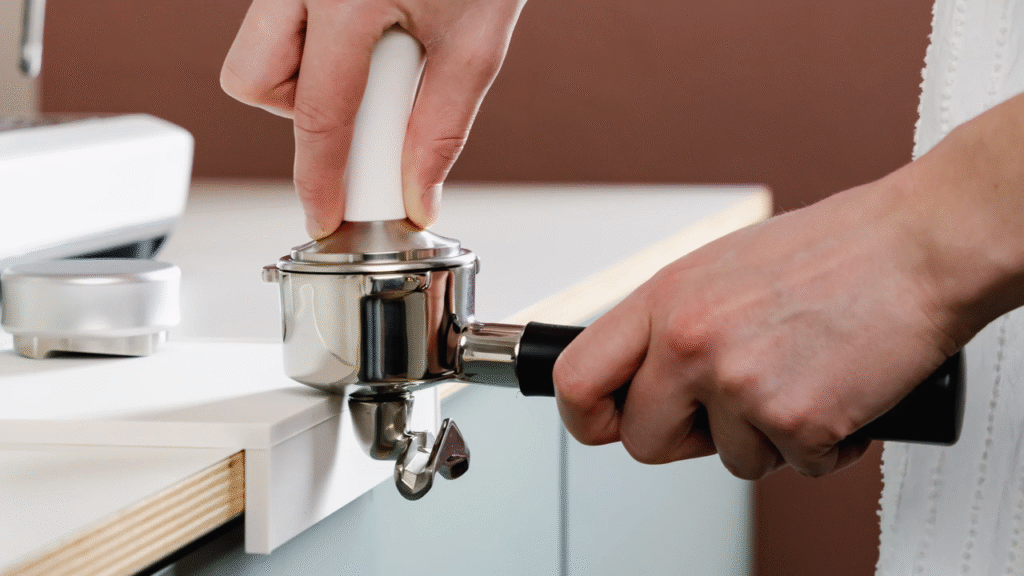
4. A Proper Tamper
What It Is & Why It’s Essential:
A tamper compresses loose coffee grounds into a tight, level puck inside the portafilter. This compression creates resistance. It forces hot water to flow evenly through the entire coffee bed. Most machines include flimsy, ill-fitting plastic tampers that are practically useless. A proper, heavy tamper prevents “channeling.” Channeling happens when water finds the path of least resistance and bypasses most of the coffee. This results in weak, sour, disappointing shots.
 
What to Look For:
Size is the most important factor. It must match your machine’s portafilter diameter. This is typically 58mm for commercial-style machines or 54mm/51mm for many beginner models. Check your machine’s specifications. Look for a comfortable handle and solid, heavy stainless steel base. A simple flat base works perfectly for beginners.
 
Beginner’s Tip:
Aim for firm, level pressure. Many people think you need to press as hard as possible. The real goal is consistency. Apply enough pressure until the coffee puck feels fully compressed. Focus on keeping the tamper perfectly level. Consistent, level tamping matters more than heavy tamping.
 
5. A Coffee Distribution Tool
What It Is & Why It’s Essential:
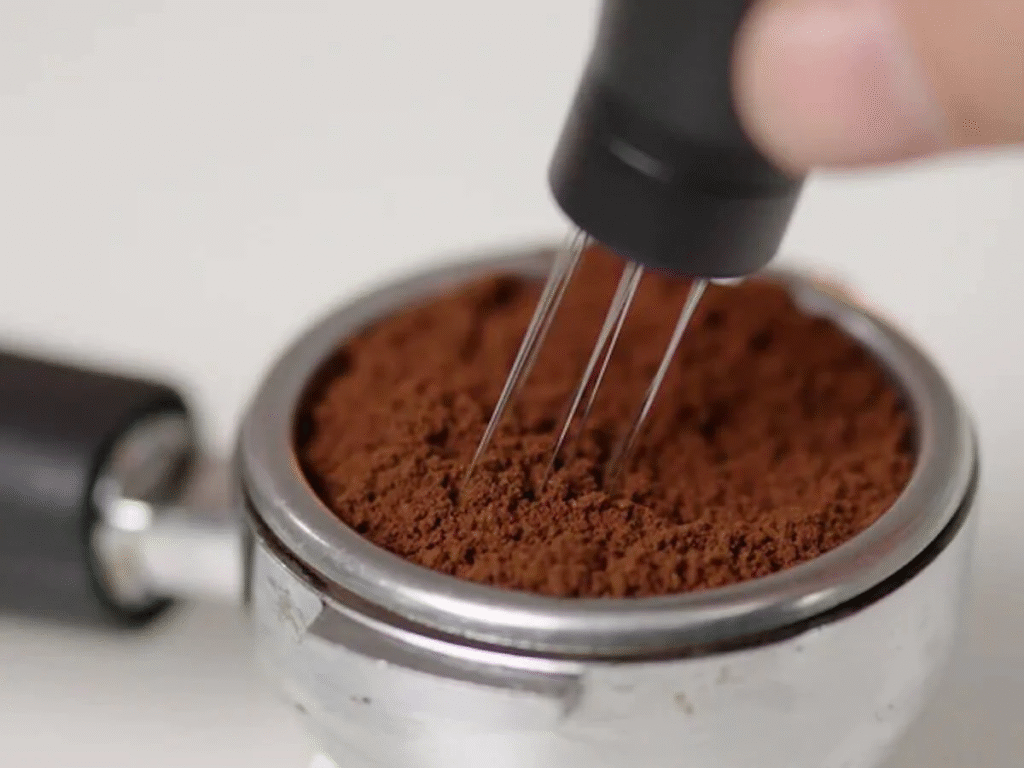
Even the best grinders produce somewhat clumpy, unevenly distributed grounds in the portafilter. These clumps create dense pockets that resist water flow. This causes channeling again. A distribution tool breaks up clumps and creates a fluffy, uniform coffee bed before you tamp. This is one of the biggest game-changers for shot consistency.
 
What to Look For:
There are two main types: spinner-style levelers and WDT tools. For beginners, we highly recommend a WDT (Weiss Distribution Technique) tool. This has a handle with several very fine needles, like acupuncture needles. You use it to stir the grounds. It breaks up deep-seated clumps more effectively than spinners, which often just groom the surface.
 
Beginner’s Tip:
You don’t need to spend much money here. You can make a simple, effective DIY WDT tool with a wine cork and a few 0.4mm acupuncture needles. These are available online very cheaply. It works just as well as expensive, beautifully machined models. It’s a perfect way to start understanding proper distribution benefits.
 
6. A Knock Box
What It Is & Why It’s Essential:
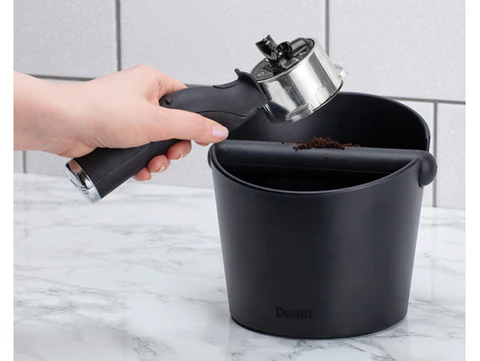
A knock box is a dedicated container with a sturdy bar across the top. You use it for “knocking out” used coffee pucks from your portafilter after brewing. This is a huge quality-of-life and workflow accessory. Without one, you’ll bang your expensive portafilter on your trash can edge. This can dent it. Or you’ll try scooping out hot, muddy pucks with a spoon. This is messy and inefficient.
 
What to Look For:
Look for durable materials like hard plastic or stainless steel. Make sure it has a non-slip rubber base to prevent sliding around your counter. The bar should be removable for easy cleaning since it gets coated in coffee oils. Choose a size appropriate for home use. You don’t need a giant cafe-sized model.
 
Beginner’s Tip:
Position your knock box right next to your espresso machine. Create a dedicated “station” for your coffee routine: grinder, machine, knock box. This builds muscle memory and makes the entire process from brewing to cleanup feel smooth and professional. It becomes enjoyable rather than a chore.

Tier 3: The "Refine & Maintain" Crew

Once you’re consistently pulling good shots, this tier helps you expand into milk-based drinks. It also ensures long-term health and performance of your valuable equipment.
 
7. A Milk Frothing Pitcher
What It Is & Why It’s Essential:
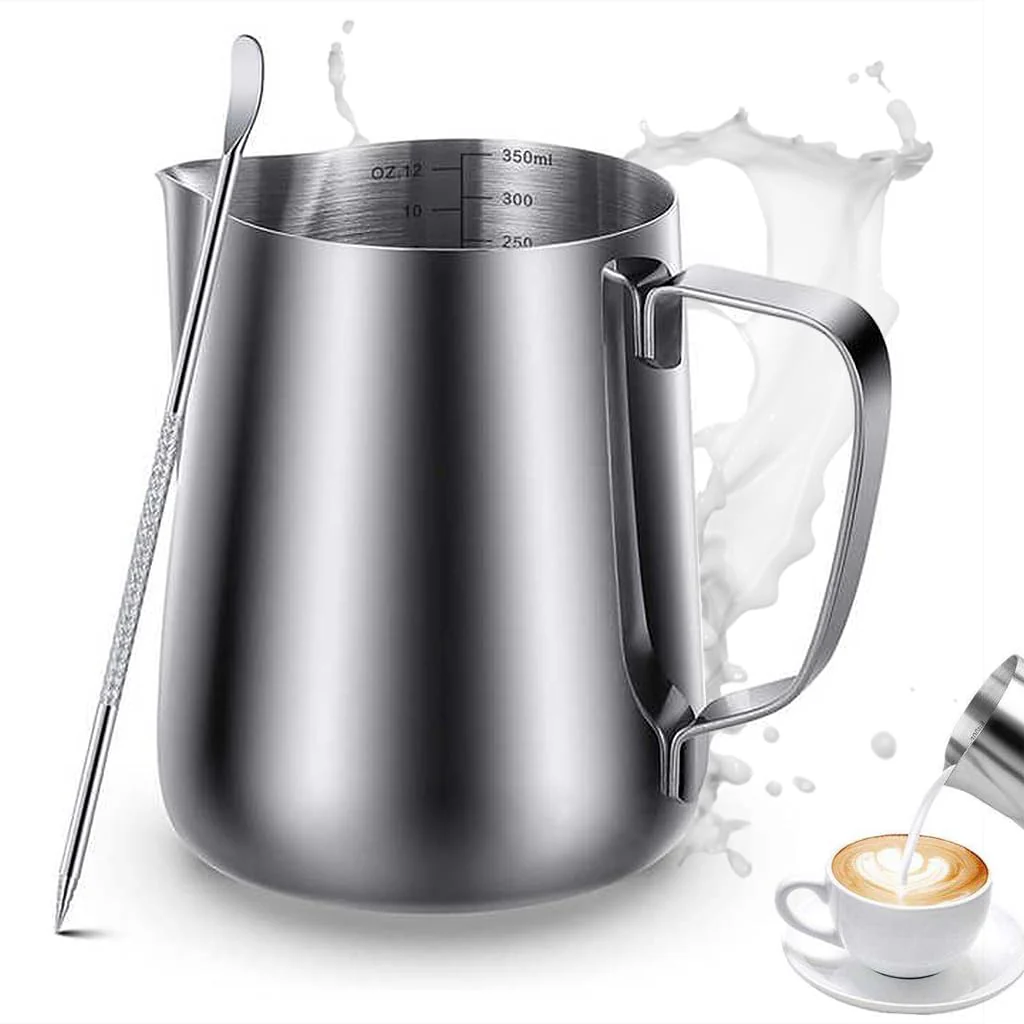
If you plan on making lattes, cappuccinos, or flat whites, a dedicated milk frothing pitcher is essential. The specific shape matters. It’s wider at the bottom, tapering toward the top. This design creates a vortex that incorporates air and textures milk into silky-smooth microfoam. The defined spout is crucial for controlling your pour and attempting latte art. Regular mugs or cups simply won’t work.
 
What to Look For:
Stainless steel is standard because it’s durable and conducts temperature well. This lets you feel how hot the milk is getting. The most important feature is a sharp, well-defined spout for pouring control. For beginners making one drink at a time, a 12oz (350ml) pitcher is perfect. It allows enough room for milk to expand without being so large that you waste milk.
 
Beginner’s Tip:
Keep your pitcher and milk as cold as possible before steaming. We recommend storing the pitcher in the freezer for 10 minutes before use. Cold milk gives you a longer window to stretch and texturize before reaching ideal temperature (around 140-150°F / 60-65°C). This extra time is invaluable when learning.
 
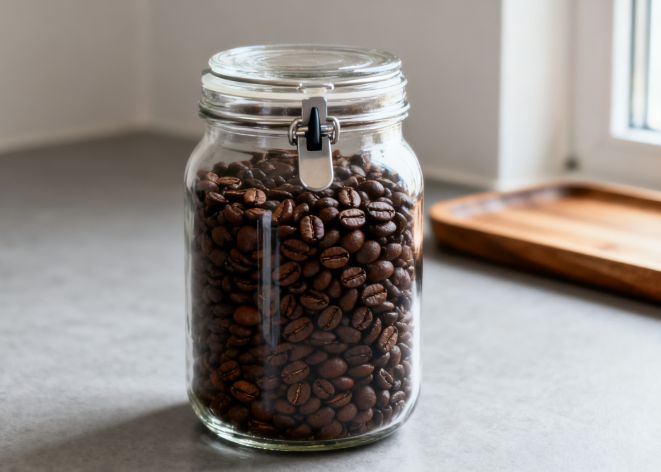
8. An Airtight Coffee Container
What It Is & Why It’s Essential:
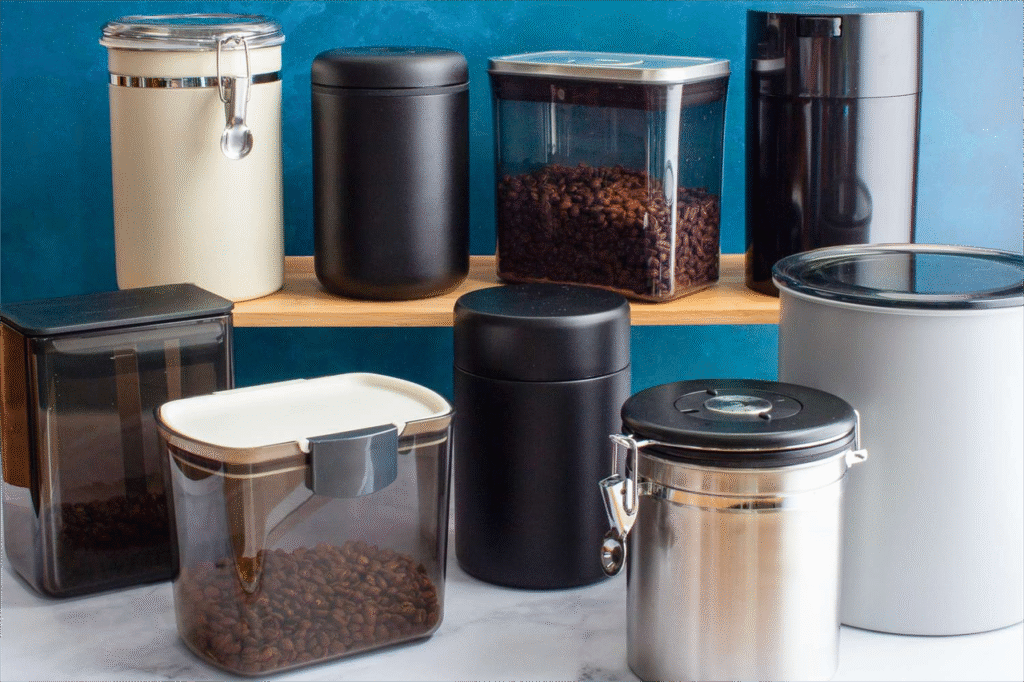
You’re investing in fresh, high-quality beans. Now you need to protect them. Coffee has four enemies: oxygen, light, heat, and moisture. An airtight container shields your beans from these elements. It preserves delicate flavors and aromas much longer than the original bag. Leaving beans in an unsealed, rolled-up bag guarantees stale coffee within a week.
 
What to Look For:
Choose containers made of opaque materials like ceramic or stainless steel to block light. The most critical feature is an airtight seal. Some advanced models feature vacuum seal pumps to actively remove oxygen. Look for containers with one-way CO2 valves. These allow carbon dioxide from freshly roasted beans to escape without letting oxygen in.
 
Beginner’s Tip:
Never store coffee beans in the refrigerator or freezer. Condensation forms when you take them out. This introduces moisture and ruins the beans. For more details on this common mistake and other best practices, review our guide on what is the best way to store coffee beans.
 
9. Essential Cleaning Supplies
What It Is & Why It’s Essential:
This is the least glamorous but most critical category. Over time, coffee oils build up inside your machine’s group head and portafilter. These oils go rancid. They make your fresh coffee taste bitter and dirty. Regular cleaning is absolutely mandatory for both flavor and long-term machine health. A dirty machine cannot make good coffee.
 
What to Look For:
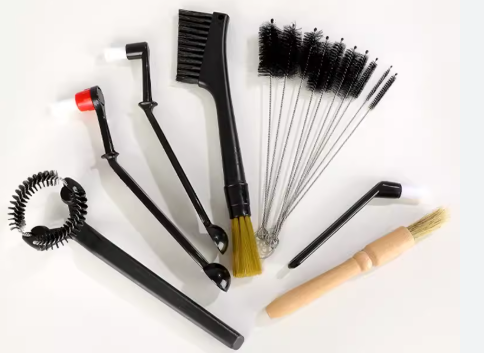
Your basic cleaning kit needs three things. First, a backflush “blind” basket (a basket with no holes). Second, espresso machine cleaning powder like Cafiza or similar products. Third, a group head brush. Use the brush for daily cleaning to scrub the shower screen. Use the powder and blind basket for weekly “backflush” chemical cleaning.
 
Beginner’s Tip:
Get into the habit of backflushing with just water after every coffee-making session. Do a backflush with cleaning agent once weekly. This simple routine takes less than two minutes. It makes a huge difference in your coffee’s taste. For general descaling, you can learn how to clean a coffee maker with vinegar. However, for espresso machines, dedicated descaling solutions are often better.
 
10. A Water Filter or Softener
 
What It Is & Why It’s Essential:
Coffee is over 98% water. If your tap water tastes bad, your coffee will taste bad. More importantly for your machine, hard water contains minerals like calcium and magnesium. These build up inside the boiler and pipes as limescale. Scale buildup is the number one killer of espresso machines. It restricts water flow and affects temperature stability. It can lead to very expensive repairs.
 
What to Look For:
First, get simple water hardness test strips to assess what you’re working with. If your water is hard, the easiest solution is an in-tank filter pouch. Brands like BWT make pouches that both filter and soften. Alternatively, use a dedicated water filter pitcher like Brita or ZeroWater. Fill your machine’s reservoir from that.
 
Beginner’s Tip:
Using properly filtered water from day one is the best preventative maintenance for your new machine. It’s far easier and cheaper to prevent scale buildup than remove it later. Think of it as very cheap insurance for your expensive new investment.
Accessory
Tier
Primary Purpose
Burr Grinder
1
Consistent Grind Size
Digital Scale
1
Accurate Measurement
Fresh Beans
1
Flavor Foundation
Tamper
2
Even Compaction
Distribution Tool
2
De-clump & Distribute
Knock Box
2
Clean Workflow
Milk Pitcher
3
Milk Frothing
Storage Container
3
Preserve Freshness
Cleaning Supplies
3
Machine Maintenance
Water Filter
3
Flavor & Machine Health

Putting It All Together

Knowing the tools is one thing. Seeing how they work together is another. Let’s walk through pulling one perfect espresso shot using our new coffee machine accessories. We’ll bring Tier 1 and Tier 2 items into a seamless workflow.
 
  1. Prep Station: Turn on your espresso machine to let it heat up fully. Place your cup on the machine’s top warming tray. On your counter, arrange your **digital scale**, portafilter, **distribution tool**, and **tamper**. This is your command center.
     
  2. Weigh & Grind: Place the empty portafilter on the scale and press tare to zero it out. Dose your fresh beans directly into the portafilter until the scale reads your target dose, like 18.0 grams. Take the portafilter to your burr grinder and grind the beans. You’ll hear the satisfying crunch as burrs transform whole beans into fragrant, fluffy grounds.
     
  3. Distribute & Tamp: With the portafilter full of fresh grounds, place it on your counter or tamping mat. Take your distribution tool and gently stir the grounds. Break up any clumps and create a level, uniform surface. You’ll see grounds transform from a lumpy pile into a smooth, even bed. Now take your **tamper**, place it on the grounds, and press down firmly and evenly until the puck feels compact. Give it a gentle spin without pressure to polish the surface.
     
  4. Brew: Immediately lock the portafilter into the machine’s group head. Place your warmed cup and scale underneath the portafilter. Tare the scale to zero again. Start your machine’s brew cycle and the timer on your scale at exactly the same moment. Watch as first drops of espresso appear, then form a steady, honey-like stream. Keep your eye on the weight. As soon as the scale reads your target yield—in our case, 36 grams—stop the shot.
     
  5. Clean Up: Your shot is ready to enjoy. But the workflow isn’t done. Take the portafilter from the machine and walk it to your **knock box**. Give it a firm “knock” on the bar. The used puck will fall out in one clean piece. Give the group head a quick water flush to rinse away stray grounds. Now your station is clean and ready for the next shot.

Your Coffee Journey Starts Now

Starting a new hobby can feel daunting, but it doesn’t have to be. By focusing on this curated list of the top 10 coffee machine accessories for beginners, you have a clear path forward. Remember the core message: begin with Tier 1 essentials. A quality burr grinder, precise digital scale, and fresh coffee beans are the foundation of everything.
 
Mastering these few key accessories is far more important than owning every gadget on the market. They give you the control and feedback needed to turn brewing from a guessing game into a rewarding craft. Build from that strong foundation. Add other tools as you grow in skill and confidence.
 
Don’t be afraid to experiment, make mistakes, and learn from every cup. For more tips and in-depth guides to continue your education, explore our full blog.
As a professional manufacturer specializing in the research, development, and production of coffee machines, we not only offer a diverse product selection but also support OEM/ODM customization to meet the needs of diverse markets and customers. With consistent quality control, fast delivery, and innovative designs, our coffee machines are used by numerous brands and channels worldwide. Whether you're a distributor, wholesaler, or brand owner, we can provide you with reliable solutions to help you grow your business. Contact us to explore potential collaboration opportunities.
Facebook
Twitter
LinkedIn
WhatsApp

Contact Us

FIll out the form below and we will cantact you as soon as possible