ESPRESSO ACCESSORIES · PORTAFILTER GUIDE · OEM SOURCING
10 Different Types of Portafilters: How to Choose the Right One
Choose a portafilter in this order: exact machine compatibility, basket pressure system, dose capacity, then bottomless or spouted workflow. The ten common “types” describe different layers of one setup, so a single assembly can be bottomless, non-pressurized, ridgeless and fitted with a double basket at the same time.
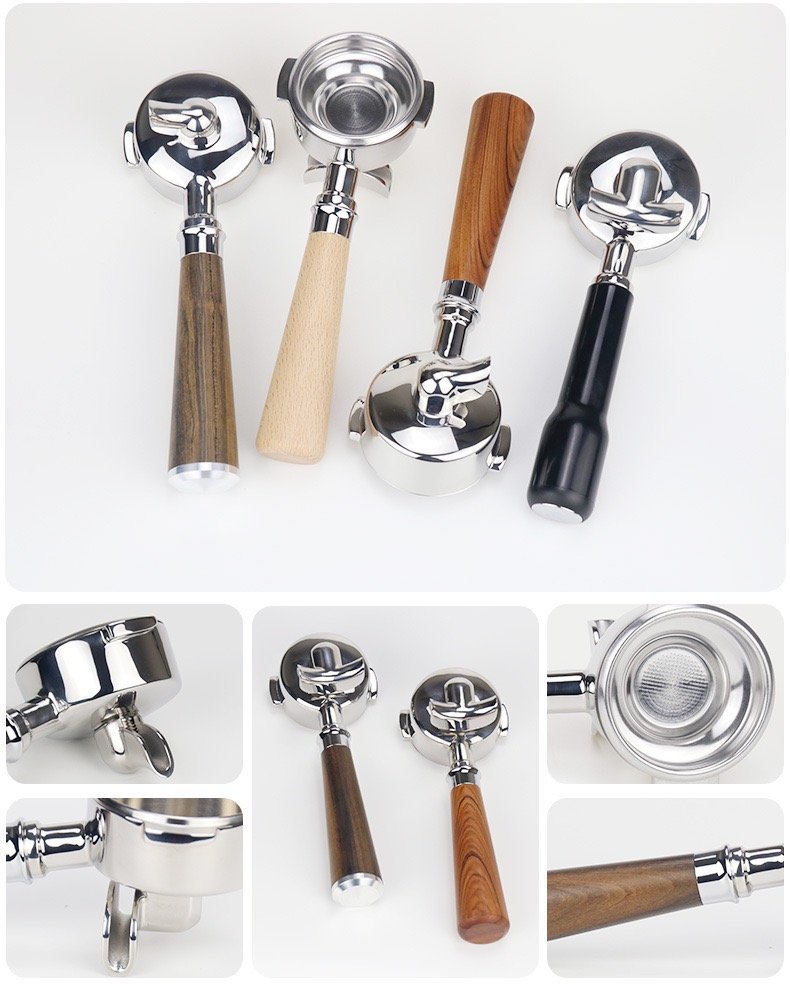
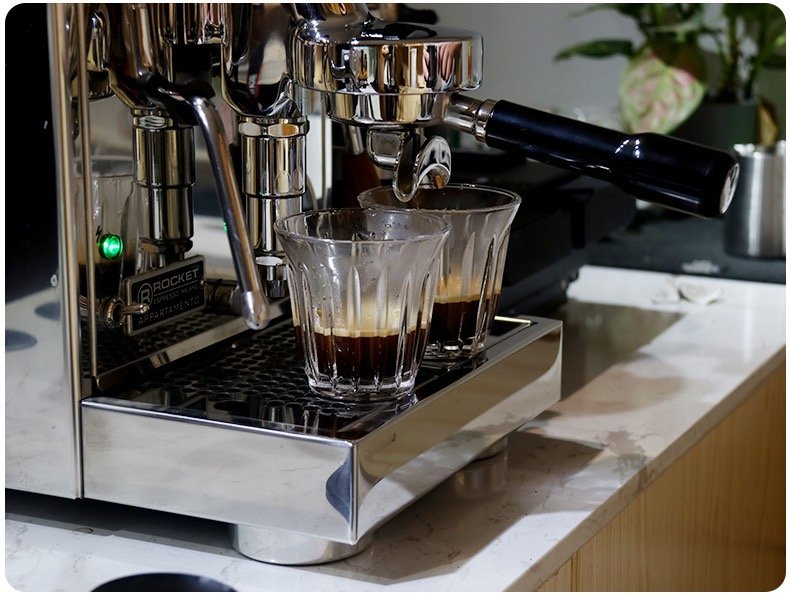
Quick answer: first match the machine, then select the workflow
- Portafilter body types and basket types are different layers—not ten mutually exclusive products.
- Bottomless, single-spout and double-spout describe how espresso leaves the body.
- Pressurized and non-pressurized describe where flow resistance is created in the basket/outlet system.
- Single, double and triple describe basket capacity, not a universal dose in grams.
- Ridged and ridgeless describe the basket wall near the retaining spring, not the portafilter locking lugs.
- 51 mm, 54 mm and 58 mm labels are only a starting point; model-specific fit is essential.
First, understand how portafilter types overlap
A portafilter is the removable handled assembly that holds a filter basket and locks into the espresso machine’s group head. In common search language, basket styles are often also called portafilter types. That is useful for discovery, but it can lead to buying mistakes unless the layers are kept separate.
Machine interface
Head diameter, lugs/ears, insertion depth, basket rim and gasket contact decide whether the part can lock and seal.
Body outlet
Bottomless, single-spout and double-spout styles decide extraction visibility and cup delivery below the basket.
Basket system
Pressure design, capacity and ridge profile determine puck geometry, resistance, dose and basket retention.
Category-overlap rule: a setup can be bottomless by body style, non-pressurized by basket design, ridgeless by basket-retention profile and double by dose capacity at the same time. Do not treat every label as a separate handle you need to buy.
| Type | What the label actually describes | Best fit | Main limitation |
|---|---|---|---|
| 1. Bottomless / naked | Open underside with no spout below the basket | Training, diagnosis and cup clearance | Can expose spray and messy puck preparation |
| 2. Single-spout | One outlet beneath the body | One-cup service | Cannot split one extraction into two cups |
| 3. Double-spout | Two outlets beneath the body | Two-cup service | More lower-body surfaces to clean |
| 4. Pressurized / dual-wall | Restricted outlet adds flow resistance | Pre-ground coffee and convenience | Less direct feedback from puck preparation |
| 5. Non-pressurized / single-wall | Open perforated base; coffee puck governs flow | Fresh coffee and dialing in | Needs repeatable grinding and preparation |
| 6. Single basket | Lower-capacity basket, often tapered | Lower-dose espresso | Can be harder to dial in |
| 7. Double basket | Everyday medium-capacity basket | Most home and café recipes | Dose range still varies by basket |
| 8. Triple / high capacity | Deeper, larger-dose basket | Defined high-dose recipes | Needs enough body and group clearance |
| 9. Ridged basket | Sidewall indentation engages retaining spring | Secure retention during knock-out | Basket changes may take more effort |
| 10. Ridgeless basket | Smooth sidewall held by spring friction | Frequent basket changes | Retention depends closely on correct spring fit |
Types 1–3: bottomless, single-spout and double-spout bodies
1. Bottomless portafilter (naked portafilter)
A bottomless portafilter has no floor or spout beneath the basket, leaving the underside visible during extraction. It is mainly a diagnostic and training tool: the barista can see whether flow gathers evenly, remains off-center or sprays. It does not make extraction better by itself, and visible spray can result from distribution, grind, dose, tamp, basket condition, headspace or group-water distribution.
2. Single-spout portafilter
A single-spout body guides espresso through one outlet. It is useful for one-cup service and narrow cups. Single spout does not mean single basket: a compatible double basket can still deliver its full yield through one outlet.
3. Double-spout portafilter
A double-spout body has two outlets and can divide one extraction between two cups. It supports familiar café workflow, but the split will not necessarily be equal. Spout geometry, levelness, cleanliness and cup position can change distribution. The lower chamber and outlets also need cleaning access.
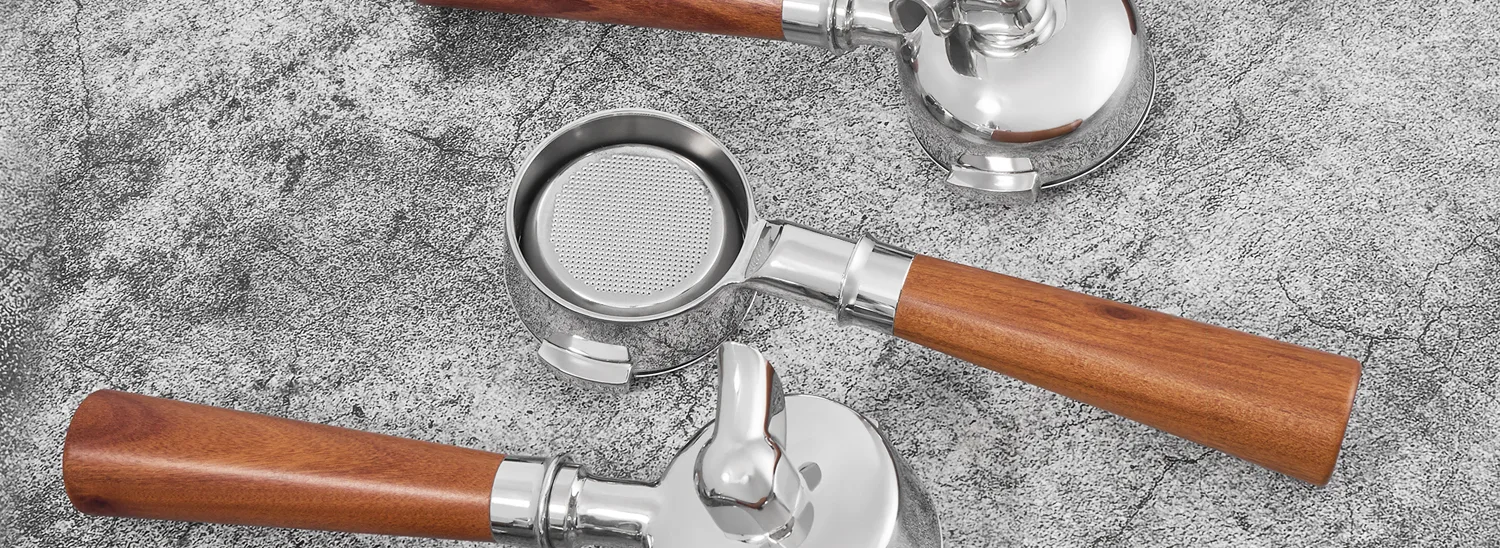
Bottomless vs spouted
- Choose bottomless for extraction visibility, diagnostics, training and vertical cup clearance.
- Choose a single spout for one guided stream and one-cup presentation.
- Choose a double spout for two-cup service and contained delivery.
- Keep the compatibility check identical: outlet style does not define the upper locking interface.
Some model-specific systems can convert among outlet styles, but never assume a spouted portafilter can safely become bottomless without the maker’s approved design and parts.
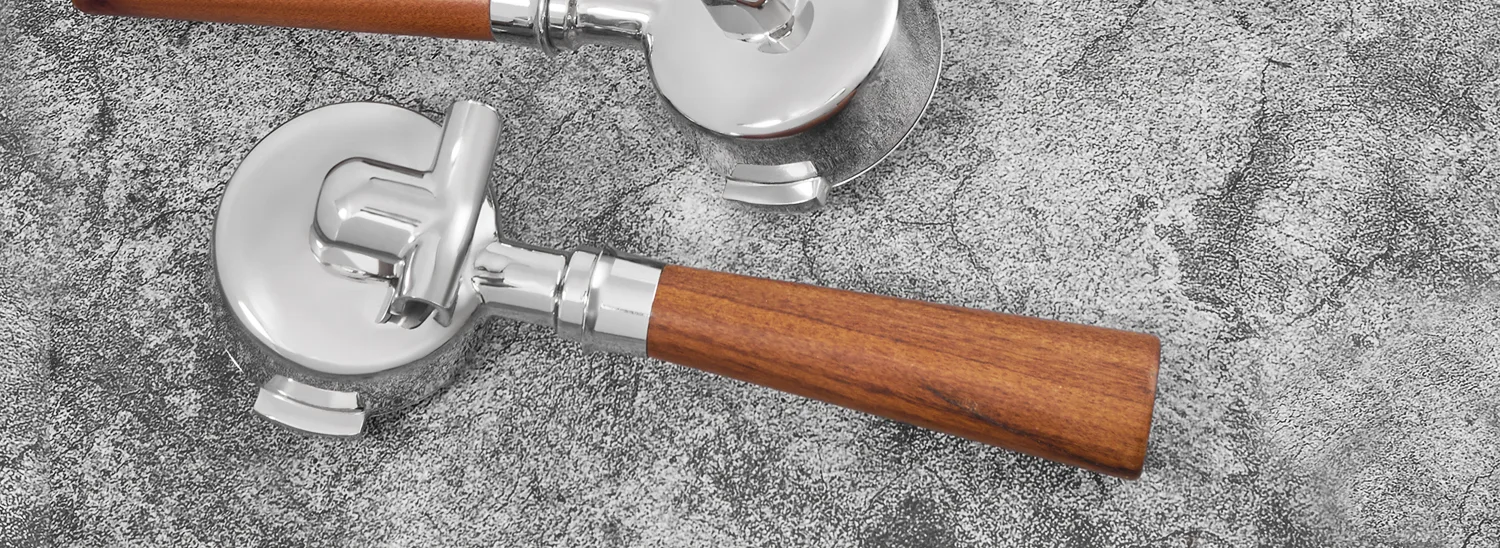
Types 4–5: pressurized vs non-pressurized baskets
4. Pressurized portafilter basket (dual-wall)
A pressurized, or dual-wall, basket has an added restricted outlet after water passes through the coffee. In a typical design, a perforated inner wall drains into a second wall with one or a few small exits. The added restriction makes the setup more tolerant of pre-ground coffee, less consistent grinders and convenience-led workflows.
5. Non-pressurized portafilter basket (single-wall)
A non-pressurized, or single-wall, basket has a perforated base without that second restricted wall. The prepared coffee puck provides most of the flow resistance. This gives the operator more direct control through grind, dose, distribution, tamp and coffee freshness—but makes poor preparation more obvious.
| Factor | Pressurized / dual-wall | Non-pressurized / single-wall | Practical decision |
|---|---|---|---|
| Primary resistance | Added restricted outlet contributes strongly | Coffee puck and open base govern flow | Convenience versus direct recipe control |
| Coffee input | More tolerant of pre-ground or variable coffee | Best with fresh coffee and fine grinder adjustment | Match the system to actual equipment |
| Learning feedback | Masks some puck-prep variation | Shows changes in grind, dose and distribution more directly | Use single-wall when dialing in is the goal |
| Cleaning focus | Small restricted outlet needs close attention | Perforated floor and body need routine cleaning | Inspect every flow path the design contains |
Types 6–8: single, double and triple basket capacity
Single, double and triple are capacity labels, not universal gram specifications. Basket shape, wall taper, depth, hole area, coffee density and machine clearance all change the workable dose. Use the basket manufacturer’s stated range and test the actual puck headspace rather than relying on a generic number.
6. Single basket
Lower capacity, often tapered or asymmetric. Useful for a smaller dose but commonly less forgiving for distribution and tamping.
7. Double basket
The everyday default for many home and café workflows. Its broader, often straighter puck can be easier to dose, distribute and dial in.
8. Triple / high-capacity basket
Deeper body for a larger-dose recipe. It can require more portafilter-body depth and sufficient clearance below the shower screen or screw.
A high-capacity basket does not automatically need unusually high brew pressure. Capacity changes coffee dose and puck geometry; brew settings must follow the machine, coffee and validated recipe. If the puck touches the shower screen or screw before brewing, reduce the dose or use the correct basket—do not force the portafilter into the group.
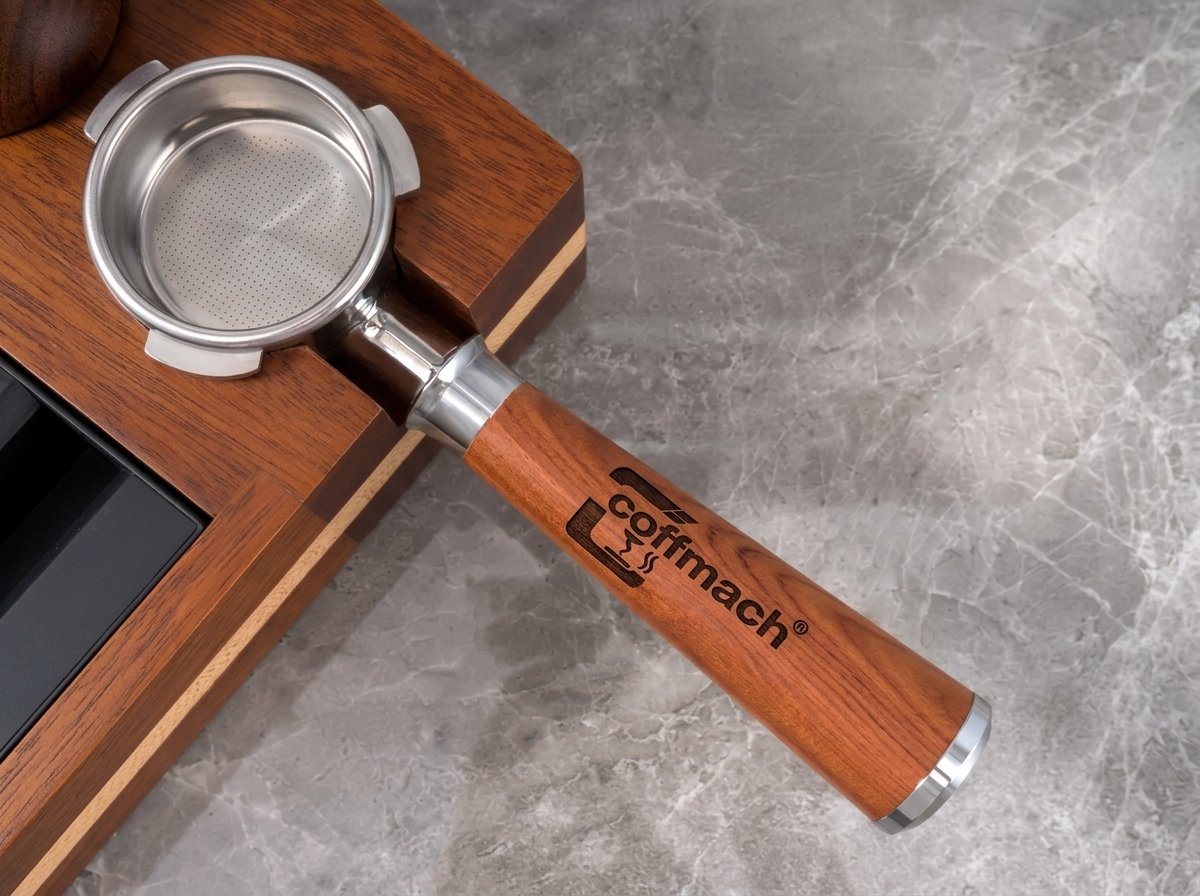
Types 9–10: ridged vs ridgeless basket retention
9. Ridged basket
A ridged basket has a circumferential indentation in the sidewall. The portafilter retaining spring engages this ridge to hold the basket firmly during knock-out. This can reduce accidental basket loss, but removal can take more effort and the formed area needs periodic cleaning.
10. Ridgeless basket
A ridgeless basket has a smooth sidewall, with the spring gripping by friction. The profile can make basket changes easier and removes the indentation where loose grounds may collect. The trade-off is that a weak or mismatched spring can let the basket loosen during knock-out.
The ridge is not a locking lug
The ridge belongs to the basket and interacts with the retaining spring inside the portafilter. It is not the portafilter’s external lug/ear and has nothing to do with the machine’s group-head lock. Record ridge location, rim, basket depth and approved spring when sourcing baskets in volume.
Before service, invert an empty portafilter over a safe surface and confirm that a clean basket is retained correctly. Do not assume a new basket will behave like the previous one even when the nominal diameter matches.
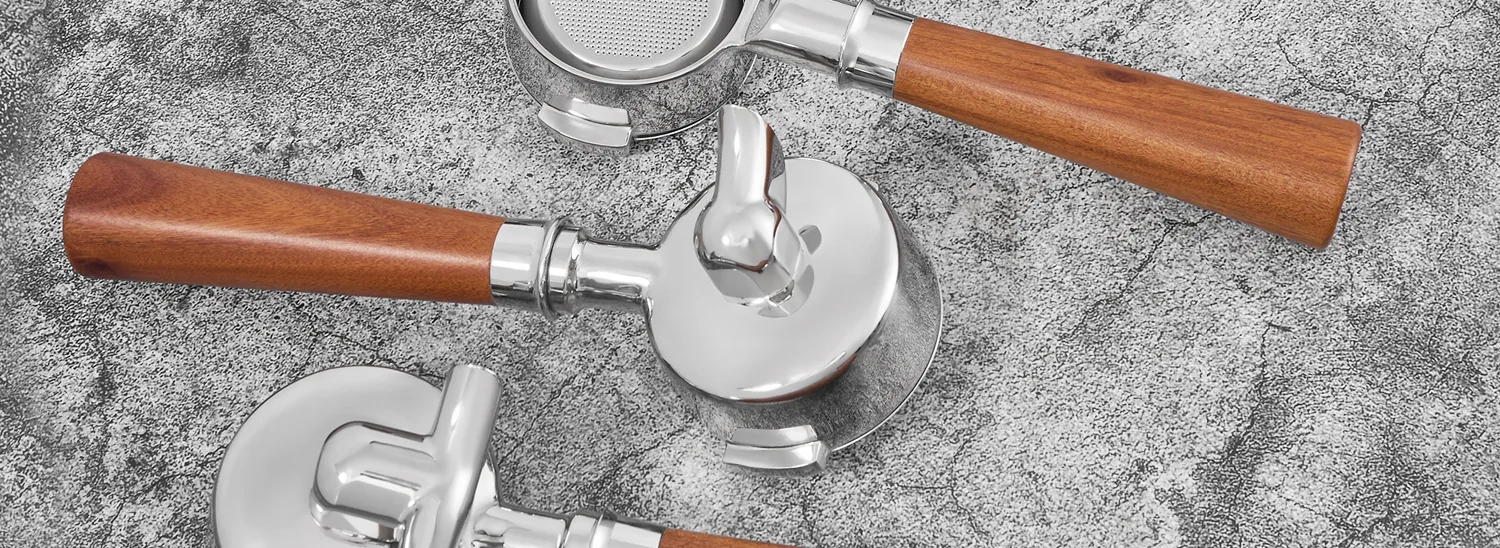
Special-purpose systems outside the main ten
E.S.E. pod basket or pod portafilter
An E.S.E. setup is designed for Easy Serving Espresso paper pods, not loose ground coffee. The E.S.E. Consortium defines the system around a pre-packed 7 g coffee serving sealed between filter-paper layers. Use a pod only with a machine and basket or portafilter assembly explicitly approved for it; a generic loose-coffee basket can look similar but still be unsuitable.
Blind basket for cleaning
A blind basket has no brewing holes. It is a service tool for an approved backflushing process, not an eleventh brewing style. Not every espresso machine supports backflushing. Use only the cleaning disc/basket, detergent, cycle and rinse sequence specified by the machine maker.
How to choose the right portafilter in five steps
Use a model-matched sample before a bulk order. With the machine cool and depressurized, inspect no-force insertion, secure lock, basket retention, gasket seal, cup clearance, flow, cleaning access and repeated-use behavior.
Buying and OEM checklist
For a private-label or wholesale program, convert “bottomless 58 mm with a wooden handle” into a controlled technical specification. The approved drawing and functional sample must define the upper interface as carefully as the visible handle and outlet style.
| Specification block | What to define | How to verify |
|---|---|---|
| Target machine | Brand, exact model, market, revision/serial range and OEM reference | Manual, parts catalog, original unit and approved model list |
| Locking geometry | Head dimensions; lug count, clocking, width, thickness, projection, profile and insertion depth | Dimensioned drawing, fixture, golden sample and no-force fit |
| Seal & clearance | Basket rim, gasket contact, lock position, basket depth, dose and screen/screw clearance | Controlled fit and leak test on target machine |
| Body outlet | Bottomless/single/double, fixed/removable spout thread, cup clearance and cleaning access | Functional flow, split, torque and cleaning inspection |
| Basket system | Pressurized/non-pressurized, capacity, ridge, rim, depth and retaining spring | Approved basket, dimensions, retention and flow inspection |
| Brand & packaging | Logo, artwork, colour, barcode, individual protection and destination labels | Signed artwork and packaging approval sample |
Need a model-matched custom portafilter?
Send Coffmach the machine model, original part reference, full interface dimensions, basket system, outlet style, handle, finish, logo, quantity and packaging requirements. We can support sampling and OEM/ODM development.
Frequently asked questions
What type of portafilter is best for a beginner?
Use a compatible spouted body with a pressurized basket when relying on pre-ground coffee or a basic grinder. It provides contained delivery and a more forgiving outlet system. With a capable espresso grinder and an interest in dialing in, a non-pressurized double basket is a better long-term learning choice.
Is a bottomless portafilter better than a spouted one?
It is better for visibility, diagnosis and cup clearance—not automatically for flavor. A spouted portafilter is better at directing flow and containing mess. Both still need the same correct machine interface, basket, dose and puck preparation.
Can a bottomless portafilter use a pressurized basket?
Sometimes mechanically, but the combination can defeat the diagnostic benefit of a bottomless body because the restricted outlet changes how coffee exits. Confirm basket fit, outlet clearance and machine approval instead of assuming every open body supports every basket.
Is a double-spout portafilter the same as a double basket?
No. A double spout describes two beverage outlets below the body. A double basket describes dose capacity and puck geometry. A compatible double basket can drain through a single-spout, double-spout or bottomless body.
Are all 58 mm portafilters compatible?
No. The nominal diameter is only one part of fit. Lug geometry, head dimensions, insertion depth, basket rim, gasket contact and handle clearance can differ. Confirm the exact machine model, supported part number, drawing and safe sample fit first.
What is the difference between ridged and ridgeless baskets?
A ridged basket has an indentation engaged by the retaining spring, which can improve retention during knock-out. A ridgeless basket has a smooth wall and is often easier to remove. Actual behavior depends on exact basket dimensions and spring tension.
Should I choose a single, double or triple basket?
Choose the exact basket whose published dose range matches the recipe and machine clearance. A double is the practical starting point for many users. A single can reduce dose but may be harder to dial in; a triple supports a larger dose but needs sufficient body and group-head clearance.
Does a triple basket need 15-bar brewing pressure?
No universal rule says it does. Basket capacity changes coffee dose and puck geometry; brew pressure is set by the espresso machine and recipe. Do not increase pressure simply because a basket is marketed as triple.
Technical sources and image credits
- Coffmach — Coffee Portafilter. Product context for bottomless, single-spout, double-spout, size, materials and OEM/ODM options.
- Breville — Bambino Instruction Manual. Model-specific basket use, locking and basket-rim seal context.
- Breville — Pressurized vs Non-Pressurized Baskets. Official dual-wall and single-wall selection context.
- Decent Espresso — Portafilter Baskets. Ridged/ridgeless retention and basket-specific dose/geometry context.
- E.S.E. Consortium — E.S.E. Standard. Easy Serving Espresso pod-system definition.
- La Marzocco — Linea Micra. Model-specific convertible portafilter example.
- All six images are real Coffmach portafilter product images chosen specifically for this article’s body types, basket use, spout styles and custom configurations. Captions are plain text and images are not clickable.